Vintage Studio Living: How to Use a Wood-Frame Divider With String Lights
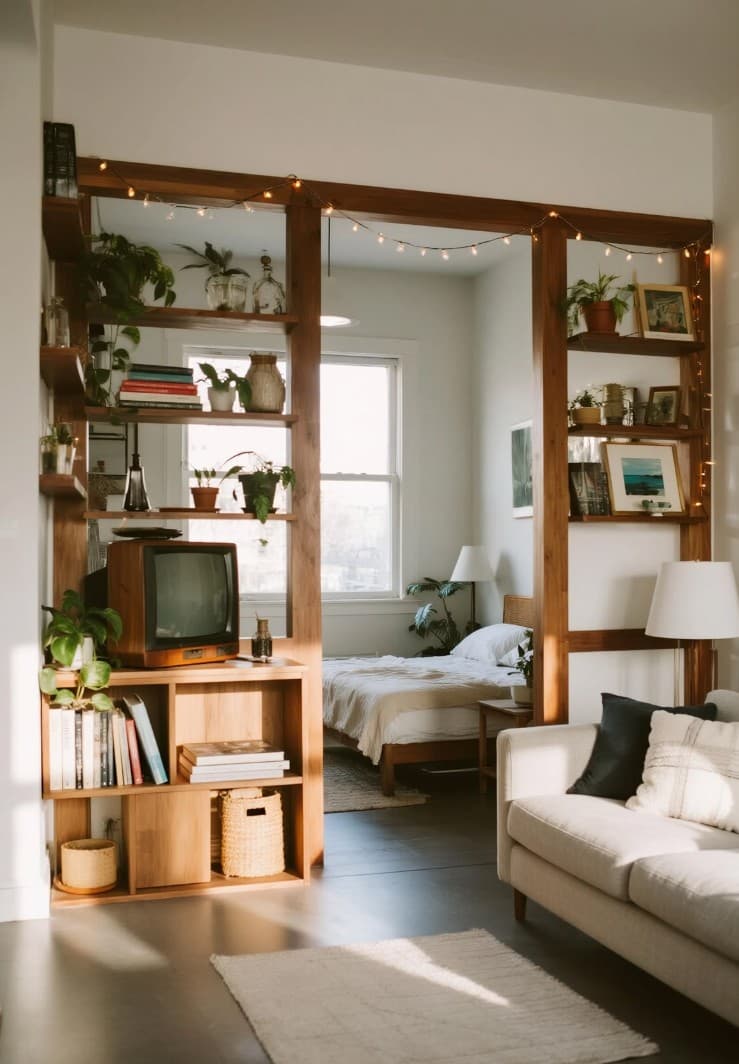
This studio apartment divider is something you build, not buy. Two solid wood uprights, open shelves spanning the width, a string of warm globe lights draped along the top, and shelves filled with plants, books, glass bottles and a vintage TV. On one side, a bedroom with natural light pouring through a window. On the other, a cream sofa and a sense of privacy. The whole thing costs relatively little and creates something genuinely unique.
Building a freestanding wood-frame divider
The structure here is two vertical timber posts — likely 8×8 cm or similar — with horizontal shelves at varying heights connecting them. The posts can be stabilised by running them from floor to ceiling with adjustable ceiling feet, or weighted with heavy shelving on the lower sections. No wall fixings needed in a rental.
The warm-toned wood (possibly oak-stained pine) gives the divider weight and presence. A lighter wood like birch or pale pine would feel more Scandinavian; darker tones like walnut read as more eclectic and vintage.
String lights as an architectural element
The globe string lights draped along the top of the frame turn a practical divider into something magical in the evening. These aren't fairy lights — they're warm filament bulbs on a flex, giving a much more deliberate, designed look. Hung loose rather than taut, they catch the light and create a canopy effect over the threshold between zones.
Styling the shelves
The shelves here hold a genuinely personal collection: books with colourful spines, glass bottles catching the light, small potted plants, a retro TV used as both display and function. This is the opposite of curated minimalism — it's an accumulation of things that matter, arranged with enough intention that they look considered rather than chaotic.
The key is repetition of material: the glass bottles share a language, the books are grouped loosely by colour, the plants are all similar in size. Individual items vary; the overall tone is consistent.
The vintage TV as decor
A retro television — cathode-ray, rounded corners, warm plastic — is functional and nostalgic at once, which is rare in a display object. Against the warm-toned wood shelving, a vintage TV reads as an intentional choice rather than a leftover.
Interior tips
- Globe string lights on a warm-dimmer switch create two completely different moods — day and evening — from a single feature.
- Mix shelf heights: don't space shelves evenly. Vary the gaps so some shelves hold taller plants and bottles, others hold stacked books.
- Leave open space between shelves — the bedroom visible through the divider is part of the design. It should be framed, not blocked.
- A cream or natural sofa on the living side keeps the focus on the divider rather than competing with it.
- Plants at the top of the frame trail downward over time, gradually turning the divider into a green archway.
Building your own wood-frame divider: the practical guide
The divider in this image is achievable as a weekend DIY project if you have basic woodworking skills. Here's how to approach it:
Materials you'll need:
- Two timber uprights, 8×8 cm or similar, cut to ceiling height minus 2 cm
- Four to six horizontal shelf planks, 20–25 cm deep, cut to the desired width of the divider (typically 100–150 cm)
- Adjustable ceiling feet (available from hardware stores) to lock the uprights in place without wall fixings
- Shelf brackets or dados cut into the uprights to support the shelves
- Globe string lights on a warm-toned flex (Edison or G40 filament bulbs, not cool-white LED)
Construction approach: drill shelf brackets or cut dados into the uprights at your chosen heights, position the uprights, level them, and tighten the ceiling feet. The uprights need to be completely plumb — use a spirit level. Once the uprights are secure, the shelves simply rest on the brackets. No glue or screws are strictly necessary for the shelves, which makes height adjustment easy.
Sand the timber well and apply a light oil or wax finish rather than paint — the natural wood grain is part of the appeal, and a clear or light-toned finish keeps the divider feeling open rather than solid.
Styling for different interiors
The warm, eclectic styling of the divider shown here — glass bottles, books, vintage TV, trailing plants — is one approach. But the same structure works in other aesthetic directions:
Minimal Scandinavian: restrict the shelves to potted plants in terra cotta, a handful of books spine-out, and one or two ceramics. Leave most shelves nearly empty. The string lights still apply.
Botanical: lean into the plants entirely. Multiple varieties of trailing and bushy plants at different heights, with the shelves serving purely as plant stands. Books and objects become secondary.
Gallery style: use the shelves for framed artwork leaning at an angle, small sculptures and ceramics. The divider becomes a three-dimensional gallery wall that can be walked around.
String light options and how to hang them
Not all string lights create the same effect. For the warm, deliberate look shown here, choose:
- Edison filament bulbs on black or brown fabric flex: the most intentional-looking option, available at most home stores and online
- G40 globe bulbs (40 mm diameter): the classic globe that gives a warm, visible filament effect without being too small
- Warm white LED filament bulbs: similar appearance to incandescent filament but use less energy — look for a colour temperature of 2200–2700K
Hang the string lights loosely along the top of the frame, looping slightly between the uprights. A taut line of lights looks utilitarian; a loose, draping line looks intentional. Use small hooks or clear clips to attach them to the frame without damaging the wood.
Common mistakes with DIY room dividers
Uprights that aren't plumb. Even a small lean becomes visually obvious over the full height of a room. Take the extra time to get the verticals exactly right.
String lights that are too cold or too bright. Cool-white or daylight string lights destroy the warmth that makes this divider work. The Kelvin rating matters: 2200–2700K only.
Shelves too close together. Variable shelf height is what makes this divider dynamic. Tight, evenly-spaced shelves look like a standard bookcase. Use at least two or three significantly different gaps — one tall gap for a statement plant or bottle collection, one shorter gap for books.
Over-styling immediately. The best version of this divider evolves over time as you add objects you genuinely love. Start with less than you think you need, then add one or two pieces at a time. A divider built up slowly over months looks far more personal and considered than one styled in a single weekend.
Related posts

How to Style a Hallway with a Large Monstera and Uplighter
A statement monstera in a ribbed pot with an uplighter beneath it transforms a hallway into the most memorable part of your home. Here is how to do it well.
Three Walnut Shelves Above the Toilet: The Bathroom Storage Idea That Changes Everything
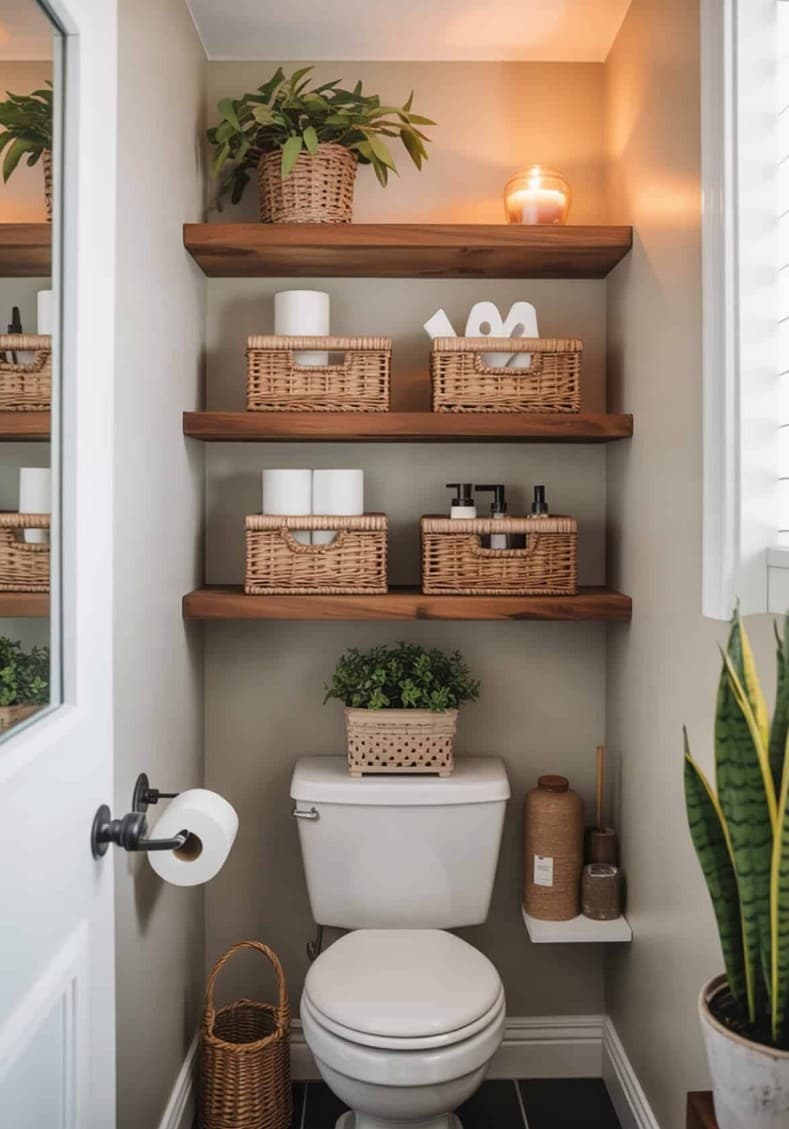
Three dark walnut floating shelves above the toilet, each holding wicker baskets with toiletries, a large plant, an amber candle and a snake plant on the floor — this is how to make a small bathroom look considered and beautiful.
The Plant Room Divider: How to Separate a Studio Bedroom Without Walls
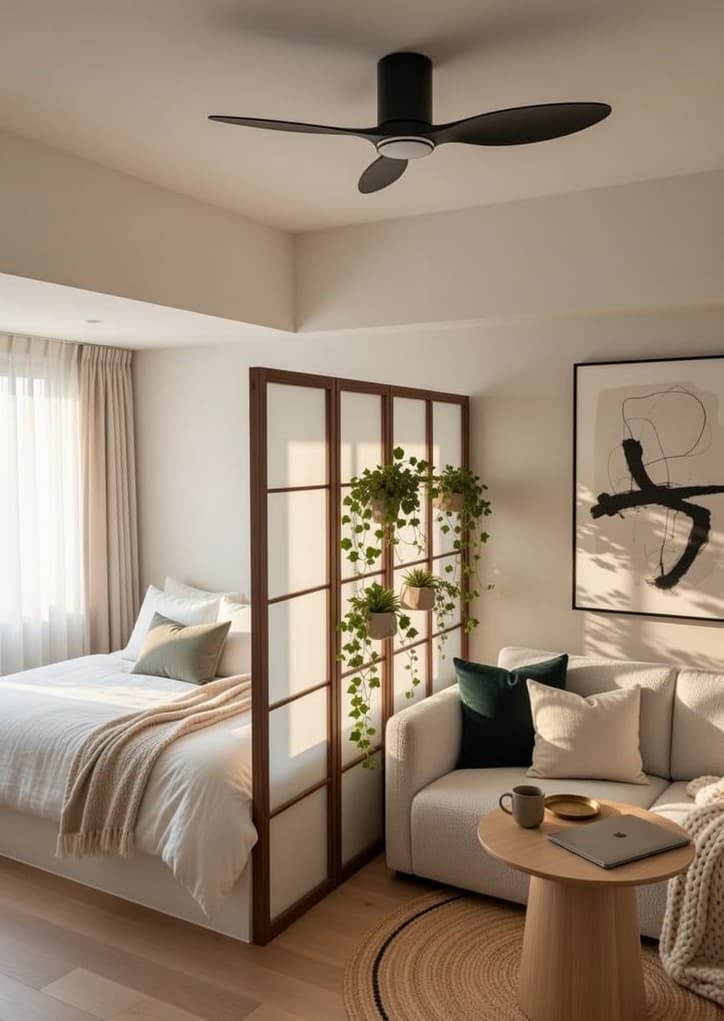
A wooden grid panel with hanging trailing plants creates a beautiful, light-filled boundary between sleeping and living zones — no construction required.