
The hallway is the first room every visitor sees and the last room most people think to decorate. This image changes that entirely. A large monstera in a ribbed cream pot, lit from beneath by an uplighter, creates a moment of drama that makes the entire home feel considered. The shelf above carries trailing plants and ceramics. A wall sconce adds a second light source. The sideboard below keeps things grounded and functional.
It takes four elements. Here is how each one works.
The monstera as the centrepiece
A large, mature monstera deliciosa reads as architecture more than foliage. Its split leaves — the fenestrations that develop as the plant matures — catch light from multiple angles and cast beautiful shadows on the wall behind them. In a hallway, where there is often only one wall to work with, a monstera makes that wall extraordinary.
For this effect, you need a plant that is genuinely large: a stem height of at least 80–100 cm, with leaves spanning 50 cm or more. Young monsteras do not have the same impact. Look for mature specimens at specialist plant shops rather than garden centres — they cost more but the effect is immediate.
Monsteras grow toward light. In a hallway with limited natural light, rotate the plant a quarter turn every few weeks so it grows symmetrically rather than leaning toward the nearest window.
The ribbed pot on a stand
The pot matters as much as the plant. A tall, ribbed ceramic pot in cream or off-white elevates the monstera — literally and visually. The ribbing adds texture that makes the pot interesting in its own right, and the stand raises the pot off the floor, giving the plant extra height and making the uplighter beneath it more effective.
When choosing a pot stand, match the material to the sideboard: if the sideboard is oak, choose a wooden stand. If the sideboard is darker, choose a black metal stand. Consistency in material across multiple elements makes a room feel designed rather than assembled.
The uplighter beneath the pot
A small uplighter placed directly beneath or behind the monstera pot is the single element that elevates this from a nice plant to a statement. Uplighters aimed into large foliage create dramatically patterned shadows on the wall and ceiling. In the evening, the shadows from a monstera lit from below can fill an entire wall with a shifting, graphic pattern.
LED uplighters designed for plant highlighting are available widely and draw very little power. Look for a colour temperature between 2700K and 3000K — warm white, not cool daylight. A daylight temperature uplighter makes foliage look yellow and slightly unreal. Warm white makes it look lush and intentional.
The wall sconce
A cylindrical wall sconce above and to one side of the monstera adds a second light source and a graphic element on the wall. This type of sconce — a simple cylinder that throws light up and down — creates two cones of warm light rather than a broad wash, which is more interesting and more flattering.
Position the sconce at around 160–170 cm from the floor — eye height or just above. This ensures the upward beam lights the ceiling rather than hitting a wall too close and creating a harsh spot.
The floating shelf with trailing plants
Above the monstera, a wooden floating shelf carries a mix of trailing plants, ceramics and a framed print. Trailing plants — pothos, string of pearls, or English ivy — cascade down from the shelf, linking the shelf visually to the monstera below and filling the wall with green at multiple heights.
A shelf in a hallway should carry objects at two different heights: a taller item (a framed print, a tall ceramic, a diffuser) and smaller items arranged in front of it. The variation in depth and height stops a shelf from looking flat.
The sideboard
A low, wooden sideboard with slatted or rattan-panel doors grounds the display and provides the storage a hallway actually needs — a place for keys, bags, seasonal items. The top surface of the sideboard keeps the staging simple: the pot and stand sit centred, with nothing competing beside them.
Lighting the hallway as a whole
Three light sources — the overhead (implied), the wall sconce, and the uplighter — work together to create a layered lighting scheme in a space that's usually an afterthought. The hallway should not be uniformly bright. It should have areas of warmth and shadow, a focal point of light (the plant), and enough ambient light to be functional.
If your hallway has no ceiling rose for a pendant, a plug-in wall sconce is a straightforward alternative — no electrician required, and the cable can be run neatly along the skirting or wall.
Common mistakes to avoid
- Using a cool-white bulb in the uplighter. Cool white drains the life out of foliage. Always warm white.
- Choosing a pot that is too small. A large monstera in a small pot looks top-heavy and falls over. The pot diameter should be roughly a third of the plant's height.
- Overcrowding the shelf. Two or three objects, one trailing plant. More than that and the shelf competes with the monstera rather than supporting it.
- Positioning the monstera in a dark corner. Monsteras tolerate low light but will not produce the large, fenestrated leaves that make them dramatic. The brighter the position, the better the plant.
- Forgetting to water correctly. Monsteras need water when the top few centimetres of soil are dry. In a warm hallway, that might be every 10–14 days. Check before watering rather than following a fixed schedule.
Interior tips
- Support the monstera stems with a moss pole or discreet bamboo stake as the plant grows. This keeps it upright and encourages larger leaves.
- Wipe the leaves with a damp cloth every few weeks to remove dust. Clean leaves are glossier, more dramatic, and photosynthesise more efficiently.
- Add a slim console table if the hallway is wide enough — it gives you a surface at the right height for keys and post without the bulk of a sideboard.
- Run the uplighter cable along the skirting board and fix it with cable clips — a tidy cable is invisible; a loose one is always the first thing visitors notice.
- Photograph the space in the evening when the uplighter and sconce are both on. This is when the room looks best, and the image is worth having.
Related posts
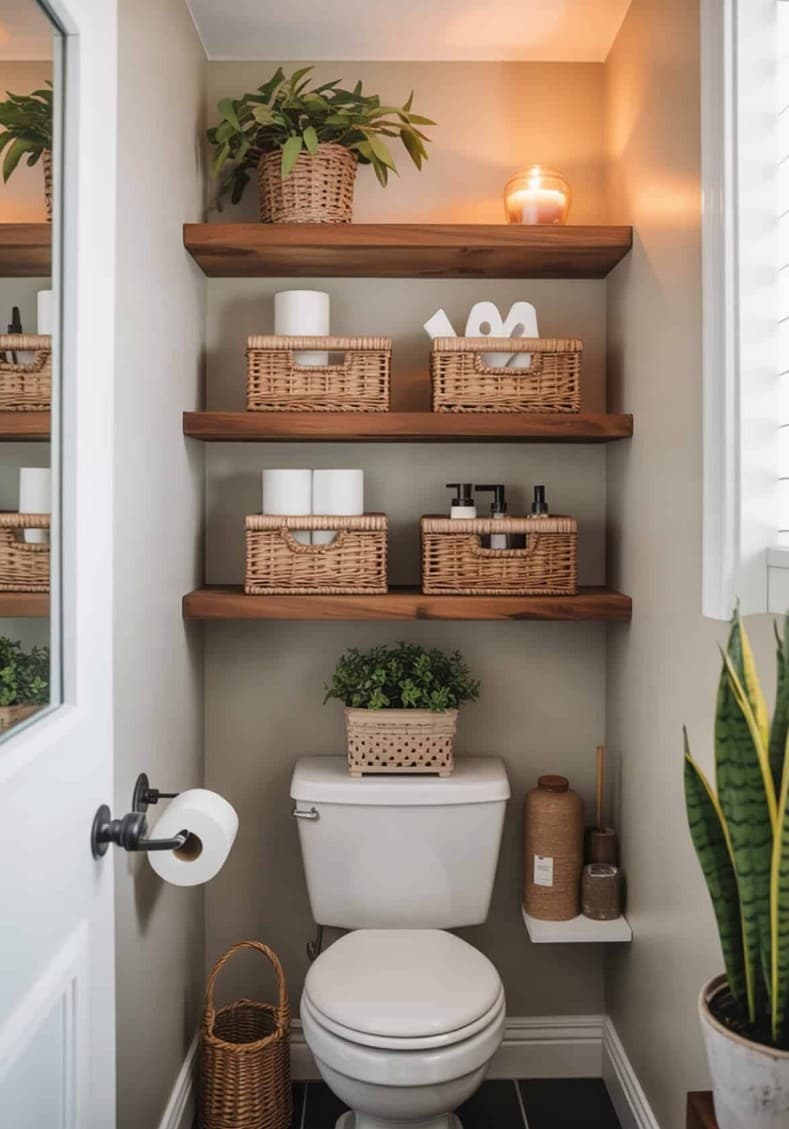
Three Walnut Shelves Above the Toilet: The Bathroom Storage Idea That Changes Everything
Three dark walnut floating shelves above the toilet, each holding wicker baskets with toiletries, a large plant, an amber candle and a snake plant on the floor — this is how to make a small bathroom look considered and beautiful.
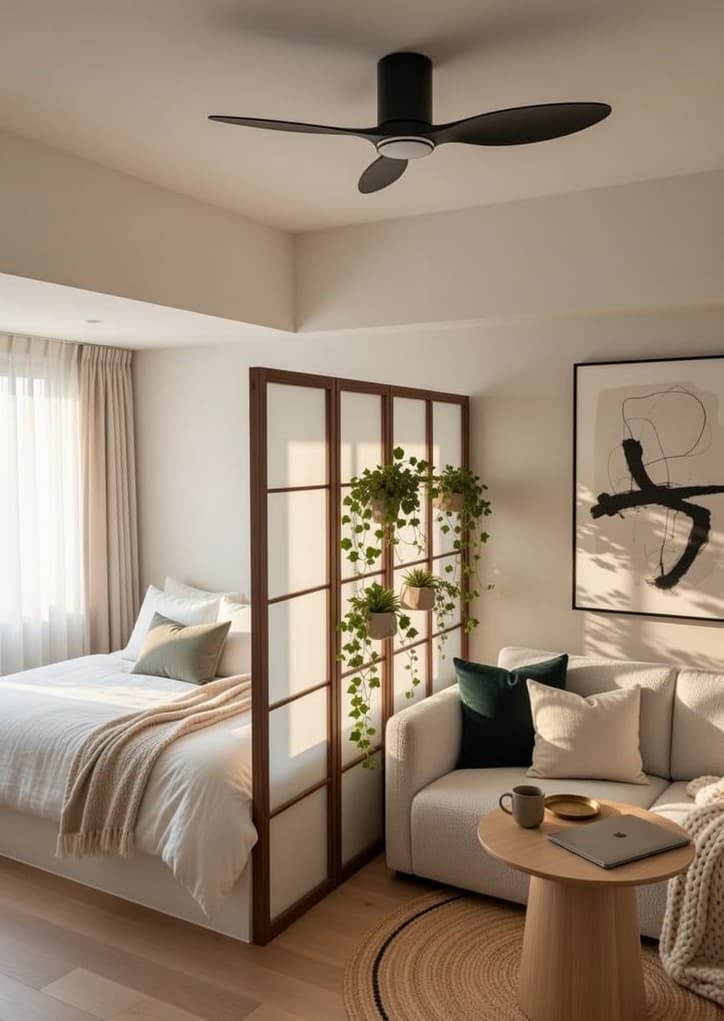
The Plant Room Divider: How to Separate a Studio Bedroom Without Walls
A wooden grid panel with hanging trailing plants creates a beautiful, light-filled boundary between sleeping and living zones — no construction required.
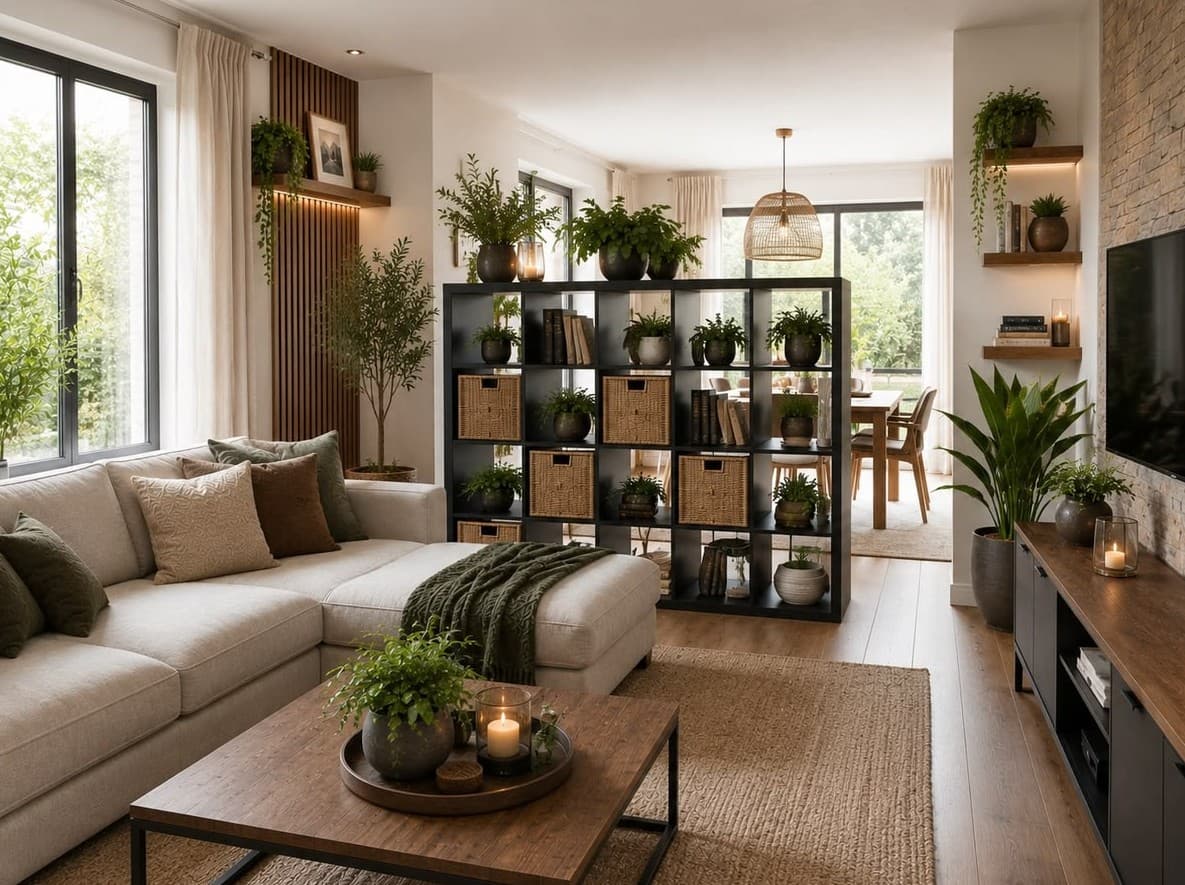
Open Plan Living: How a Plant-Filled Shelf Divider Transforms a Small Space
One bookshelf loaded with plants and wicker baskets separates living from dining — and does it more beautifully than any wall could. Here's the full breakdown of this open-plan setup.