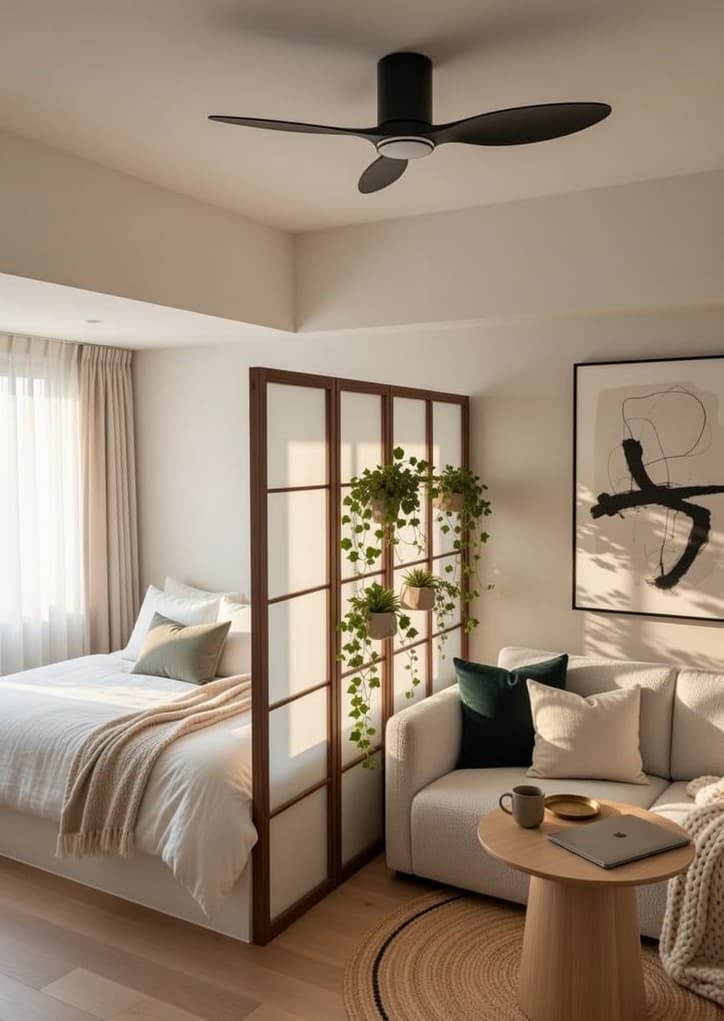
The wooden-framed panel with hanging potted plants in this studio does something remarkable: it creates a clear visual separation between the bedroom and living area without blocking light, without making the space smaller, and without any permanent construction. It's a solution that costs little and requires no permission from a landlord.
Why a plant divider works in a studio
A solid wall or partition in a studio apartment reduces every room it creates. A transparent or semi-transparent divider — whether glass, fabric, shelving or, as here, a wooden grid with plants — creates zones while preserving the sense of openness. Light continues to travel through the space. The eye can still move. The apartment still feels like one generous room rather than two cramped ones.
Building the wooden grid panel
The frame here is a dark-stained timber grid — essentially a window frame without glass, divided into rectangular sections. You can build this with basic woodworking skills, or source a similar piece from home stores that sell decorative room screens. Wall brackets at top and bottom keep it stable without drilling through the ceiling.
Choosing the plants
The trailing plants used here — likely pothos or heartleaf philodendron — are ideal for a hanging panel. They tolerate lower light, grow quickly, and trail beautifully over the edge of small hanging pots. Mount the pots on S-hooks through the grid or use purpose-made clip-on planters that attach to the frame.
The living area on one side
The white boucle sofa, round jute rug and warm wood coffee table in the living zone are deliberately low-key — they let the plant divider be the star. The abstract line-art print on the wall echoes the organic shapes of the trailing plants.
Interior tips
- Use matching small pots in terracotta or white for a cohesive look — mismatched pots on a divider can look cluttered.
- A ceiling fan in a studio is a practical and stylish choice: it circulates air between zones and adds a modern, architectural touch.
- Keep the bedroom side minimal — the bed should be made and the area uncluttered so the studio feels calm from the living side.
- Vary trailing lengths: let some plants fall long and keep others compact — the variation makes the divider feel more like a living garden wall than a shelf.
- Sheer curtains behind the divider on the bedroom side add privacy at night and a soft, diffused-light effect during the day.
Positioning your divider for maximum effect
Where you place the divider matters as much as what it looks like. The goal is to create a visual boundary that doesn't cut the apartment in half — it should feel like a transition, not a barrier.
The most effective placement is approximately one-third to halfway into the room from the entrance side. This puts the living area in the front (the first zone you see when you enter) and the sleeping zone behind (more private, further from the door). If your apartment has a single window, keep the divider far enough from it that light reaches both sides.
Avoid placing the divider perpendicular to a window unless the window is very wide — a panel across a narrow window line can block the view and make both zones feel dark.
How to source or build the frame
Ready-made wooden room dividers exist at various price points. IKEA's HEJNE and KALLAX units can be adapted as frames. Home improvement stores sell decorative room screens in both natural wood and dark-stained formats. For a more custom look, a carpenter can build a simple grid frame to your exact measurements for a modest fee.
If you prefer the DIY route, the frame is essentially a ladder structure made from 4x4 cm timber battens. Cut four outer pieces to your desired dimensions, join them at the corners with metal L-brackets, then add interior cross-pieces at regular intervals. Sand everything smooth, apply a matte wood stain in a dark walnut or ebony tone, and the result looks almost identical to the panel pictured here.
The critical detail is stability. A free-standing panel with heavy pots attached needs a wide base or it will tip. Fit a cross-brace at floor level and add rubber feet to prevent the base from sliding. If you're concerned about stability (particularly if you have young children or pets), a small L-bracket fixed into the wall at the top of the frame is a sensible precaution.
Making both sides of the divider look good
The most common oversight with a room divider is that one side gets all the attention. In a studio apartment, you see both sides constantly, so both need to work visually.
The plant side (typically facing the living area) is easier — the plants do most of the work. For the bedroom-facing side, consider:
- A horizontal shelf attached to the back of the frame for books, a lamp, or a small clock — essentially a bedside area that uses the divider itself as a headboard.
- A fabric panel in a textured linen or cotton, hung from the top of the frame and falling behind it, to add softness and visual warmth to the bedroom side.
- Framed prints hung on the bedroom-facing surface of the frame — small prints at eye-level when lying in bed make the space feel considered and personal.
Watering and maintenance
Plants on a room divider need a sensible watering routine. The pots are small, which means they dry out faster than floor-standing plants. Check them every two to three days in warm weather.
Use a small indoor watering can with a long narrow spout to reach into the pots without disturbing the others. A large plate or tray placed on the floor beneath the divider during watering catches any drips and protects your floor. Remove dead or yellowing leaves weekly — a well-maintained divider is a beautiful focal point, but a neglected one quickly becomes an eyesore.
Feed the plants with a diluted liquid fertiliser once a month during spring and summer. Pothos and philodendrons are forgiving, but regular feeding keeps the growth lush and the leaves large, which makes the divider look fuller and more impressive.
Related posts

How to Style a Hallway with a Large Monstera and Uplighter
A statement monstera in a ribbed pot with an uplighter beneath it transforms a hallway into the most memorable part of your home. Here is how to do it well.
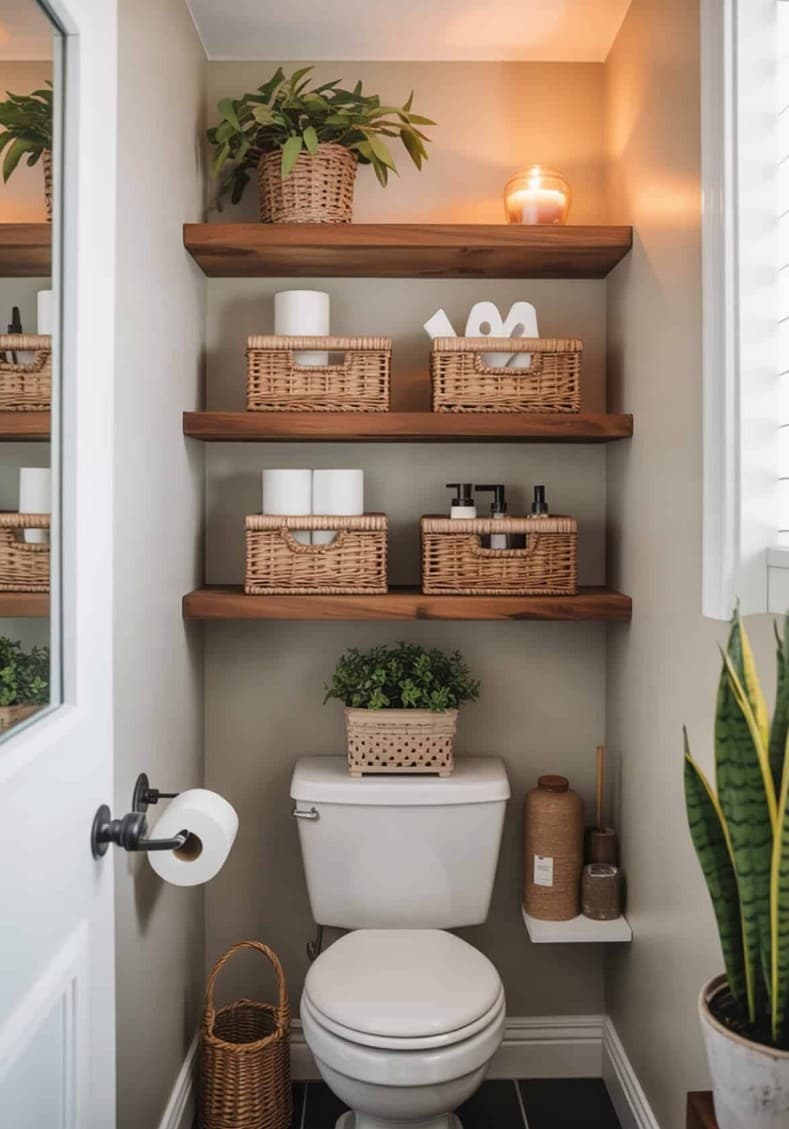
Three Walnut Shelves Above the Toilet: The Bathroom Storage Idea That Changes Everything
Three dark walnut floating shelves above the toilet, each holding wicker baskets with toiletries, a large plant, an amber candle and a snake plant on the floor — this is how to make a small bathroom look considered and beautiful.
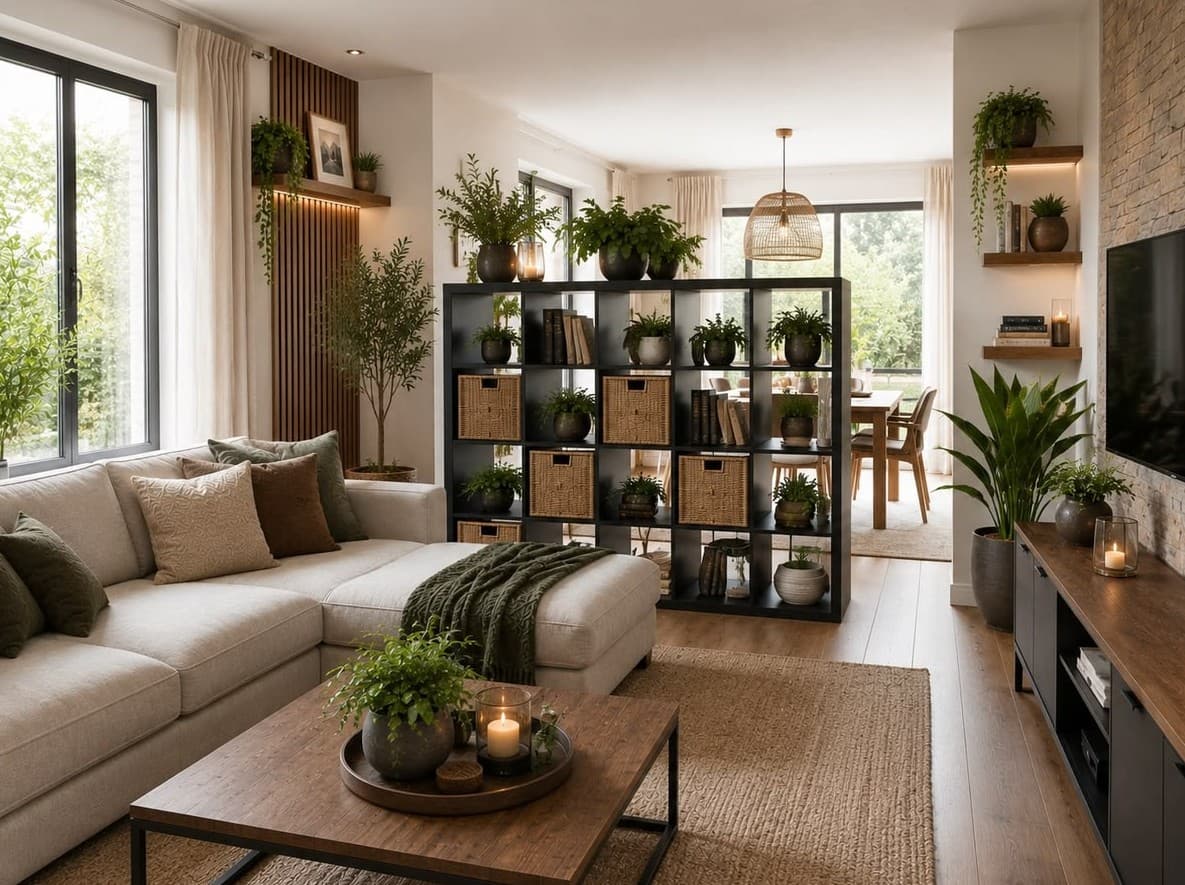
Open Plan Living: How a Plant-Filled Shelf Divider Transforms a Small Space
One bookshelf loaded with plants and wicker baskets separates living from dining — and does it more beautifully than any wall could. Here's the full breakdown of this open-plan setup.