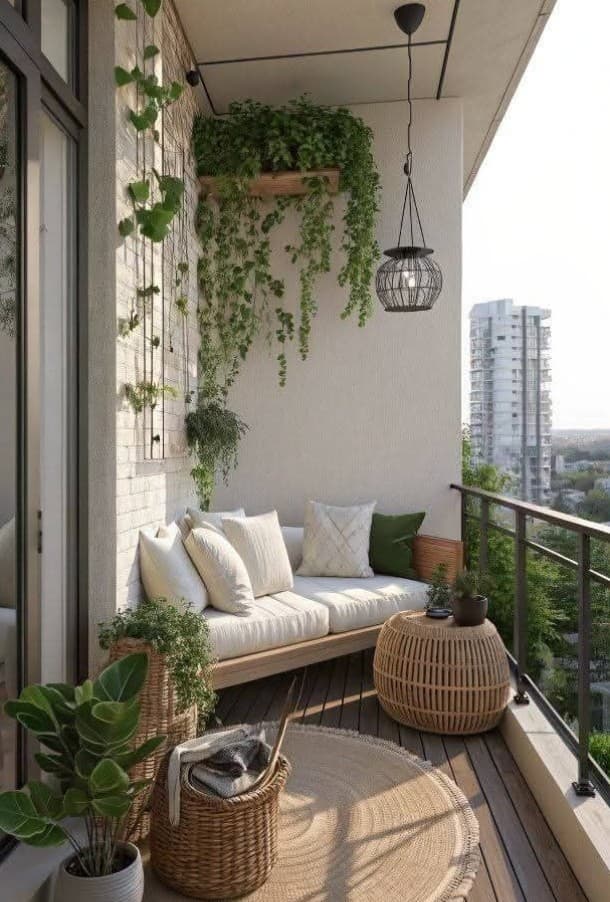
Most apartment balconies are treated as afterthoughts — a place for a drying rack and a sad pot plant. But a small balcony, styled with intention, can become the best spot in your home: somewhere to have morning coffee, read in the afternoon, or wind down in the evening.
Start with a proper seat
The single most important thing you can add to a balcony is somewhere comfortable to sit. A wooden bench with thick cushions, like the one pictured here, works beautifully because it sits low, feels relaxed, and can be pushed against the wall to leave walking space. Look for outdoor cushions with removable, washable covers.
Add a side table
A rattan or wicker side table at seat height gives you somewhere to put your coffee cup, a book, or a candle. Rattan is ideal for balconies because it's lightweight, weather-tolerant, and has a warm, natural look that pairs well with plants.
Layer in plants
Plants are what turn a balcony from a space into a place. In the image, trailing plants hang from a wall-mounted shelf above the bench, creating a green curtain effect. A mix of heights works best: a tall floor plant (like a fiddle leaf or olive tree) in one corner, medium plants on the rail or table, and trailing plants that hang down.
Think about lighting
A pendant light hung from the ceiling (with an outdoor-rated cord) immediately makes a balcony feel like an outdoor room rather than an add-on. Alternatively, string lights along the ceiling or rail give a warm, relaxed glow in the evenings.
Interior tips
- Use a round rug to define the seating area and add warmth underfoot. Outdoor-rated jute or polypropylene rugs work well and handle rain.
- Keep it simple — a balcony that's too full of furniture and accessories feels cluttered. One seating area, one table, a few plants. That's usually enough.
- A wicker or rattan basket doubles as storage for a spare throw, garden tools, or cushions when it rains.
- Choose white or neutral cushions — they photograph beautifully, reflect light, and go with every plant colour.
- Hang something on the wall — a mounted shelf, a small mirror rated for outdoor use, or a simple hook for a hanging plant instantly makes the space feel more designed.
How to choose the right furniture for your balcony size
Balconies are often even smaller than they feel, so furniture scale is critical. Before buying anything, measure your balcony floor area and mark out the furniture footprint with tape on the ground — this tells you immediately whether a piece will work.
For a narrow balcony (under 150 cm wide), a bench pushed against the wall is almost always the right choice. It runs along the length of the space rather than across it, keeping the middle clear. Avoid round chairs or armchairs with wide footprints — they consume the centre of the space and make it difficult to move around.
For a wider balcony or a corner space, a small bistro table with two chairs works beautifully. The classic French bistro chair folds flat and can be stored inside when not in use, which means you get the look without permanently sacrificing the space.
The best plants for a balcony environment
Not all plants tolerate a balcony well. Wind, direct sun, and temperature fluctuations can stress plants that do well indoors. Choose varieties that are genuinely suited to an outdoor position.
- Lavender is nearly indestructible on a sunny balcony and smells incredible in summer.
- Nasturtiums grow quickly, flower generously, and tolerate both sun and partial shade — and the flowers are edible.
- Rosemary and thyme thrive in terracotta pots on a sunny balcony and are endlessly useful in the kitchen.
- Japanese sedge (Carex) is a graceful, low-maintenance grass that tolerates wind and partial shade well.
- Geraniums (Pelargoniums) are the classic balcony plant for good reason — they're tough, bright, and come in every colour.
For trailing plants on shelves or rails, ivy, trailing lobelia, and wave petunias all perform well in outdoor conditions.
Weatherproofing and maintenance
A well-styled balcony needs minimal upkeep if you choose the right materials. Rattan and wicker should be stored inside (or in a large bag) over winter if you live in a cold or wet climate — they hold up to rain but don't love prolonged damp. Solid teak or acacia furniture is the most durable outdoor wood option and develops a beautiful silver patina if left untreated.
Cushions are the most maintenance-intensive element. Look for cushions with covers made from solution-dyed acrylic fabrics (brand names like Sunbrella), which resist fading and can be hosed down. If budget is tight, buy good-quality cushion inserts and make your own covers in an outdoor fabric — the covers are easy to sew and can be swapped seasonally.
Common mistakes to avoid
Buying furniture that's too large. A dining table and four chairs looks wonderful on a terrace but overwhelms a 4-square-metre balcony. Be ruthless about scale.
Forgetting drainage. Pots without drainage holes will waterlog in rain, killing your plants. Always choose pots with holes, or add a layer of gravel at the bottom before planting.
Ignoring wind. Upper-floor balconies can be very windy, which knocks over pots, scatters cushions, and limits which plants will survive. Heavier terracotta pots and a railing-mounted planter system are more wind-stable than lightweight plastic containers sitting on the floor.
Neglecting the floor. A bare concrete or tile balcony floor looks unfinished. An outdoor rug, interlocking deck tiles, or even a few large terracotta pots placed strategically can completely transform the surface and make the space feel more like a room.
Related posts

How to Style a Hallway with a Large Monstera and Uplighter
A statement monstera in a ribbed pot with an uplighter beneath it transforms a hallway into the most memorable part of your home. Here is how to do it well.
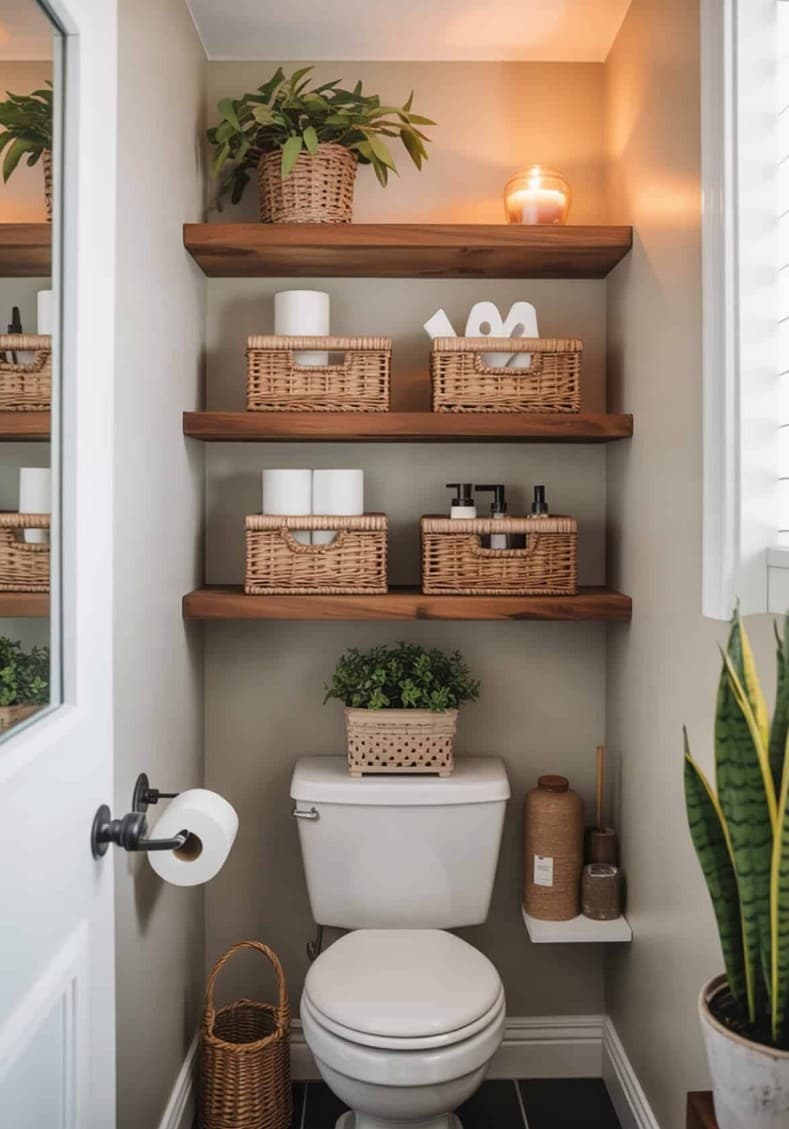
Three Walnut Shelves Above the Toilet: The Bathroom Storage Idea That Changes Everything
Three dark walnut floating shelves above the toilet, each holding wicker baskets with toiletries, a large plant, an amber candle and a snake plant on the floor — this is how to make a small bathroom look considered and beautiful.
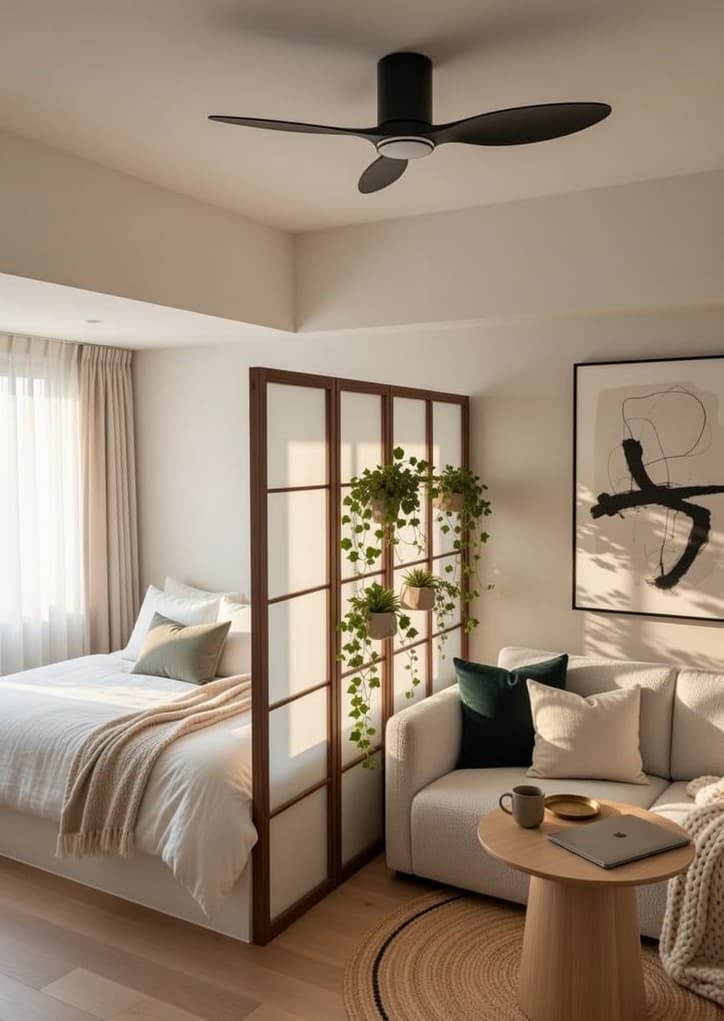
The Plant Room Divider: How to Separate a Studio Bedroom Without Walls
A wooden grid panel with hanging trailing plants creates a beautiful, light-filled boundary between sleeping and living zones — no construction required.