Studio With Shelf Divider and Bubble Pendant: A Small Space That Gets Everything Right
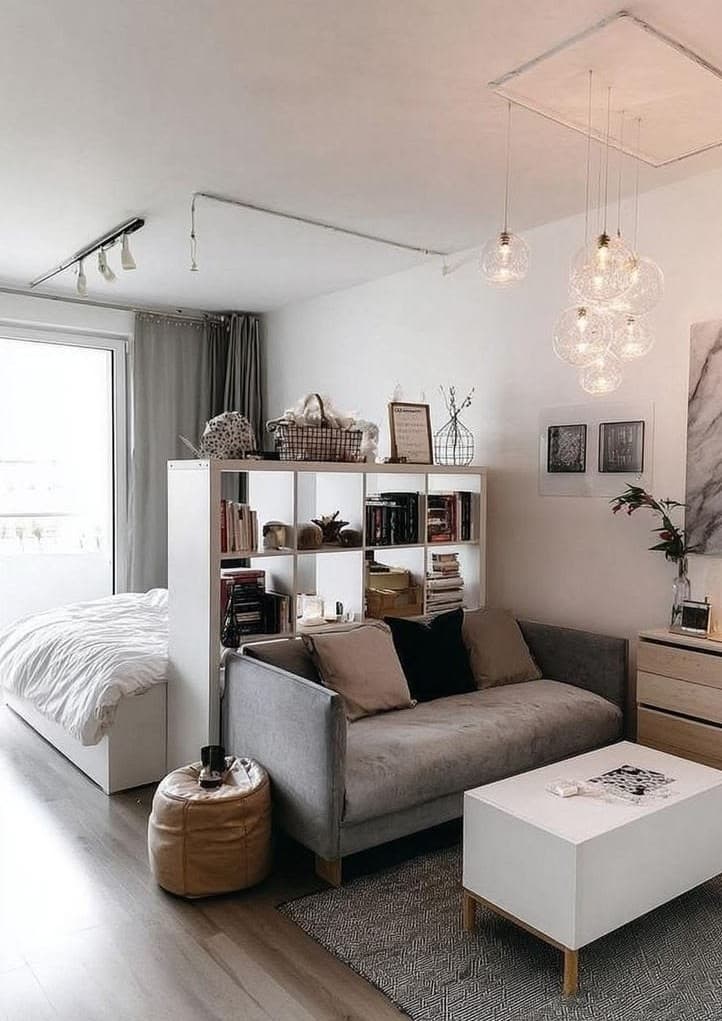
This studio apartment has solved the single hardest problem of small-space living: how to have a bedroom and a living room in the same space without either feeling like an afterthought. The answer here is a white cube shelf placed at the foot of the bed, facing the sofa — not so tall that it blocks light, not so short that it fails to divide, exactly right for what it needs to do.
The shelf divider: why it works
The cube shelf here is the KALLAX-type unit — white, two rows of four openings, freestanding. It sits perpendicular to the back wall, creating a visual barrier between the sleeping and living zones. Books, bags, a wire basket and small plants fill the openings, making the shelf a storage unit and a display piece as well as a divider. The height — approximately shoulder height when sitting — is crucial: you can see over it when standing but not when lying in bed, which provides exactly the right degree of visual separation.
The bubble pendant chandelier
The dominant feature of the living space is the cluster pendant light: five or six clear glass globe bulbs hung at staggered heights from a single ceiling plate. The clear glass means the bulbs themselves are the feature — at night, each globe glows individually, creating a constellation effect. This is a dramatic light fitting for a small space, but it works because the rest of the room is extremely restrained.
The living zone
A grey sofa faces the shelf divider, with a white box-frame coffee table in front of it and a tan leather pouf to one side. The palette is grey, white and warm tan — calm and intentional. A large marble-effect canvas on the wall behind adds scale without colour. Track lighting on the ceiling rail provides adjustable directional light across the whole room.
The sleeping zone
Behind the shelf, the bed has white bedding and sits directly against the large window wall. The window itself lets in morning light and frames a view — the most generous feature a small apartment can have. The sleeping zone needs nothing but the bed: the shelf does all the decorative work.
Interior tips
- Face the sofa toward the shelf divider, not the window: this is counterintuitive but it creates the living zone — the sofa and shelf together form a room-within-a-room that the window alone never could.
- A leather pouf beside the sofa adds flexible seating that takes up almost no visual space. It can become a footrest, extra seating, or a surface when topped with a tray.
- Cluster pendant lights work in small spaces precisely because they fill vertical space rather than floor space — the ceiling becomes the feature, leaving the floor clear.
- Use track lighting to direct light to the areas you actually use — at the sofa, over the desk, beside the bed. Lighting one area at a time makes a studio feel like multiple rooms.
- Keep the shelf facing the living area styled, the back (sleeping area side) plain: the living zone sees the display; the sleeping zone sees a simple back panel. One shelf, two faces, two different moods.
Making the most of natural light
In a studio, natural light is the most valuable thing you have. The arrangement here — bed against the window wall — is not accidental. Placing the sleeping zone at the window does two things: it fills the bed with morning light, which is the nicest possible way to wake up, and it leaves the interior of the room available for the sofa, the coffee table and the shelf divider, where you spend your waking hours.
If your window faces a good direction, resist the temptation to hang heavy curtains. Sheer linen panels that filter light without blocking it entirely are the right choice for a studio — they provide privacy without making the room feel dark. Blackout fabric, if you need it, is best applied as a blind hidden behind the sheers rather than as the primary window covering.
Mirrors help enormously. The marble-effect canvas here reflects light back into the space. A large mirror on the wall facing the window would do the same job even more effectively — it effectively doubles your natural light source.
Buying guide: choosing the right shelf divider
Not every freestanding shelf works as a room divider. Here is what to look for:
- Height: aim for 100–130 cm. Lower than this and it barely registers as a division; taller than this and it starts to feel like a wall, blocking light and airflow between the zones.
- Depth: standard cube shelves are 38–42 cm deep — deep enough to hold books, baskets and plants, shallow enough to not dominate the space.
- Stability: a freestanding shelf that will be used as a divider — rather than placed against a wall — needs to be weighted or anchored. Fill the lower cubbies with heavier items (books, boxes) and secure it to the ceiling or a wall with a small anti-tip bracket if the manufacturer recommends it.
- Open vs closed back: an open-backed cube shelf lets light and air pass between zones, which is usually preferable in a studio. A closed-back unit creates a more solid division but can feel heavier and darker.
The KALLAX from IKEA (mentioned in the photo description) is the standard choice for a reason: it is well-proportioned, inexpensive, comes in multiple sizes and colours, and accepts a range of inserts (doors, drawers, baskets) that let you customise it over time.
Common studio apartment mistakes
Using a rug that is too small. A small rug under only the front legs of a sofa reads as an afterthought. In a studio, where zones are psychological rather than architectural, a rug needs to be large enough to define the entire living area — front and back sofa legs both on it, coffee table fully within it.
Overhead lighting only. A single ceiling light that illuminates the entire studio at once destroys the sense of separate zones. Multiple light sources — a pendant for the living area, a bedside lamp for the sleeping zone, a floor lamp in a corner — let you control which zones are active and which recede.
Cluttering the shelf divider. The shelf faces both zones and is visible from everywhere in the studio. Overfilling it with random objects makes the entire apartment feel messy. Edit it down to items you actually want to look at from every angle.
Related posts

How to Style a Hallway with a Large Monstera and Uplighter
A statement monstera in a ribbed pot with an uplighter beneath it transforms a hallway into the most memorable part of your home. Here is how to do it well.
Three Walnut Shelves Above the Toilet: The Bathroom Storage Idea That Changes Everything
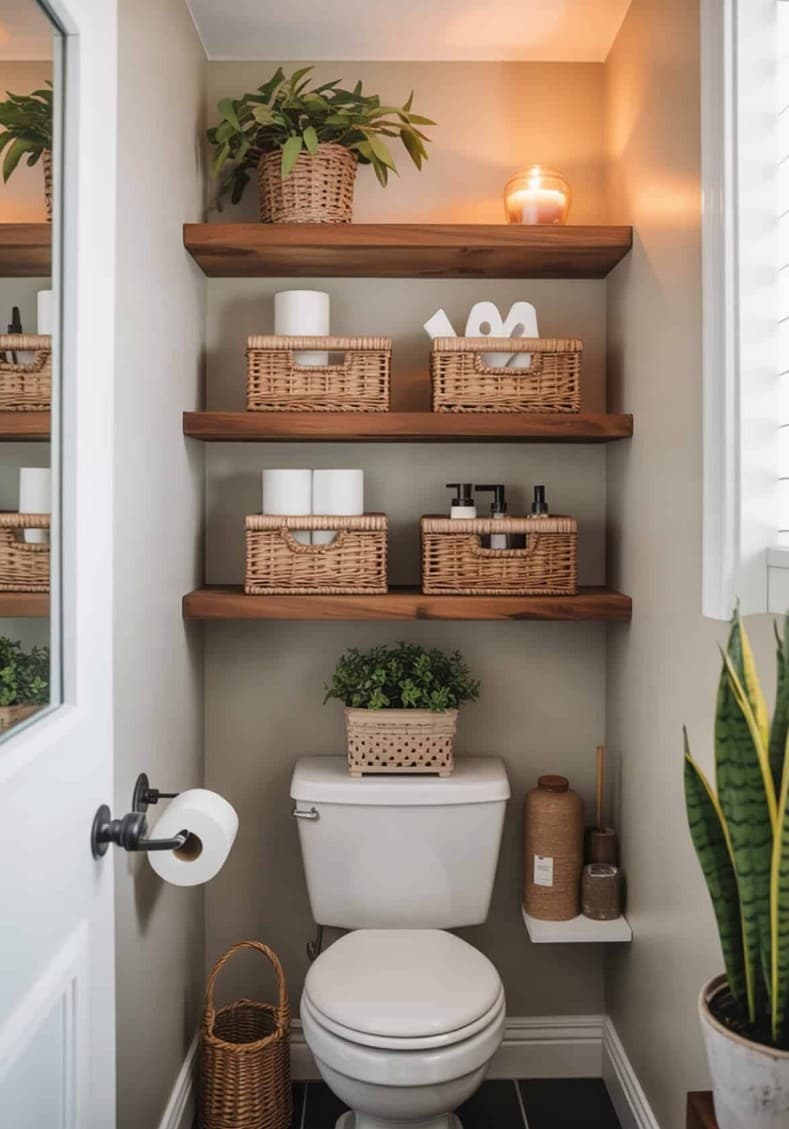
Three dark walnut floating shelves above the toilet, each holding wicker baskets with toiletries, a large plant, an amber candle and a snake plant on the floor — this is how to make a small bathroom look considered and beautiful.
The Plant Room Divider: How to Separate a Studio Bedroom Without Walls
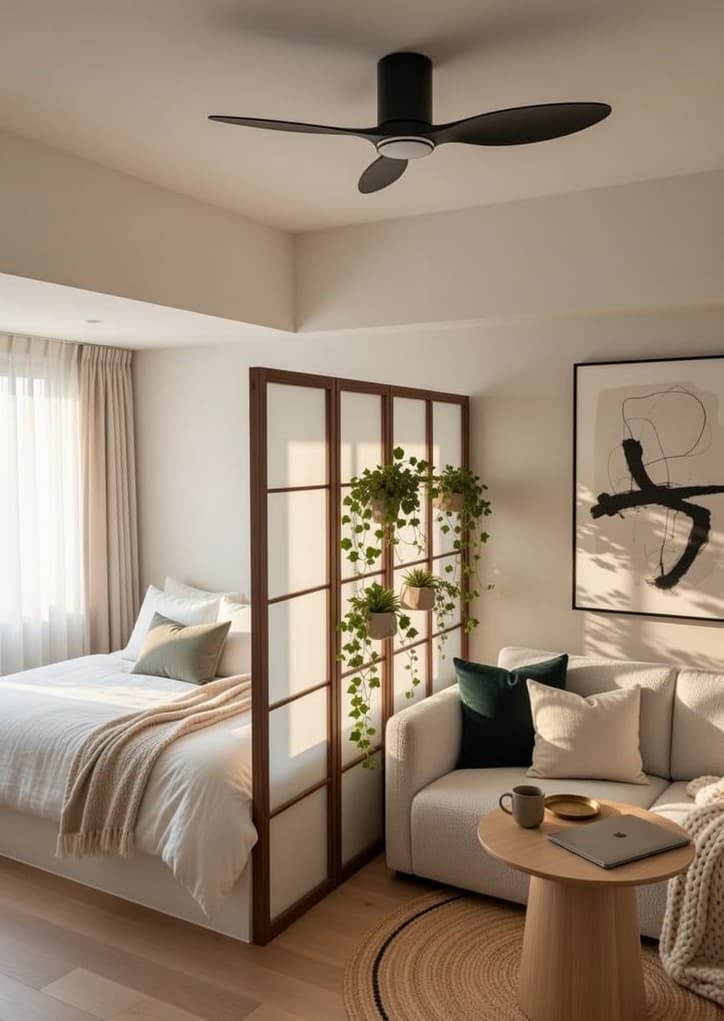
A wooden grid panel with hanging trailing plants creates a beautiful, light-filled boundary between sleeping and living zones — no construction required.