The Storage Sofa With a Hidden Compartment: How Much Can You Fit Inside Your Sectional?
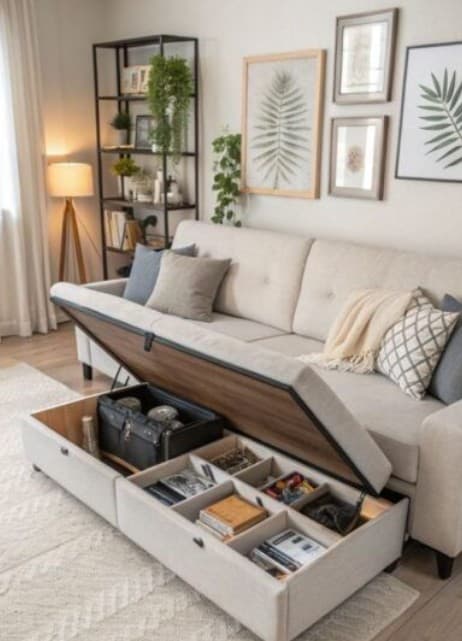
The seat cushion of this sectional sofa has been lifted on a gas-piston hinge, and what's underneath is surprising: a large, deep storage compartment running the full length of the seat section, neatly organized with a divided tray, a small bag and various stored items. Beside it, the chaise section has a pull-out drawer — also open, also full. This is not a small amount of storage. This is a wardrobe's worth of space hidden inside the piece of furniture that takes up the most floor space in the room, storing things that previously had nowhere to go.
How storage sofas work
Most storage sofas use one of two mechanisms: a lift-up ottoman (the seat rises on a gas strut, like a car bonnet) or pull-out drawers beneath the seat. Better storage sofas offer both. The lift-up section provides deep, wide storage for large or irregular items — extra duvets, bulky cables, board games, shoe boxes. The drawers are better for smaller organized items — books, chargers, controllers, craft supplies.
What to store where
The compartment here is being used for travel bags, document folders and miscellaneous smaller items organized in a tray. The drawer beneath the chaise appears to contain magazines, books and loose items. Both are used for things that need to be accessible but don't have a natural home elsewhere. This is exactly the right approach: a storage sofa is not long-term storage — it's the solution for the mid-term, accessible items that usually end up on surfaces.
The room around the sofa
The living room here is styled beautifully to give the functional storage reveal its context: botanical framed art prints (palm leaves, fern fronds) above the sofa in natural wood frames, a cream textured throw over the sofa arm, grey and cream cushions, a white fluffy high-pile rug, a tripod floor lamp and a metal-frame open shelving unit with plants and books to the left. The room is warm, calm and clearly organized — which makes sense, because the sofa is doing a significant amount of the organizational work.
What to look for when buying
When shopping for a storage sofa, test the gas strut (the hinge that holds the seat open) — it should stay open without effort and lower gently when released. Check the drawer action if there are drawers: they should slide smoothly on full-extension runners. And measure the internal dimensions of the storage compartment: depth (usually 25–40 cm), width (the full length of the sofa section) and height (usually 20–30 cm for the lift-up section).
Interior tips
- Organize the inside from the start: add a tray, a couple of small boxes or a fabric divider before you start storing. A compartment with no organization fills up and becomes impossible to use within a month.
- Store things by frequency of use: items you access daily (throws, controllers, chargers) in the drawer; items used monthly (spare duvets, seasonal textiles) in the deeper compartment.
- Botanical art above the sofa ties nature into a neutral room: the palm and fern prints here add life to the wall without colour. They suit the cream and grey palette perfectly.
- A white fluffy rug under a cream sofa is a bold choice — it requires regular cleaning — but the texture contrast between the high-pile rug and the smooth linen sofa is extremely effective.
- A metal-frame open shelf with plants and books adds the vertical interest that a storage sofa, by its low horizontal nature, does not provide. The combination of low, storage-rich sofa and tall, open shelving creates a well-balanced room.
Is a storage sofa actually worth it?
The honest answer is yes — if you have the right situation. A storage sofa typically costs 20 to 40 percent more than a comparable sofa without storage. That premium is worth paying when you genuinely lack storage elsewhere, when you live in an apartment where every piece of furniture needs to earn its floor space, or when the items you need to store (spare duvets, seasonal cushions, extra throws, board games) are bulky and would otherwise require a separate chest or wardrobe.
It is less clearly worth it if you already have adequate storage space, if you prefer a sofa style that requires a fixed base (storage mechanisms usually preclude legs or turned feet), or if a higher seat height creates an issue — the storage compartment beneath the seat does make most storage sofas sit 3 to 5 cm higher than equivalent non-storage models.
Upholstery and long-term durability
Storage sofas are opened frequently, which means the upholstery around the seat perimeter and hinge area sees more stress than a regular sofa. This is important when choosing fabric. Linen and performance fabric hold up well and are easy to spot-clean. Avoid light-coloured velvet around the storage opening — the mechanism and whatever is stored inside can transfer marks onto the pile over time.
If you are considering a leather storage sofa, check the quality of the lift mechanism carefully before purchasing. The gas strut needs to be substantially more robust to lift a leather seat panel, which is significantly heavier than fabric. A poorly made gas strut on a leather sofa fails noticeably faster than on a fabric one.
What to store — and what not to
The lift-up compartment works well for:
- Spare duvets, blankets, and seasonal cushions
- Board games and puzzles
- Extra throw pillows in seasonal colours
- Tangled cables and charger boxes you need occasionally but not daily
Avoid storing:
- Anything recently laundered or slightly damp — moisture in an enclosed space causes mould over a matter of weeks
- Food of any kind
- Heavy books or vinyl records — gas struts have weight limits, and regularly lifting a compartment packed with heavy items shortens the mechanism's life considerably
- Anything you reach for daily — the minor inconvenience of lifting a seat becomes an annoyance if you do it five times a day
Common mistakes when buying
- Not testing the gas strut in the store: a poorly made mechanism is the most common failure point on a storage sofa. The seat should lift with minimal effort, hold fully open hands-free, and lower gently when released. If it drops suddenly in the showroom, it will do so at home.
- Ignoring the internal dimensions: always ask for the depth, width and height of the internal compartment. Depth varies from 20 to 40 cm between models, which is the difference between fitting a king-size duvet and fitting a throw.
- Choosing style over mechanism quality: beautiful upholstery on a poorly engineered storage mechanism is a short-lived purchase. Prioritize the mechanism, the internal dimensions, and the drawer runners before worrying about cushion fill weight and button detail.
Related posts
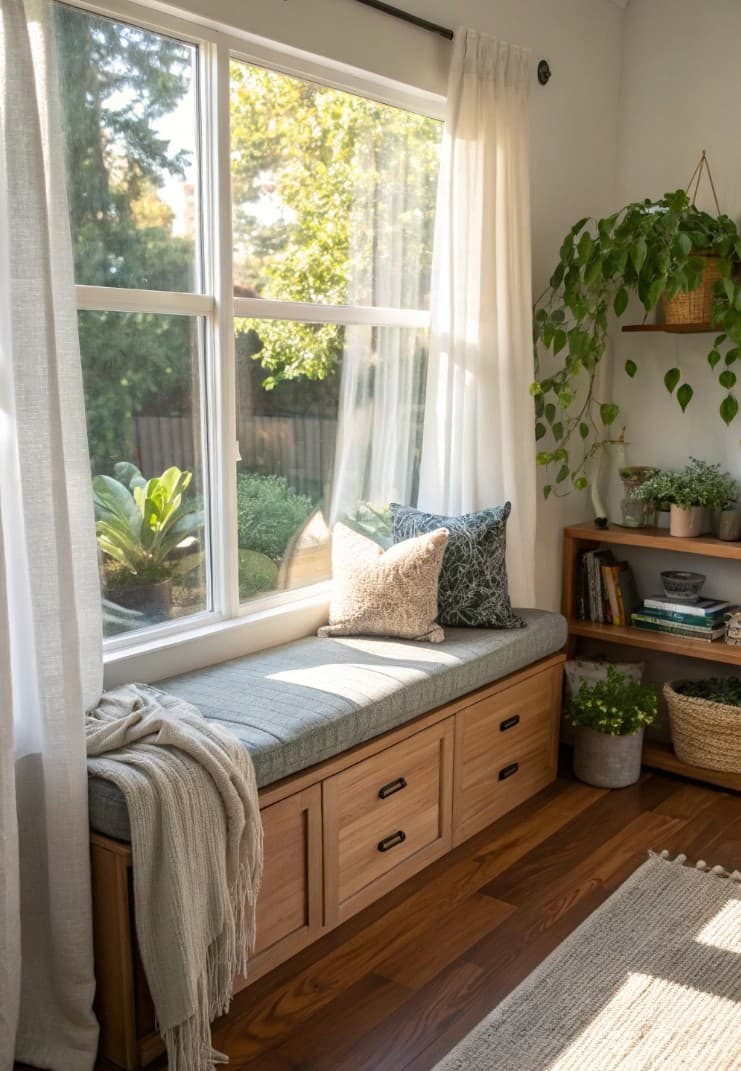
How to Build a Window Seat With Built-In Storage Drawers
A window seat with drawers underneath adds seating, storage and a reading nook in the space a window usually leaves empty.
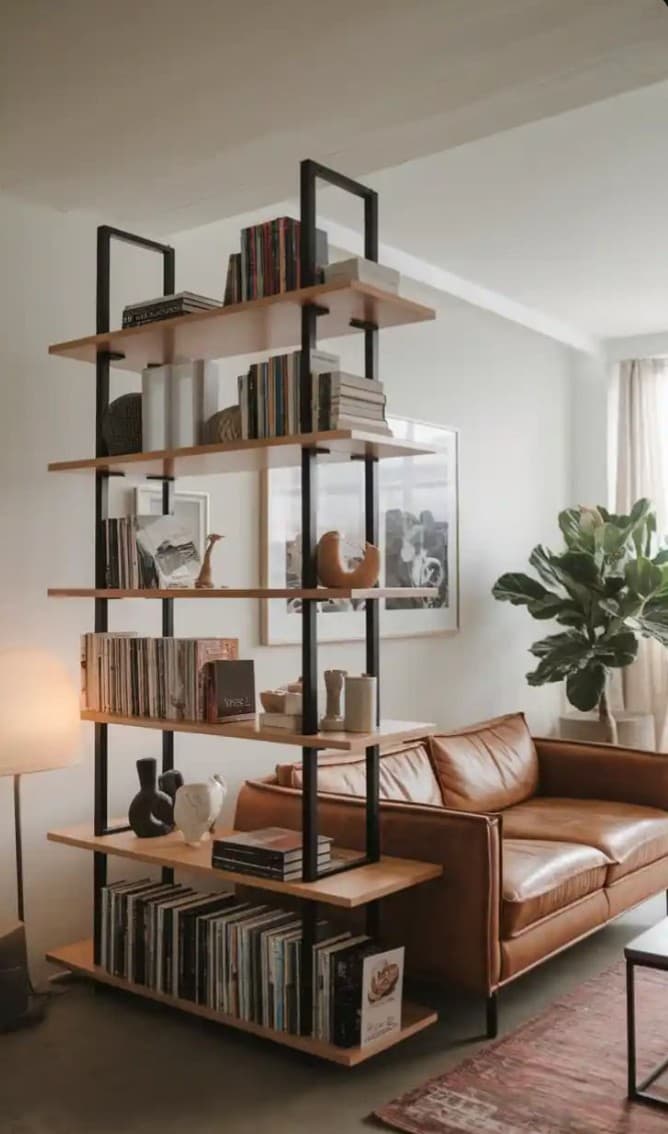
Industrial Shelving Units: The Statement Storage Piece for Modern Living Rooms
A tall black-frame, oak-shelf freestanding unit with books, ceramics and vinyl records becomes the focal point of a living room — here's how to style one.
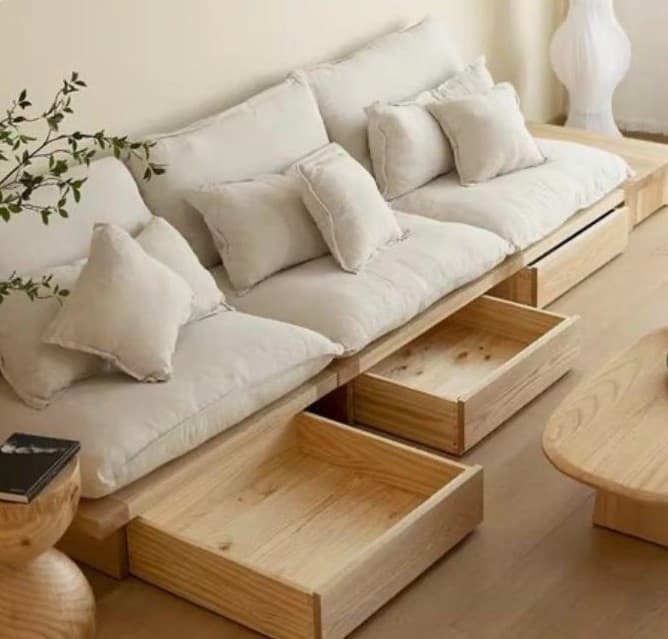
Japandi Platform Sofa With Hidden Storage Drawers: The Ultimate Space-Saver
A low pine platform sofa with pull-out drawers underneath stores as much as a wardrobe while taking up the footprint of a sofa. Here's why this is one of the smartest furniture ideas around.