Industrial Shelving Units: The Statement Storage Piece for Modern Living Rooms
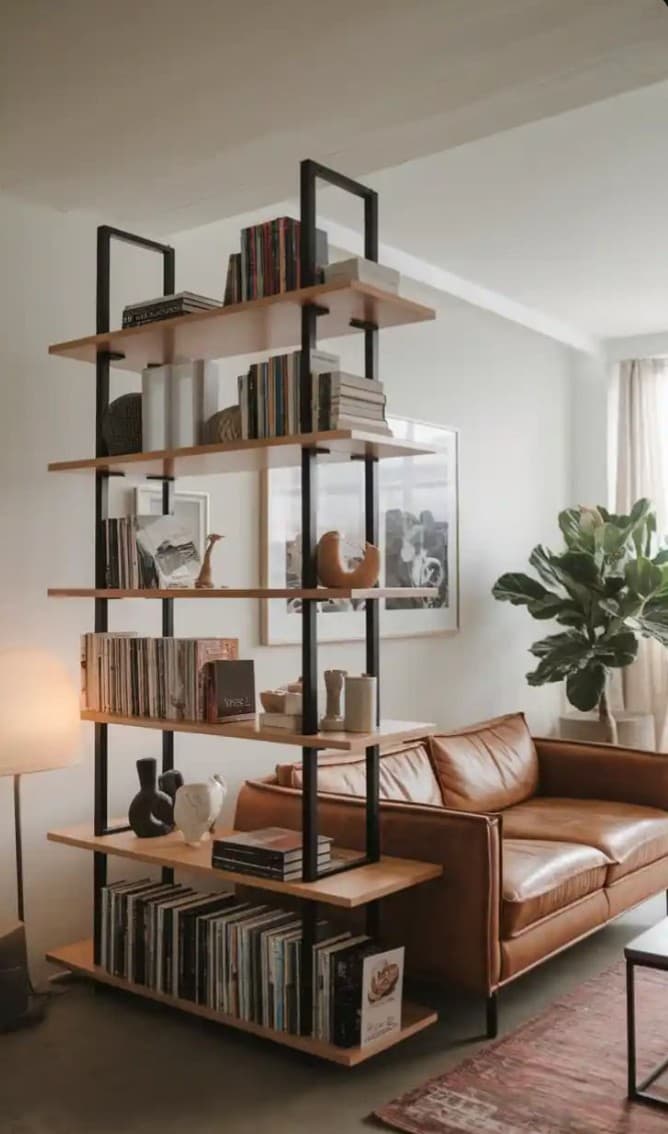
The tall black-frame shelving unit in this living room is doing more work than any other piece of furniture in the space. It holds books, records, ceramics and art. It provides vertical interest in a room where everything else sits low. And behind it, a cognac leather sofa and a fiddle leaf fig in the corner complete one of the most considered contemporary living rooms you'll see.
The black frame and oak shelf combination
Black steel frames with warm oak shelves is one of the defining material combinations of contemporary interior design. The contrast works because each material brings something the other lacks: the steel is cold, precise and structural; the oak is warm, natural and textured. Together they produce a look that is simultaneously industrial and domestic — modern without being cold.
This style of unit is available from several manufacturers at various price points, from IKEA's FJÄLLBO at the budget end to custom welded steel units at the premium end. The mid-range market has expanded considerably in the last few years, with brands like String, Montana and Tiptoe offering configurations that sit comfortably between flat-pack and bespoke.
Choosing the right size unit for your space
Before buying, measure twice. A shelving unit that's too short in a room with high ceilings will look unconvincing — it needs to reach at least two thirds of the ceiling height to anchor the wall. Too wide, and it swallows the room. The sweet spot for most living rooms is a unit between 180 and 220 cm tall and between 80 and 120 cm wide.
Depth matters as much as width. Standard shelving depths run from 20 cm (display only) to 35 cm (books and objects). Go deeper than 35 cm and the shelves start to look cavernous; shallower than 20 cm and nothing sits stably. For a mix of books, ceramics and display objects, 30 cm is usually ideal.
How to style a tall open shelving unit
The shelves here are styled with genuine intention. Starting from the top:
- Upper shelves: oversized books laid flat, stacked to create platforms for smaller objects
- Middle shelves: a mix of upright books, ceramic objects, small framed art leaning against the back — the back of the unit has a large framed artwork behind it, visible through the shelves
- Lower shelves: vinyl records stored vertically, small ceramic vessels, a sculptural bird figure
- Floor level: more records, books, creating a sense that the collection extends beyond the unit itself
The rule that ties these levels together is contrast: some things tall, some things small; some things grouped, some things isolated; some shelves dense, some shelves spare. The eye needs variety to stay interested.
Where to position the unit in the room
A black-frame shelving unit works best as a statement wall — one dedicated surface where the unit has room to breathe. Flanking a TV with symmetrical units can work, but a single large unit positioned as an alternative to a TV wall creates a room that feels genuinely unique. If possible, centre it on the longest wall and keep both sides clear of competing furniture.
Natural light is worth thinking about. Shelving positioned near a window will have the objects on it subtly backlit, which looks beautiful but can cause glare on a TV if the unit is positioned close to one. Artificial light from a floor lamp or shelf-mounted LEDs is often more controllable.
The leather sofa behind it
The cognac leather sofa is a bold pairing with a black-frame shelf. Warm leather and cool black steel should clash — but they don't, because the oak shelves mediate between them. The fiddle leaf fig in the corner adds green that softens both the leather's warmth and the steel's coolness.
Vinyl records as display
The records stored vertically on the lower shelves are both practical and decorative — their spines add graphic texture and the hint of a collection that goes beyond what's visible. Books and records together on a shelf suggest a person who reads and listens: it's one of the most characterful displays you can create.
Common mistakes when styling open shelves
The most common error is overfilling. A shelf that is packed end to end with books or objects stops reading as a curated display and starts reading as a storage problem. Leave at least 20–30% of each shelf empty — those gaps are not wasted space, they're what makes the filled areas look intentional.
The second most common mistake is styling shelves with objects that have no relationship to each other. A ceramic vessel, a marble sphere, a picture frame, a toy and a candle from five different aesthetic worlds placed on the same shelf creates visual noise. Work with a limited material palette — natural ceramics, warm wood, aged brass — and repeat it across shelves so the whole unit reads as one composition.
Interior tips
- Lean art against the back wall through the shelf frames rather than hanging it — this creates depth and a layered effect that hanging alone doesn't achieve.
- Keep a fiddle leaf or large leafy plant nearby — the organic form contrasts beautifully with the geometric precision of a black-frame shelf.
- Vary shelf heights where the system allows: tall gaps for large books and objects, shorter gaps for stacked items.
- Don't fill every shelf: the empty spaces give the eye somewhere to rest and make the filled shelves feel more deliberate.
- A floor lamp beside the unit creates a reading corner and adds warm light at a height that overhead lighting can't reach.
- Group objects in odd numbers: three objects on a shelf almost always look better than two or four. This applies to ceramics, candlesticks, plants and frames alike.
- Dust regularly — open shelves are beautiful but unforgiving. A thin layer of dust on ceramic objects dulls the entire display. A quick wipe-down every week or two keeps everything looking sharp.
Related posts
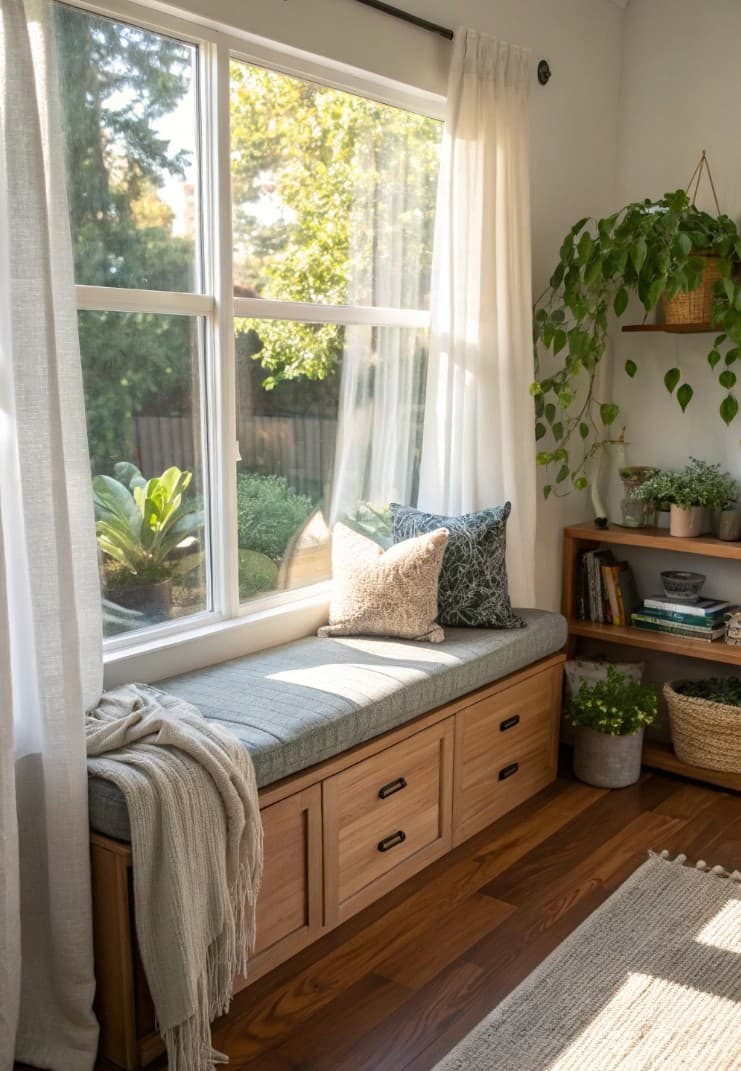
How to Build a Window Seat With Built-In Storage Drawers
A window seat with drawers underneath adds seating, storage and a reading nook in the space a window usually leaves empty.
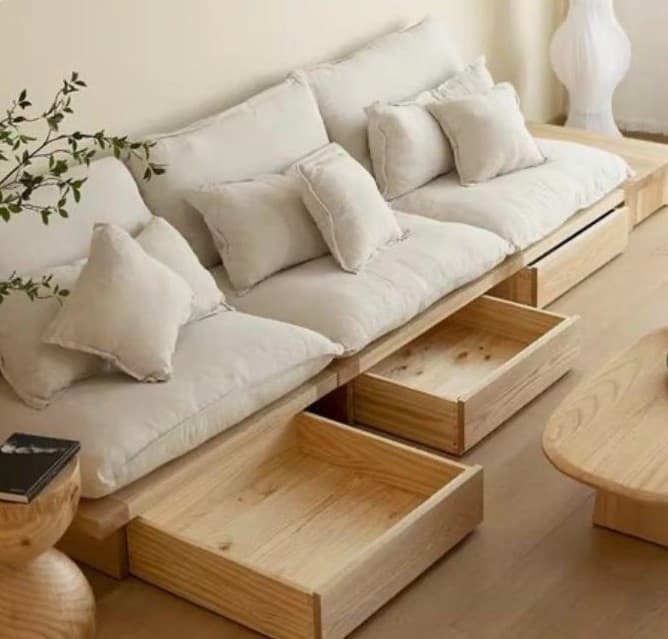
Japandi Platform Sofa With Hidden Storage Drawers: The Ultimate Space-Saver
A low pine platform sofa with pull-out drawers underneath stores as much as a wardrobe while taking up the footprint of a sofa. Here's why this is one of the smartest furniture ideas around.
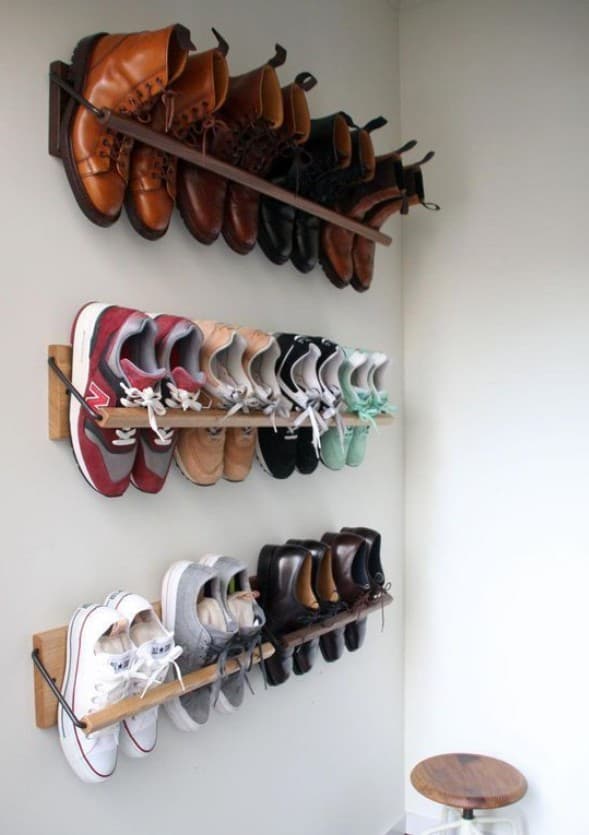
Wall-Mounted Shoe Rails: The Smartest Shoe Storage Idea
Tired of shoes cluttering your entryway? Wall-mounted shoe rails keep everything visible, accessible and off the floor — and they look great doing it.