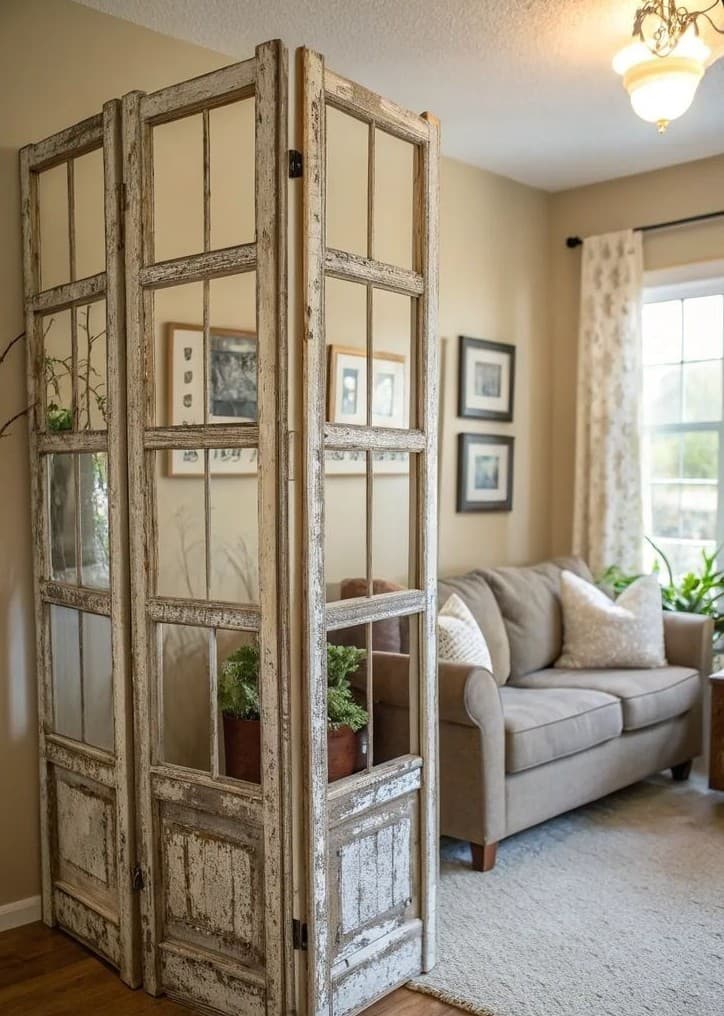
Three old window frames, joined at their edges with hinges to form a folding screen, stand between the entrance and the living room behind it. The frames are painted in a chalky, matte white that has been lightly distressed to reveal traces of the original timber beneath — the kind of finish that comes from years of weather or from deliberate sanding with fine grit sandpaper. The glass panes in the upper sections of each frame are intact, providing translucency without full transparency: the living room behind is visible in outline but not in detail. In the lower panels of the folding screen, where the original window would have had solid wood or lower glass, small potted ferns and trailing plants sit in the recesses. The screen divides the space without blocking light, and it brings plants into an unusual vertical position.
Where old windows come from
Old window frames are available from architectural salvage yards, demolition companies, antique dealers and online platforms. Look for frames with intact glass panes (replacing panes is possible but adds a step) and robust joinery — the frames need to support their own weight when hinged together and stood vertically. Sizes vary enormously; for a room divider, consistent height across all three frames matters more than width.
How to join three frames as a screen
The three frames are connected with two hinges each — one at the top of the joint and one at the bottom. Heavy-duty strap hinges in black metal or antique brass suit the aesthetic. The hinges need to be positioned so the frames can fold both ways (allowing you to angle the screen as needed) or one way only (creating a stable standing position). For stability, the screen needs to fold at a slight angle rather than standing perfectly flat.
The distressed white finish
A chalky white or off-white paint applied directly over the original timber (no primer needed for a distressed effect) then lightly sanded at the edges, corners and raised mouldings creates the finish visible here. The key is using matte or eggshell paint — any sheen undermines the aged quality. Apply one coat, let it dry completely, then sand lightly with 220-grit sandpaper on the areas most likely to show natural wear.
Plants in the lower panels
The small potted plants sitting in the lower recesses of the frame panels are one of the most inventive details of this piece. The solid or partial-glass lower panels of old window frames often have a natural ledge or recess that holds a small pot without any modification needed. Ferns, small succulents and trailing plants all work well in this position.
Interior tips
- Use the screen at the entrance to a living room rather than in the middle of a room: a folding screen as an entry point creates a threshold — a moment of transition before the room reveals itself.
- Position plants in the lower panels only: placing plants in the upper glass panels would require modifying the glass and would block the translucency that makes the screen so effective.
- Three frames is more stable than two: a two-panel screen is inherently unstable and requires careful positioning. Three panels allow a zigzag folding position that stands without support.
- Distressing corners and edges specifically: the natural wear pattern on real antique furniture happens at the edges, corners and most-handled surfaces — the places where paint wears away first. Sanding the same places creates a convincing result.
- Let the room behind be partially visible: the translucency of the glass panes is the key feature. Don't position the screen so that the room behind is completely obscured — the sense of something behind the screen is part of the appeal.
Related posts

How to Frame a Doorway with Plants for a Stunning Kitchen View
Trailing plants on a shelf above a black-framed doorway, floor plants on either side, and a warm Scandi kitchen beyond — how to make a transition space the most beautiful part of your home.

The Hygge Living Room: Layering Textures, Candles and Natural Materials
Patterned cushions, chunky knit throws, wooden tray tables, candles and eucalyptus — how to build a living room that feels genuinely cosy all year round.
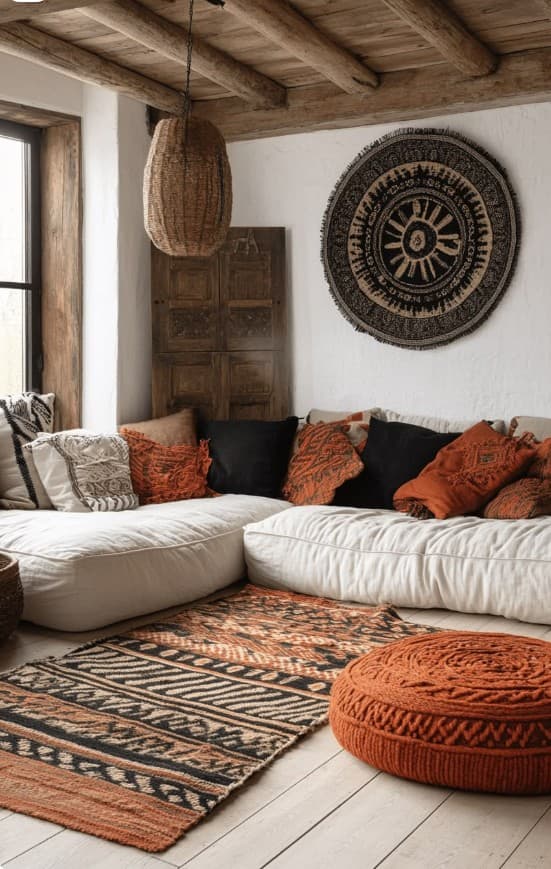
Rust, Black and White: The Boldest Boho Palette in One Living Room
A low white sectional sofa loaded with rust-orange ethnic cushions, a black circular wall tapestry, a bold kilim rug and a rattan pendant — this is boho living room design at its most confident and distinctive.