
Most doorways are openings, not destinations. This one is different. A wide shelf sits just above the door frame, crowded with trailing plants that cascade down on both sides. Floor plants — a large-leafed specimen on one side, a small olive tree on the other — frame the opening at ground level. A jute runner leads the eye through. And at the end of the view: a warm Scandinavian kitchen with open shelves, a pendant light, and more plants.
The doorway becomes a frame, and what it frames is a picture.
The overhead plant shelf
The single most impactful element here is the shelf mounted just above the door frame. A floating wooden shelf — ideally at the same depth as the door architrave — runs the full width of the opening and holds a row of plants, ceramics and small objects. From this shelf, trailing plants cascade downward, framing the door on both sides with living green curtains.
For this to work, the plants need to trail significantly. The best choices for an overhead shelf are:
- Pothos (Epipremnum aureum) — fast-growing, tolerant of lower light, trails dramatically
- String of pearls (Senecio rowleyanus) — delicate and sculptural, needs more light
- Heartleaf philodendron — broad leaves, long vines, very forgiving
- Devil's ivy — nearly indestructible, trails 2 m or more given time
- Creeping fig — fine-leafed and elegant, clings to surfaces if allowed
Plant three or four varieties along the shelf rather than one species. The variation in leaf size and growth habit looks more natural and interesting than a single plant repeated.
The black door frame
The door frame is painted black, and this is a more important decision than it might seem. A black frame makes the doorway itself a graphic element — a bold rectangle that defines the boundary between two spaces clearly and beautifully. Against the white wall and the natural wood shelf, the black reads as a considered accent rather than a heavy feature.
If your door frame is currently a standard white, painting it black is one of the highest-impact, lowest-cost changes you can make to an interior. Use a satin or eggshell finish — flat black scuffs too easily in a high-traffic area, and gloss black reads as too sharp.
The floor plants
Two large floor plants anchor the bottom of the doorway, one on each side. On the left, a large glossy-leafed tropical plant in a plain grey pot. On the right, a small olive tree in a pale ceramic pot. Different plants, similar pot tones — this is the rule that keeps a mixed plant grouping feeling cohesive.
The floor plants here serve a structural role: they lead the eye from floor level up to the trailing plants above, so the whole doorway is filled with green from top to bottom. Without them, the overhead shelf would feel disconnected from the ground.
For the floor plants, choose species that grow upright or outward rather than trailing — you want them to fill space, not add more downward movement.
The jute runner
A jute or sisal runner centred in the doorway defines the path through it and adds warmth and texture at floor level. A runner in a transition space does something a full rug cannot: it emphasises the linear quality of the space, drawing the eye forward and through.
For a plant-heavy doorway, a natural fibre runner — jute, seagrass or coir — is the right choice. It reinforces the organic quality of the plants without competing with them. An patterned or coloured runner would fight for attention in a space where the plants are already the focus.
The Scandi kitchen beyond
The kitchen glimpsed through the doorway is worth noting: open wooden shelves, a black pendant, a marble or white stone worktop, plants on every shelf. The kitchen's palette — light oak, black, white, green — mirrors the hallway's exactly. This is how a home feels coherent rather than like a series of disconnected rooms: matching the materials and tones from space to space, even when the rooms serve completely different functions.
If you are planning this look, start with the doorway and work backward and forward simultaneously: the space you approach the door from, and the space you see through it, should share at least two material references.
The LED shelf lighting
Look closely at the shelf: a warm LED strip light runs along its underside, casting a soft downward glow that illuminates the trailing plants from above. This detail is subtle but important — it means the plants are lit even when the room's main lights are off, and it makes the shelf readable as a designed element rather than a storage surface.
LED strip lights for shelves are inexpensive and easy to fit with a plug-in adapter. Choose a warm white strip (2700K) and install it at the back of the shelf's underside so the strip itself is not visible from below, only the light it produces.
Common mistakes to avoid
- Plants that do not trail far enough. Young trailing plants have short vines. Buy the most mature specimens you can find, or accept that this look develops over 12–18 months as your plants grow.
- A shelf that is too narrow. A shelf under 20 cm deep will not hold decent-sized plant pots. Aim for 25–30 cm depth.
- Mismatched pot colours. Pots in five different colours make a grouped planting look chaotic. Choose two or three complementary tones — here, cream, pale grey and natural terracotta — and stick to them throughout.
- Forgetting to water. Plants on a high shelf are easy to forget. Set a weekly reminder and water them from a step ladder rather than trying to manage it from below.
- A corridor that is too narrow. This look works in an opening that is at least 80–90 cm wide. In a narrower space, the floor plants will block the path.
Interior tips
- Add a small grow light above the shelf if the hallway gets limited natural light. A discreet black LED grow light can keep trailing plants healthy in spaces that would otherwise be too dark.
- Use a moisture meter for the shelf plants. Overwatering is the most common cause of failure for indoor trailing plants, and a meter takes the guesswork out.
- Frame an abstract print on the wall beside the doorway to give the eye something to rest on between the doorway and the nearest piece of furniture.
- Tie trailing vines loosely with jute twine to the sides of the door frame as they grow, encouraging them to frame the door rather than just hang straight down.
- Photograph the doorway from the far end of the kitchen as well as from the living room side. The reverse view — looking out through the plant frame into a well-lit living room — is often equally beautiful.
Related posts

The Hygge Living Room: Layering Textures, Candles and Natural Materials
Patterned cushions, chunky knit throws, wooden tray tables, candles and eucalyptus — how to build a living room that feels genuinely cosy all year round.
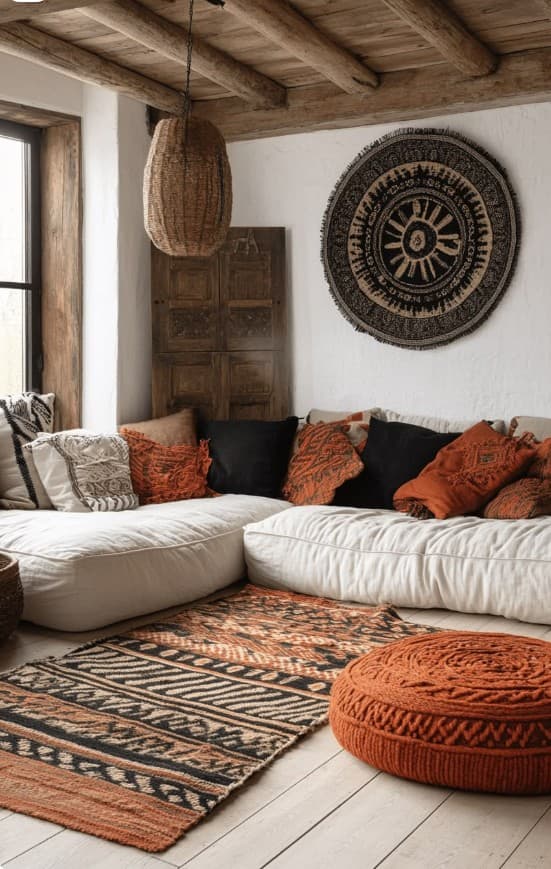
Rust, Black and White: The Boldest Boho Palette in One Living Room
A low white sectional sofa loaded with rust-orange ethnic cushions, a black circular wall tapestry, a bold kilim rug and a rattan pendant — this is boho living room design at its most confident and distinctive.
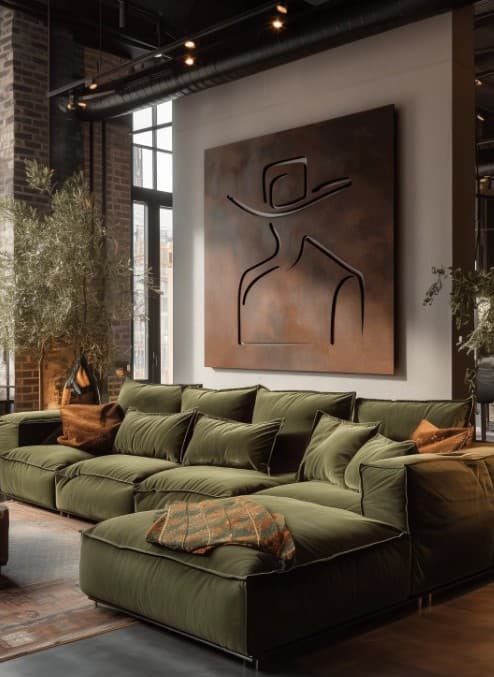
How to Style a Dark, Dramatic Living Room With a Green Velvet Sofa
A large green velvet sofa against an industrial backdrop is one of the boldest moves in interior design — and one of the most rewarding. Here's how to pull it off.