
Hygge is not a style. It is a feeling — and this living room captures it completely. The grey sofa is buried in layered cushions and throws. Two wooden tray tables hold candles and plants at different heights. A chunky knitted rug covers the floor. There are no hard surfaces, no sharp edges and nowhere to look that does not offer warmth or texture.
Here is how to build it for yourself.
The layered cushion approach
The sofa in this room carries five or six cushions in an overlapping mix of patterns, textures and sizes — and it works because the colours are disciplined. Every cushion stays within a palette of grey-blue, sage green, cream and natural linen. No bright colours, no high contrast, no sharp graphic prints.
The mix of patterns is key: a large botanical print, a woven geometric, a chunky knit, a plain linen. When every cushion is the same texture or the same scale of pattern, the result looks flat. When you mix scales and textures within a controlled palette, the result looks like it was gathered over time — the best kind of home.
Use cushions with feather pads rather than foam inserts. Feather cushions can be scrunched and plumped; foam ones stay rigid and look it.
The throw as decoration
A fringed throw — draped loosely over the back corner of the sofa, not folded neatly — is both functional and beautiful. The fringe adds movement. The looseness adds ease. A throw that looks as though someone just used it and left it there is infinitely more appealing than one arranged with geometric precision.
For hygge, choose throws in natural fibres: wool, cotton, linen or a blend. Synthetic fleece blankets are warm but they are not hygge — they read as practical rather than beautiful.
The wooden tray coffee tables
Two different-sized coffee tables — a round wooden tray table and a lower wicker stool table — replace a single central coffee table, and the effect is much more interesting. The variation in height adds rhythm. The different materials (wood and wicker) add texture. And the open floor space between them makes the seating area feel less rigid.
Style each table simply: the larger one holds a cluster of candles of different heights, a small plant and a book. The smaller one holds a pillar candle and a stone bowl. The objects are not identical, but they rhyme — natural materials, rounded shapes, warm tones.
Candles as the primary light source
In this room, the candles are not decorative. They are light. Three pillar candles on one table, a cluster of smaller votives on another — together they provide most of the warm light the room needs in the evening.
Pillar candles burn best when you let them burn long enough on each use to melt the wax to the edge of the vessel. Short burns create a tunnel down the centre of the candle and waste most of the wax. For hygge living, buy good quality unscented white or cream pillar candles in varying heights.
If you are burning candles frequently, a candle plate or tray beneath them catches drips and makes the arrangement easier to manage.
Eucalyptus and greenery
A generous bunch of eucalyptus in a glass jar adds the fresh, slightly medicinal scent that makes a room feel alive. Eucalyptus is one of the best plants for a hygge living room because it dries beautifully — you can leave a bunch for weeks and it gradually shifts from fresh green to dusty silver, still beautiful at every stage.
Pair it with a small potted plant in a plain grey or white pot on the other table. Two different types of green — one fresh and cut, one potted and growing — give more visual interest than either alone.
The chunky knitted rug
A large, hand-knitted or machine-knit chunky rug in off-white or natural wool underlines the entire seating area. The texture is the point: you want something that looks like it belongs in a mountain cabin, something you would not mind sitting on directly.
Chunky knit rugs are available from H&M Home, Zara Home and specialist rug makers on Etsy at a range of prices. Choose a size that extends at least 30 cm beyond the coffee tables on all sides — a rug that only sits under the tables looks like an underlay, not a design choice.
The decorative ladder
A wooden ladder leaned against the wall in the background serves as a display surface for trailing plants and throws, and as a visual element that adds height to a corner that would otherwise be empty. A simple wooden ladder — painted, natural or distressed — costs very little and adds a lot.
Common mistakes to avoid
- Too many patterns in too many colours. The pattern mix works here precisely because every pattern stays within the same four-colour palette. Introduce a fifth colour and the whole thing unravels.
- Cheap candles. Paraffin candles smoke, smell chemical and burn unevenly. Invest in beeswax or soy candles — the light they produce is better and the experience of burning them is too.
- A rug that is too small. A small rug in a large seating area makes the room feel like furniture in a showroom. Go larger than feels comfortable in the shop.
- Styled tables that cannot actually be used. You need somewhere to put your coffee cup. Leave one clear space on each table for actual use.
- Eucalyptus in a formal vase. A loose bunch in a large glass jar looks much more natural and intentional than eucalyptus arranged in a cut-glass vase.
Interior tips
- Mix three candle heights on each table: tall, medium and short. The variation in height creates depth and drama.
- Add a woven basket beside the sofa for spare throws — it keeps the room tidy without requiring a dedicated storage space.
- Refresh eucalyptus bunches every few weeks once they become too dry and dusty. Dried eucalyptus can be composted or used in a fireplace.
- Use a tray to unify a table grouping. A round wooden tray under your candles and objects groups them visually and makes the arrangement easier to move when you need the surface.
- Buy a spare throw. One goes on the sofa; one is stored in the basket. Hygge requires readiness — you should never have to hunt for warmth.
Related posts

How to Frame a Doorway with Plants for a Stunning Kitchen View
Trailing plants on a shelf above a black-framed doorway, floor plants on either side, and a warm Scandi kitchen beyond — how to make a transition space the most beautiful part of your home.
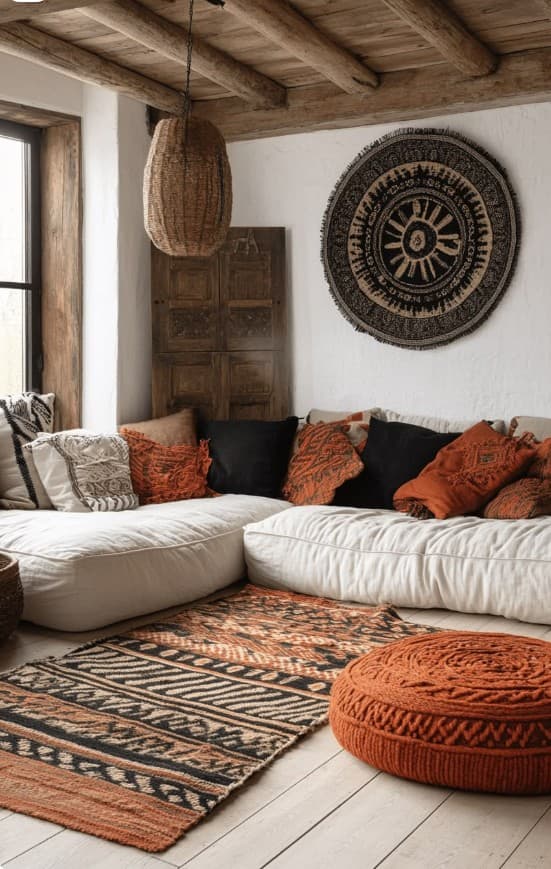
Rust, Black and White: The Boldest Boho Palette in One Living Room
A low white sectional sofa loaded with rust-orange ethnic cushions, a black circular wall tapestry, a bold kilim rug and a rattan pendant — this is boho living room design at its most confident and distinctive.
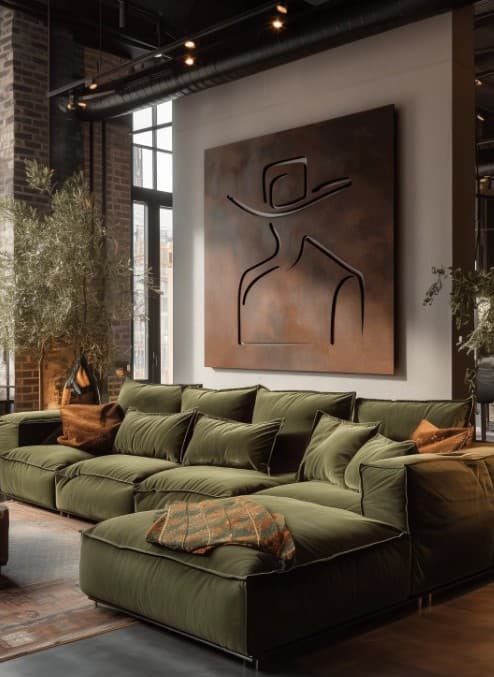
How to Style a Dark, Dramatic Living Room With a Green Velvet Sofa
A large green velvet sofa against an industrial backdrop is one of the boldest moves in interior design — and one of the most rewarding. Here's how to pull it off.