The Antique Wheel Coffee Table: How to Style a Living Room Around One Statement Piece
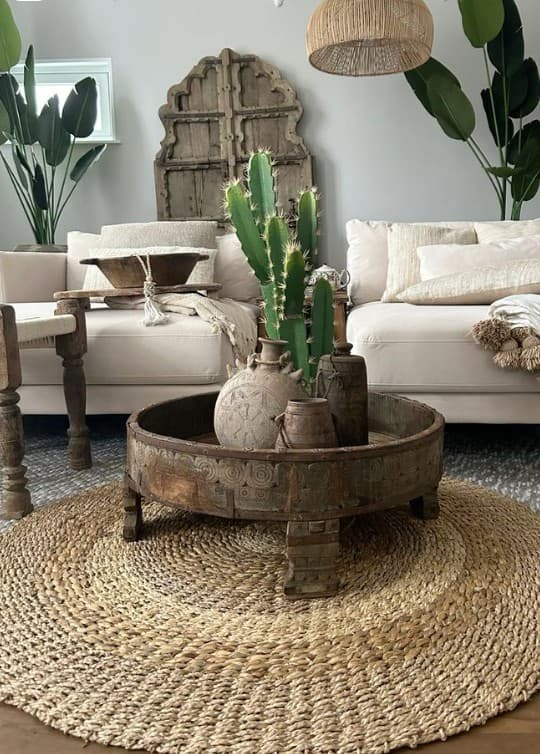
At the centre of this living room is one of the most extraordinary coffee tables imaginable: a carved antique Indian grain wheel — the kind historically used for processing grain — mounted horizontally on short legs. The wheel is dark, aged wood with intricate geometric carvings around its circumference and spokes radiating from the centre. On top of it, a large terracotta-toned ceramic vessel and a slender ceramic jug. Rising from behind the table: a tall green cactus. To the left: a bird of paradise in full leaf. To the right: another large-leafed tropical. Behind the sofa: a carved arched Moroccan-style wooden panel, leaning against the wall. Above: a rattan dome pendant. On the floor: a large circular jute rug. Everything in this room has been chosen to let that wheel table be the hero.
What makes a statement piece work
A statement piece is an object so distinctive that it determines the character of the whole room. Everything else — the sofa, the plants, the rug, the lighting — must support it rather than compete with it. This grain wheel table succeeds because every other choice in the room is restrained: the sofa is white and plain, the rug is natural jute, the pendant is simple woven rattan. The drama lives in the table and the carved wooden panel. Everything else gives it space.
The antique grain wheel
Traditional Indian grain wheels (chakra charkhi) were agricultural tools — heavy, hardwood, elaborately carved because craftsmanship was applied to everything, even tools. When removed from context and mounted on legs, they become one of the most striking coffee tables available, combining genuine age and history with a form that's inherently beautiful. Sourcing these requires specialist antique dealers, Indian furniture importers, or online platforms like Etsy and Chairish.
The cactus as the vertical element
A large columnar cactus — blue cereus or similar — rising from behind the table provides the vertical counterpoint to the wide horizontal wheel. The spiky, architectural form of the cactus contrasts with the carved organic curves of the wheel and the leafy softness of the tropical plants, making the room feel more dynamic. Cacti also require almost no maintenance, which makes them a practical choice for a display-oriented room.
The carved arched panel
The wooden panel leaning against the back wall is a carved Moroccan or Indian-style archway — the kind of decorative panel that would once have framed a doorway or window. Leaning rather than mounted, it has a casual confidence and can be repositioned without any commitment. It adds architectural scale to the back wall and continues the theme of antique carved wood that the coffee table introduces.
Interior tips
- A white or off-white sofa is non-negotiable when your coffee table is a statement: any colour or pattern on the sofa would fight with the wheel. The sofa's job here is to be a background.
- A circular jute rug under a round coffee table creates perfect concentric circles at floor level. The rug should be significantly larger than the table — if the table is 80 cm in diameter, the rug should be at least 200 cm.
- Keep the table surface nearly empty: the carvings on the wheel are the surface. One or two vessels on top — no more. A styled table with too many objects obscures the thing you bought it for.
- Tropical plants at different heights: the layering here — tall cactus behind, bird of paradise to the side, smaller plants beside the sofa — fills the room at three different heights without crowding the floor.
- Let the carved panel lean: a panel like this never needs to be wall-mounted. Its leaning angle gives it a casual presence that a rigidly mounted piece would lose.
Related posts

How to Frame a Doorway with Plants for a Stunning Kitchen View
Trailing plants on a shelf above a black-framed doorway, floor plants on either side, and a warm Scandi kitchen beyond — how to make a transition space the most beautiful part of your home.

The Hygge Living Room: Layering Textures, Candles and Natural Materials
Patterned cushions, chunky knit throws, wooden tray tables, candles and eucalyptus — how to build a living room that feels genuinely cosy all year round.
Rust, Black and White: The Boldest Boho Palette in One Living Room
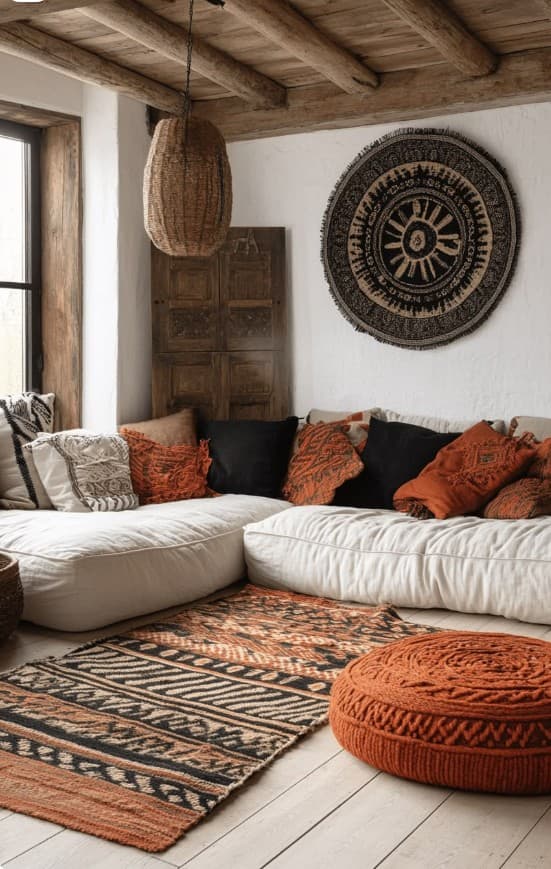
A low white sectional sofa loaded with rust-orange ethnic cushions, a black circular wall tapestry, a bold kilim rug and a rattan pendant — this is boho living room design at its most confident and distinctive.