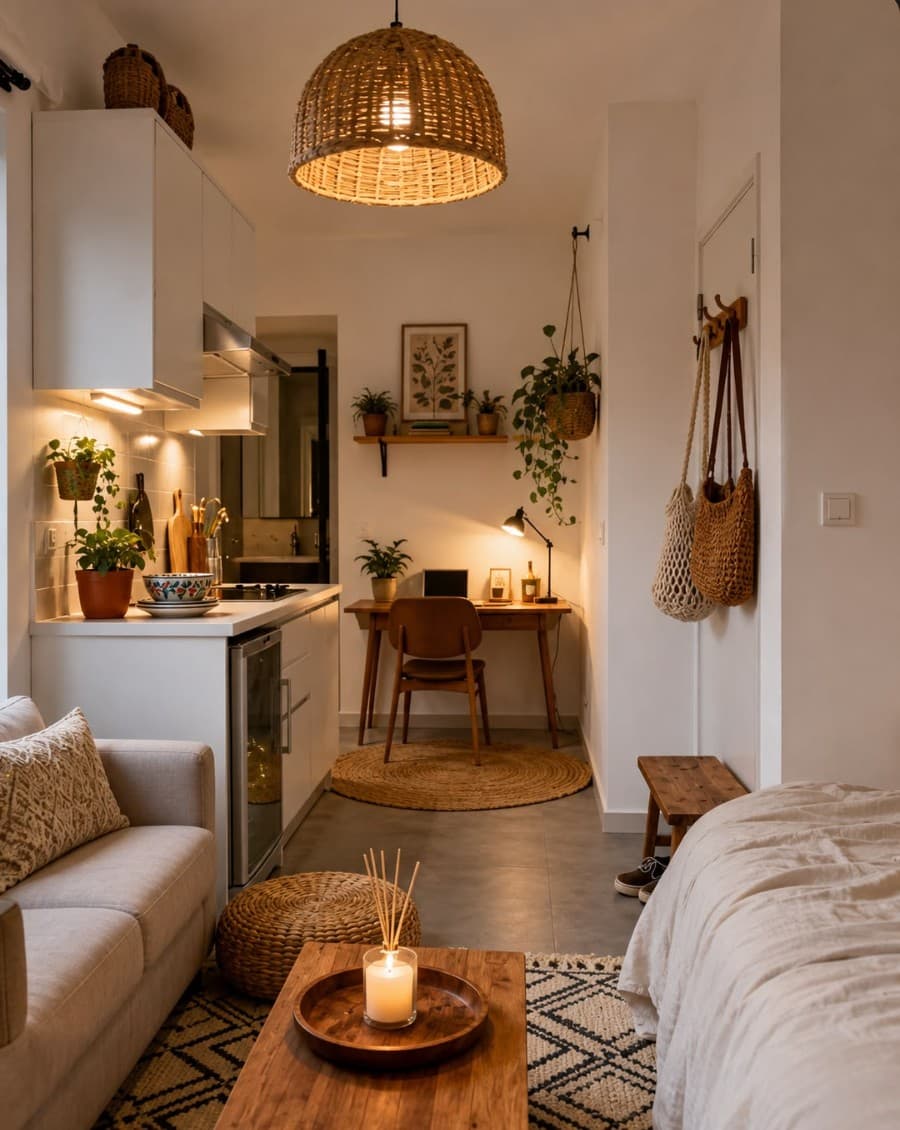
Standing at one end of this studio apartment you can see everything: the kitchen on the left with under-cabinet lighting and open shelves, the living area in the foreground with a sofa, coffee table and candle, the small desk workspace in the middle distance with a warm desk lamp and jute rug, and the bed at the far end. The large rattan dome pendant fills the ceiling above. It is one room doing the work of four — and it works because every zone is defined, every detail is warm, and nothing feels accidental.
The rattan dome pendant as the anchor
The oversized rattan dome light hanging in the centre of the room is the single most impactful element. It defines the "living room" zone by marking the ceiling above it, provides warm ambient light over the main social area, and immediately establishes the room's boho-natural aesthetic. A pendant this large and this tactile commands the whole room without overwhelming it.
If you're choosing a pendant for a studio, oversized is almost always better than undersized. A small pendant in a high-ceilinged studio looks lost; a large pendant makes a confident statement that ties everything beneath it together. Rattan, wicker and woven materials work particularly well because their texture reads clearly even from a distance.
Four zones in one space
Kitchen: white units with black handles, under-cabinet LED strips, a wine cooler integrated under the counter, open shelving with plants and a wooden chopping board on display. Small but complete.
Living area: a cream sofa, a low wooden coffee table with a candle and reed diffuser on a wooden tray, a patterned black-and-cream rug. The coffee table styling is minimal and deliberate.
Desk zone: a small wooden desk with a mid-century chair, a warm desk lamp, a botanical print on the wall, a shelf above with plants and books. The jute circle rug under the desk defines the zone at floor level.
Bedroom: just visible at the far end — a bed with white bedding and a patterned textile, positioned away from the other zones for maximum privacy.
Defining zones without walls
The most effective zone-defining tools are rugs, lighting and furniture orientation — not physical dividers. Each zone in this apartment has its own rug, its own light source and furniture that faces inward rather than outward. This creates the sense of being in a distinct space even though there are no barriers.
The sequence matters too. High-traffic zones — kitchen and living area — should sit closest to the entrance. The bedroom should always be at the furthest point from the front door. The desk sits naturally between the two: accessible from the living area but slightly removed from it.
Creating a sense of privacy for the bedroom zone
In a studio apartment, the bedroom zone will always be visible from other areas. The goal isn't to hide it but to make it feel separate enough that you're not staring at your bed when you're trying to relax on the sofa.
Effective approaches include:
- Positioning the bed to face away from the main living area so the headboard, not the foot of the bed, is visible from the sofa
- A low shelf or console table at the foot of the bed acts as a soft boundary without blocking light or air
- Consistent bedding in a neutral tone that quietly recedes into the background rather than demanding attention
- A curtain on a ceiling track that can be drawn for privacy when needed and pulled back entirely during the day
Wall hooks as a feature
The wooden wall-mounted hook rail near the entrance holds bags, a macramé net bag and a coat — functional storage that doubles as a display. The mix of bag types and textures creates a casual, lived-in energy at the entry point of the apartment.
Common mistakes when zoning a studio
The most common mistake is trying to cram every zone into equal-sized portions of the floor plan. In reality, the living area usually deserves the most space because it's where you spend most of your waking hours. The bedroom needs the least — only enough space for the bed and basic movement around it.
The second mistake is using too many colours or styles across zones. A studio apartment that has a modern kitchen, a Scandi living area, a boho desk zone and a maximalist bedroom feels fragmented and exhausting. Choose one overarching aesthetic and vary only the mood, not the style, between zones.
Interior tips
- A jute circle rug under the desk signals "this is a different space" without any physical barrier.
- A reed diffuser or candle on the coffee table adds scent to the room — an easy detail to skip, but it does more for the feel of a space than another object would.
- LED strips under kitchen cabinets at the warm end (2700K) match the tone of the desk lamp and pendant, keeping all the light sources in the same family of warmth.
- Keep the bedding simple and white: with so much going on in the rest of the room, a neutral bed disappears into the background and makes the overall space feel less busy.
- Botanical prints and hanging plants at the desk zone reinforce the boho-natural theme while making the work corner feel like a place you'd actually want to sit.
- Match floor finishes across zones: different flooring in different zones creates fragmentation. One consistent floor material — pale wood, polished concrete or a single pale tile — reads as one coherent space that has been thoughtfully divided.
Related posts

How to Style a Hallway with a Large Monstera and Uplighter
A statement monstera in a ribbed pot with an uplighter beneath it transforms a hallway into the most memorable part of your home. Here is how to do it well.
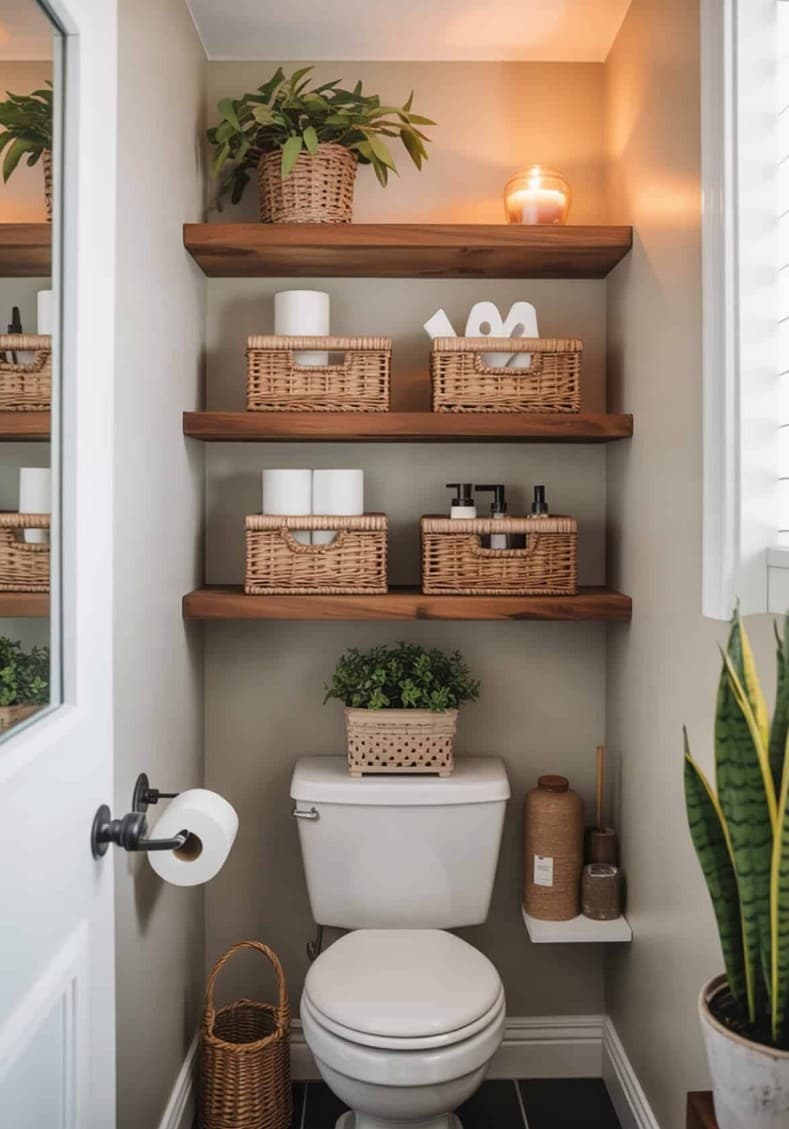
Three Walnut Shelves Above the Toilet: The Bathroom Storage Idea That Changes Everything
Three dark walnut floating shelves above the toilet, each holding wicker baskets with toiletries, a large plant, an amber candle and a snake plant on the floor — this is how to make a small bathroom look considered and beautiful.
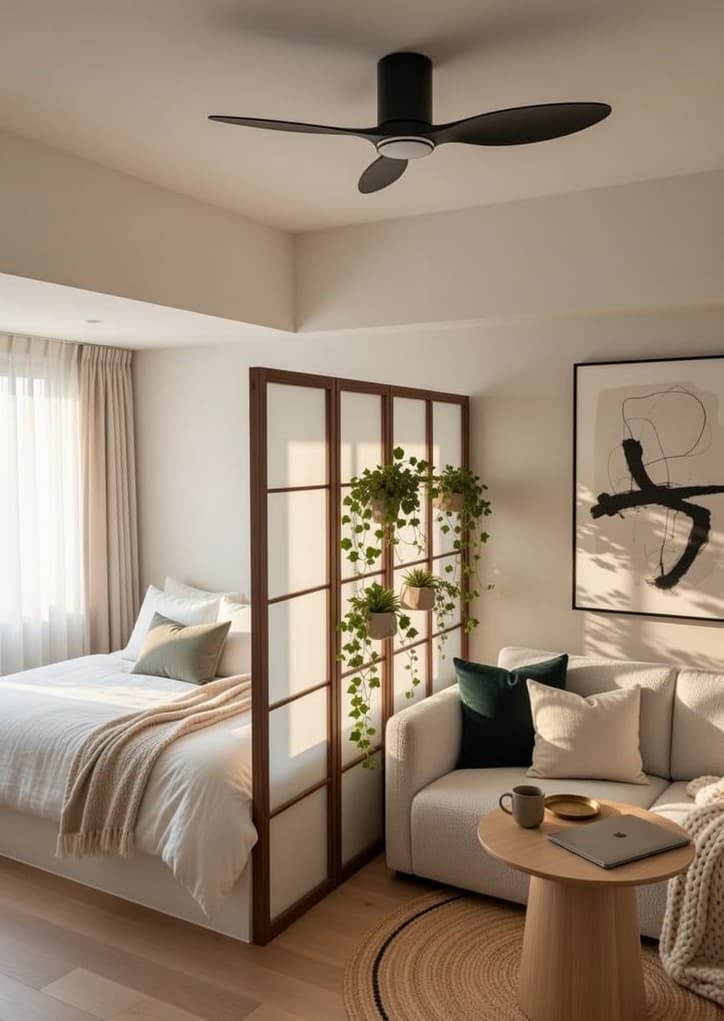
The Plant Room Divider: How to Separate a Studio Bedroom Without Walls
A wooden grid panel with hanging trailing plants creates a beautiful, light-filled boundary between sleeping and living zones — no construction required.