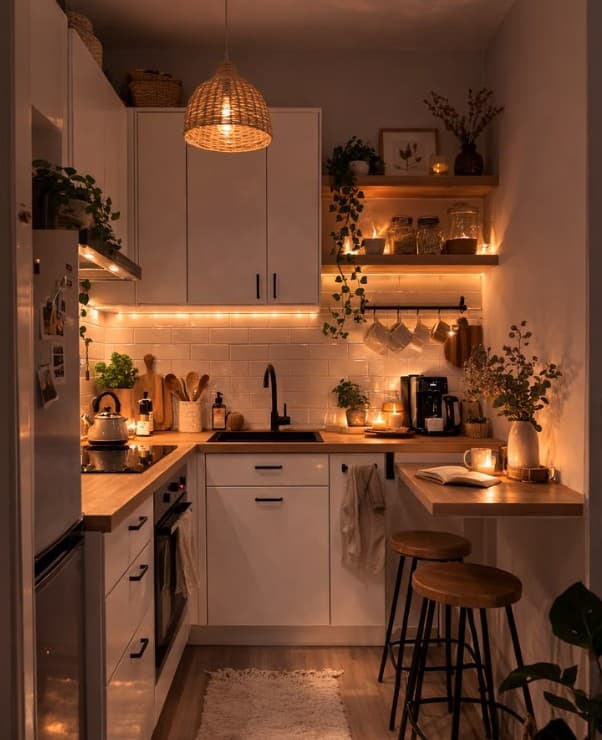
This kitchen is probably 6–8 square metres. White cabinets, wooden countertop, black hardware, subway tile backsplash. Nothing unusual — until the evening, when the LED strips under the cabinets and along the open shelf come on and the rattan pendant casts its warm glow. Then it becomes one of the most inviting rooms imaginable.
Under-cabinet LED strips: the most impactful kitchen upgrade
The LED strips tucked under the upper cabinets here light the entire countertop from above without any visible light source. The effect is a warm, even wash of light across the work surface that makes cooking more practical and the kitchen dramatically more beautiful in the evening. Installation is straightforward: peel-and-stick strips connect to a small transformer plugged into a standard socket. Choose warm white (2700–3000K) rather than cool white or daylight.
The open shelf with its own lighting
The wooden open shelf on the right, with LED strip lighting along its underside, creates a second layer of light in the kitchen. Jars, plants, mugs and small decorative items are lit from below, making the shelf feel like a display rather than storage. This kind of under-shelf lighting costs very little and transforms a functional shelf into a feature.
The rattan pendant
A large rattan globe pendant hung centrally over the kitchen creates the ambient overhead light without the coldness of a recessed LED. The woven texture of the rattan filters the bulb inside and casts a warm, dappled light over the whole room. It also adds the organic, natural material contrast that white cabinets and tile need — without it, the kitchen would feel clinical.
Bar stool counter extension
The narrow counter extension on the right with two wooden bar stools turns a solo kitchen into a social space. It creates a bar-height surface for casual meals, coffee and working from home, while the stools tuck neatly underneath when not in use. This configuration works particularly well in a galley kitchen where there's no room for a separate dining table.
Interior tips
- Candles on the countertop — even in a kitchen — add a warmth that LEDs alone can't replicate. A small tealight holder near the sink or beside the kettle changes the whole atmosphere.
- Black hardware throughout: taps, cabinet handles, pendant cord and shelf brackets in matte black creates visual coherence across all the different elements.
- A wicker hanging basket or two above the counter for garlic, onions or herbs adds texture and keeps the countertop clear.
- Plants on every available surface: on the counter near the window, on the open shelf, on top of the fridge. A kitchen full of greenery feels alive and cared for.
- Keep the countertop mostly clear: the contrast between the empty, glowing countertop and the styled shelf above it is what makes the evening look work. Clutter breaks the spell.
Choosing the right colour temperature
This is the single most common lighting mistake in a kitchen: choosing the wrong Kelvin rating. Colour temperature is measured in Kelvin, and the range that matters for kitchen lighting is 2700K–4000K.
- 2700–3000K (warm white): this is the range that creates the golden, inviting glow you see in the kitchen pictured here. It makes food look appetising, skin look warm and wood look rich. This is the correct choice for ambient and under-cabinet lighting in a residential kitchen.
- 3500–4000K (cool white or neutral white): sharper, more clinical, better for task lighting in a professional kitchen. Rarely the right choice for a small domestic kitchen where you want atmosphere as well as function.
- 5000K+ (daylight): the light of fluorescent offices. Avoid entirely in a kitchen you want to feel inviting.
If you already have cool-white LED strips installed, replacing just the strip is often easier than you'd think — most under-cabinet strips use a standardised tape format and can be swapped within an hour.
Budget-friendly kitchen lighting upgrades
You don't need to rewire anything or hire an electrician to transform a kitchen's lighting. The most impactful changes are all plug-and-play:
- Peel-and-stick LED strips under cabinets: connect to a transformer plugged into a socket inside the cabinet. Total cost: £20–£50 for a standard kitchen.
- Replace a central ceiling light with a rattan pendant: the pendant cord plugs in or connects to an existing ceiling rose. Cost: £30–£100 depending on the shade.
- Add a battery-operated LED strip inside a glass cabinet: motion-activated strips that run on AA batteries are available for under £15 and make glass-fronted cabinets look far more considered.
- Swap existing bulbs for warm-white Edison-style filament bulbs: in any pendant or exposed fitting, a filament bulb adds character. Cost: £3–£8 per bulb.
Making the evening kitchen work
The evening kitchen is a different experience from the daytime kitchen, and it should be designed accordingly. In the kitchen shown here, the evening atmosphere is created by three things working together: the warm under-cabinet LEDs, the rattan pendant's dappled glow, and the candles on the countertop. Remove any one of these and the effect weakens significantly.
Think of the evening kitchen in terms of layers:
- Task layer: the under-cabinet LEDs that light the countertop for actual cooking
- Ambient layer: the pendant or ceiling fitting that fills the room with general light
- Accent layer: candles, shelf lighting, the glow from inside a glass cabinet
When all three layers are active and all at warm white or warmer, the small kitchen transforms into one of the most intimate rooms in the home.
Common mistakes with kitchen lighting
Installing a single bright central light and nothing else. A ceiling-flush LED panel that floods the kitchen with cool white light is functional and completely joyless. Even a single warm pendant combined with under-cabinet strips will be dramatically more pleasant.
Forgetting to dim. If you invest in a pendant and LED strips, add a dimmer switch for at least one circuit. The ability to turn down the light in the evening is what separates an atmospheric kitchen from a utilitarian one.
Mixing colour temperatures. Warm LED strips under the cabinet and a cool-white pendant above create a colour clash that the eye finds uncomfortable. Choose one temperature and apply it consistently across all fitting types.
Choosing a pendant that's too small. In a kitchen with any ceiling height above 2.3 m, a pendant with a shade smaller than 35 cm in diameter will look undersized. For a small kitchen, err toward a larger shade hung lower rather than a smaller shade at standard height.
Related posts

How to Style a Hallway with a Large Monstera and Uplighter
A statement monstera in a ribbed pot with an uplighter beneath it transforms a hallway into the most memorable part of your home. Here is how to do it well.
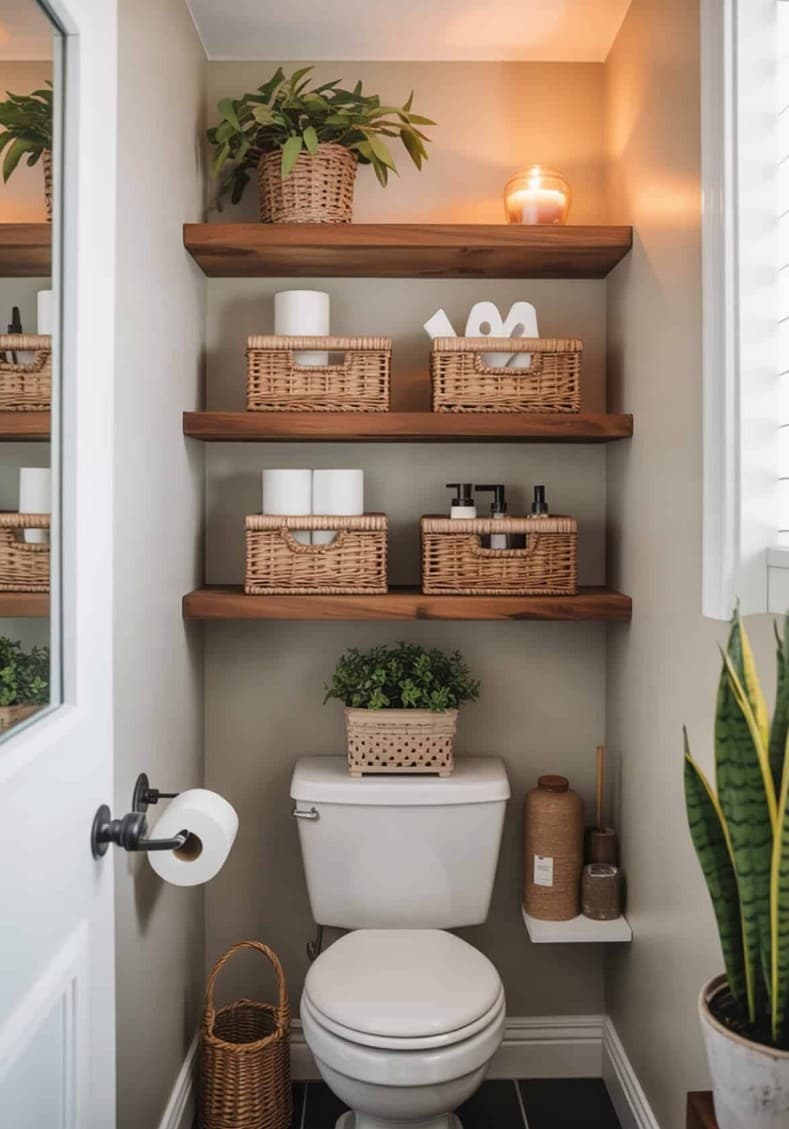
Three Walnut Shelves Above the Toilet: The Bathroom Storage Idea That Changes Everything
Three dark walnut floating shelves above the toilet, each holding wicker baskets with toiletries, a large plant, an amber candle and a snake plant on the floor — this is how to make a small bathroom look considered and beautiful.
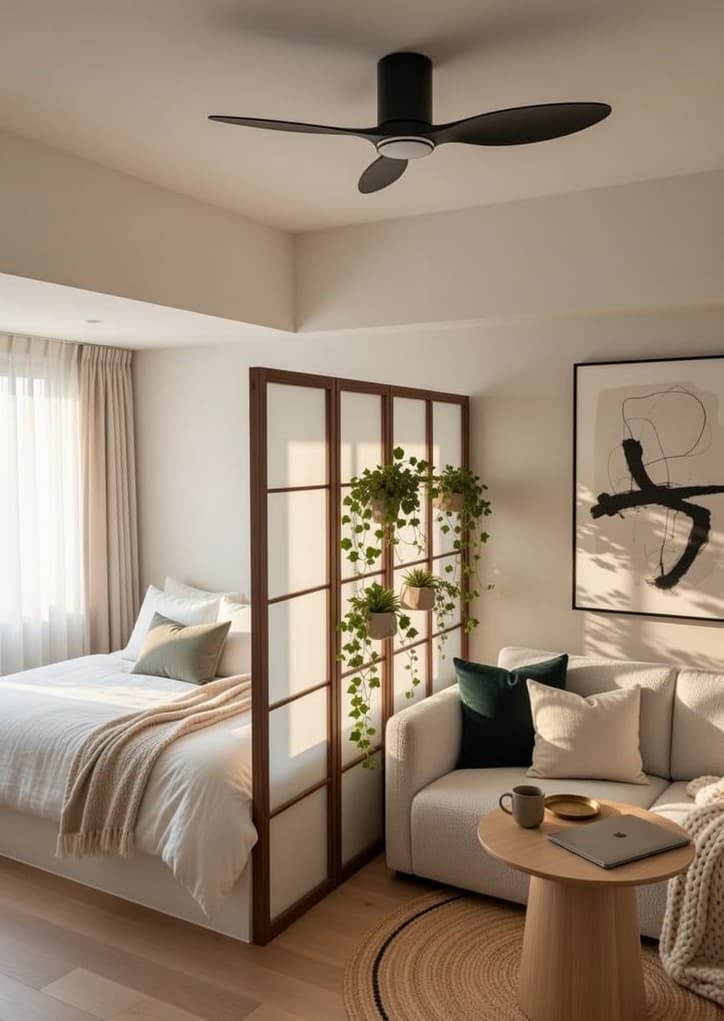
The Plant Room Divider: How to Separate a Studio Bedroom Without Walls
A wooden grid panel with hanging trailing plants creates a beautiful, light-filled boundary between sleeping and living zones — no construction required.