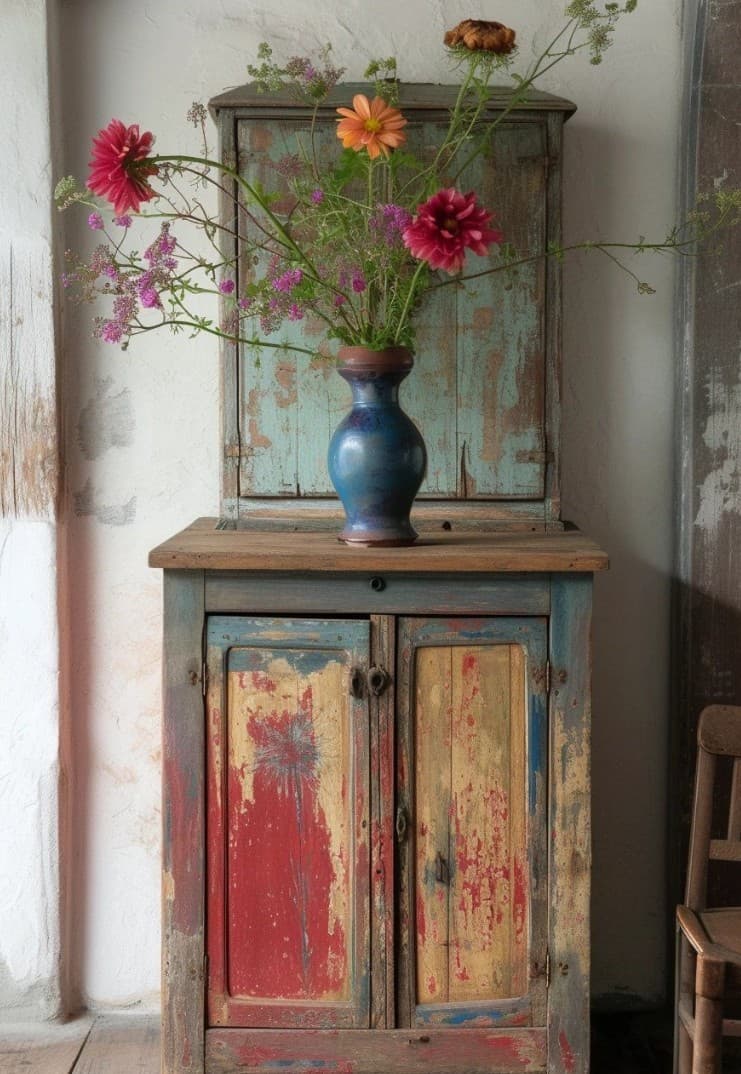
There are objects that stop a room from feeling finished, and there are objects that make a room feel like it has always been exactly right. The antique cabinet in this image is the second kind. Its paint — multiple layers of blue, red and yellow, peeling and worn at the corners — tells decades of history. The blue ceramic vase on top holds wildflowers so casually you'd think they were just cut from the garden. The wall behind it is bare and imperfect. The whole thing looks like it has never tried at all, which is exactly why it works.
Styling vintage furniture with flowers
Fresh flowers change everything about a vintage piece. Where a sculpture or a lamp might feel too deliberate, flowers are alive — they introduce movement, scent and unpredictability. The arrangement here is deliberately loose: cosmos, dahlias and grasses at varying heights, nothing clipped or formal. The taller stems extend well above the vase, which gives the composition height and stops it looking squat.
The key is to resist the florist impulse to cut stems to a uniform height and remove all foliage. Garden flowers styled in a vase should look like they've just been gathered and plunged into water. That informality is the point.
Which flowers work best with vintage pieces
Not all flowers suit all furniture. The style of the cabinet should guide your choice:
- Painted wooden furniture with visible age and wear suits wildflowers, garden flowers and cottage garden varieties: sweet peas, cosmos, larkspur, cornflower, single roses, poppies
- Dark mahogany or walnut pieces suit more architectural flowers: peonies in full bloom, ranunculus, hydrangea, magnolia branches
- Pale or limewashed vintage pieces suit dried flowers and grasses: pampas, dried alliums, bunny tail grass, cotton pods, lavender
In all cases, include some foliage — eucalyptus, fern fronds, olive branch — to give the arrangement structure and make the flowers look embedded rather than simply stuck in water.
Choosing the right vase
The blue ceramic vase here is the right choice for a reason: its colour deepens the blue in the cabinet's paint, creating a tonal connection without being matchy. A vase that shares at least one colour with the furniture it sits on almost always looks considered. The shape — wide base, narrow neck, traditional form — suits the antique aesthetic of the cabinet.
For vintage pieces, avoid clearly modern vases — geometric glass vessels, metallic cylinders, minimal concrete — they create a stylistic clash that makes both objects look wrong. Aged ceramic, hand-thrown pottery, antique glass decanters and earthenware jars all work. The vase doesn't need to be antique, but it should have a quality that suggests it could be.
How to make cut flowers last longer
A beautiful arrangement is only worth the effort if the flowers last more than a day or two. Practical steps that genuinely extend vase life:
- Re-cut stems at a 45° angle before placing in water — fresh cuts allow water uptake. Do this under running water or in the sink so air doesn't enter the stem.
- Remove all leaves below the waterline — submerged foliage rots quickly and promotes bacterial growth that clogs stems
- Change the water every two days, re-cutting stems each time
- Keep out of direct sun and away from radiators — heat accelerates wilting
- Add a small amount of sugar to the water for flowers with heavy blooms — a teaspoon per litre prolongs flowering
With these steps, most wildflowers and garden flowers will last five to ten days rather than two or three.
Embracing chipped and layered paint
The appeal of this cabinet is inseparable from its worn surface. Repainting it — even in the same colours, fresh and even — would destroy what makes it special. If you find a vintage piece with multiple layers of paint showing at the edges, leave it. Polish and wax it if needed, but resist the urge to restore it to a pristine finish.
A clear furniture wax applied over worn paint seals the surface without changing its colour or hiding the layers. Apply it with a soft cloth and buff gently — the surface will feel protected without looking restored.
Placing vintage pieces against plain walls
A wall with a rough or imperfect plaster texture, as seen here, suits a distressed vintage piece perfectly. A fresh, smooth white wall would make the same cabinet look incongruous — too old for its surroundings. If your walls are very clean and modern, consider a textured paint finish or limewashing a single wall to create a surface the vintage piece can sit comfortably against.
Limewashing a single wall is one of the most affordable ways to add texture and character to a room. Ready-mixed limewash paint is available from most DIY retailers and can be applied over existing paint. The result — slightly uneven, slightly chalky, with natural variation in tone — is exactly the kind of background a vintage cabinet deserves.
Building a corner around the cabinet
A statement cabinet works best as the anchor of a composed corner rather than a piece standing in isolation. Think about what surrounds it:
- At floor level: a vintage rug or worn painted floorboards — nothing too polished
- On one side: a wooden chair, a worn leather stool or a stack of large books
- On the other side: a trailing plant in a terracotta pot, a floor lamp with a warm shade
- On the wall above or beside it: a single framed botanical print, or a small mirror with a worn frame
The goal is a corner that looks as though it assembled itself over years, with each object having its own reason to be there.
Common mistakes when mixing antique furniture with fresh flowers
The most common mistake is using flowers that are too formal. A perfectly constructed florist bouquet in a straight-sided modern vase on top of a distressed cabinet looks like a category error. The flowers and the container need to match the furniture's informality.
The second mistake is placing too many objects on the same surface as the flowers. When the vase is the display, everything else should step back. A candle, a key or a small stone beside the vase is fine. A full collection of ceramics, framed photos and trinkets competes with the flowers and loses.
Interior tips
- Use wildflowers rather than florist arrangements: garden flowers, hedgerow clippings and cut herbs have an informality that suits vintage furniture perfectly.
- Let the background be simple: the cabinet is the subject, the flowers are the accent. Don't add other objects to the same surface.
- A small chair or stool beside the cabinet reinforces the sense of a curated corner rather than a piece standing alone.
- Sourcing tip: look for cabinets like this at estate sales, flea markets and online auction platforms. Pieces with unusual paint histories are usually undervalued because buyers lack confidence in how to use them.
- Mix eras: a very old piece of furniture in a contemporary room isn't a mismatch — it's a conversation. The contrast between old and new is one of the defining qualities of interesting interior design.
Related posts

How to Frame a Doorway with Plants for a Stunning Kitchen View
Trailing plants on a shelf above a black-framed doorway, floor plants on either side, and a warm Scandi kitchen beyond — how to make a transition space the most beautiful part of your home.

The Hygge Living Room: Layering Textures, Candles and Natural Materials
Patterned cushions, chunky knit throws, wooden tray tables, candles and eucalyptus — how to build a living room that feels genuinely cosy all year round.
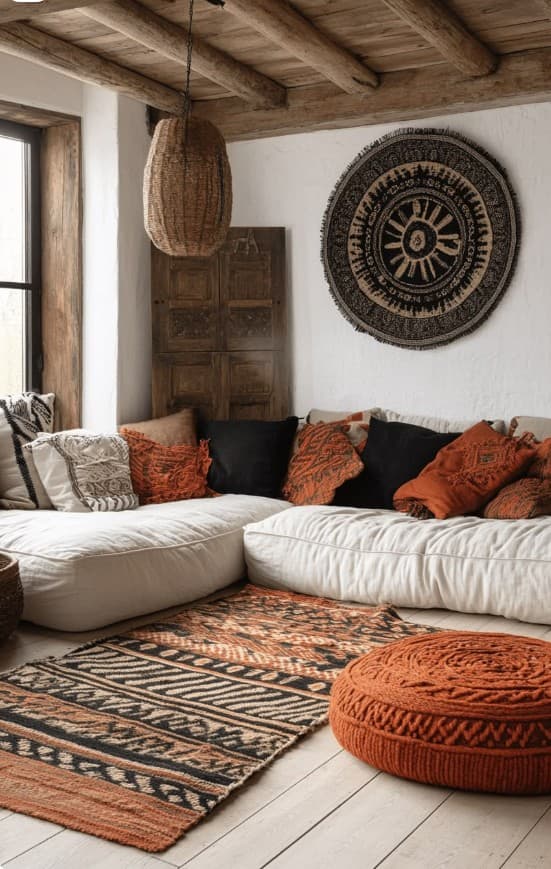
Rust, Black and White: The Boldest Boho Palette in One Living Room
A low white sectional sofa loaded with rust-orange ethnic cushions, a black circular wall tapestry, a bold kilim rug and a rattan pendant — this is boho living room design at its most confident and distinctive.