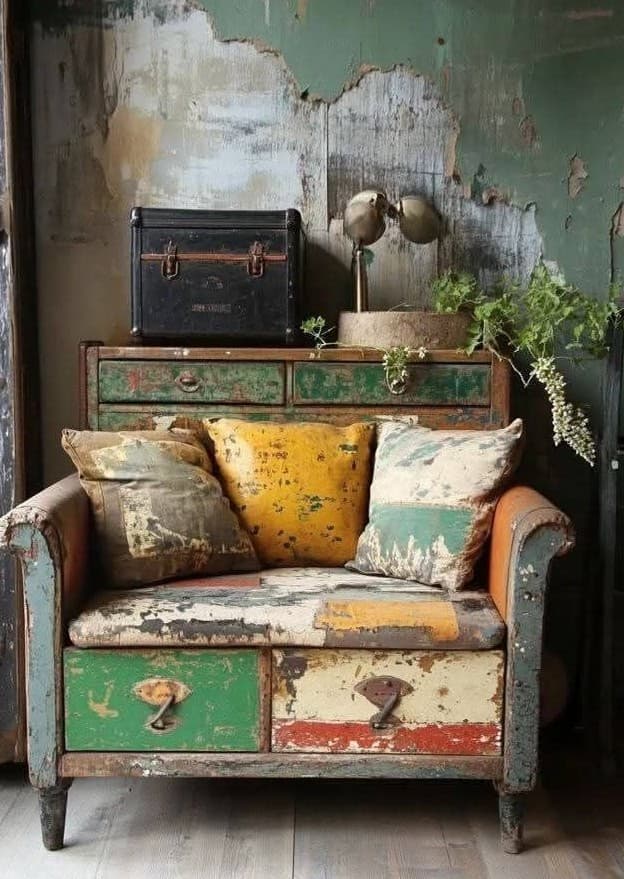
This image stops you in your tracks. A settee constructed from old painted panels — green, red, yellow — with cushions covered in layers of flaking colour. Above it, a vintage black metal trunk. A brass lamp with a concrete base. A planter spilling greenery down the wall. And behind everything, a wall where the plaster is peeling away to reveal layers of old paint beneath. It is deliberately, unapologetically imperfect — and it is stunning.
Why worn paint works
The appeal of distressed and layered paint is the same as the appeal of aged timber or patinated brass: it tells a story. You can see evidence of different eras, different owners, different choices. A freshly painted piece has no history. A piece with three generations of paint under its current coat has more personality than any new furniture could manufacture.
The colour combination here — chalky green, faded red, dusty yellow — works because these are natural, earthy pigments that occur together in old paint ranges. They don't clash; they layer.
Constructing furniture from reclaimed panels
The settee pictured appears to be made from salvaged door or shutter panels with cabinet-style drawers at the base — a genuinely inventive use of found materials. This kind of repurposing is at the heart of sustainable interior design: nothing new is manufactured, nothing goes to landfill, and the result is something completely unique.
The wabi-sabi principle
This room embodies wabi-sabi — the Japanese philosophy of finding beauty in imperfection and transience. A crumbling plaster wall becomes textured wallpaper. A worn cushion becomes a textile of interest. The trick is committing fully: one distressed piece in an otherwise pristine room looks like a mistake. A whole room styled around imperfection looks intentional and extraordinary.
Interior tips
- Leave walls with texture — rather than patching and repainting every crack, consider whether the texture adds character. Old lime plaster in muted tones is a design feature, not a maintenance problem.
- Combine metals loosely: brass, iron and aged steel together read as a collected aesthetic rather than a matched set.
- Use loose, unstructured cushions in muted, faded tones — tight, pristine cushions on a worn settee look incongruous.
- Bring in living plants to balance all the aged material — greenery and fresh growth against worn surfaces is one of the most beautiful contrasts in interior design.
- Source pieces from antique markets and salvage yards, not reproduction vintage stores. The real thing has a depth that imitations never quite achieve.
Where to find genuinely aged pieces
The difference between real vintage furniture and reproduction pieces is difficult to fake and easy to spot up close. Genuine age shows in the undersides of drawers, the back panels of cabinets, the joints and fixings. Wood that has dried and contracted over decades has a particular density and smell. Paint that has genuinely aged chips differently from artificially distressed paint — the layers are thinner, the edges sharper, the underlying wood visible through years of use rather than manufactured damage.
The best places to find real vintage furniture include:
- Estate sales and house clearances: pieces sold directly from homes that have been in the same family for decades. These are the richest sources of genuinely aged furniture with real provenance.
- Architectural salvage yards: particularly good for doors, shutters, flooring and structural pieces that can be repurposed as furniture, just as in the settee pictured.
- Country antique markets and fairs: rural areas often have lower prices for aged furniture because the competition from city-based dealers is less intense. Drive out of town for better finds at better prices.
- Online salvage platforms: increasingly, architectural salvage is available online. Search for terms like "reclaimed painted furniture", "distressed settee", or "antique panelled bench" to find pieces with genuine character.
How to create the layered paint effect intentionally
If you want to replicate this aesthetic on new or recently bought furniture, the technique is straightforward but requires patience.
Start with a base coat in a muted, earthy tone — a dusty terracotta, a chalky sage, or a warm ochre. Let it dry completely (24 hours minimum), then apply a second colour over the top in loose, uneven brush strokes. The key is not to cover the base coat entirely — let patches of it show through, particularly on edges, corners and raised details where wear would naturally occur over time.
Once the second coat is dry, sand lightly with fine-grit sandpaper (220 grit) along edges and raised areas to reveal the layer beneath. A dark wax finish applied over the whole piece then knocked back with a soft cloth seals both layers and adds the depth that makes the result look genuinely old rather than just painted to look old.
Mixing eras without creating chaos
A common fear with this aesthetic is that mixing different periods and styles will look like an unedited charity shop. The difference between a beautiful eclectic interior and a chaotic one comes down to a few specific principles.
Limit your metal tones to two: in this room, brass and dark iron work together because they're both warm-toned. Adding chrome or bright silver would break the coherence.
Use plants as connectors: greenery is neutral — it works with any era, any colour, any finish. When in doubt, add a plant. It softens contrasts and brings visual rest to a complex arrangement.
Keep the floor simple: a distressed interior needs calm underfoot. A worn natural-fibre rug, bare stone, or wide-plank timber flooring lets the furniture speak without competing.
Stick to a muted, earthy palette: the colours in this room — sage, terracotta, ochre, beige, aged brown — are all drawn from the same natural palette. Even the brass and the patinated metal fit within that range. When every piece you introduce belongs to the same palette, very different styles read as a cohesive whole.
The sustainable case for imperfect vintage
There is a practical argument for this aesthetic as well as an aesthetic one. Every piece of reclaimed or vintage furniture you bring into your home is one fewer new piece manufactured. The environmental cost of a new upholstered sofa — the timber, foam, fabric, dyes, transport — is significant. A settee assembled from reclaimed panels, re-covered in vintage fabric, repaired and maintained, costs the planet almost nothing.
Buying real vintage, even at a higher upfront price, also makes financial sense over time. A well-made piece of furniture from fifty years ago — solid timber joinery, hand-stitched fabric, steel fixings — will outlast almost anything manufactured today. The worn paint is not decay; it is evidence of durability.
Related posts

How to Frame a Doorway with Plants for a Stunning Kitchen View
Trailing plants on a shelf above a black-framed doorway, floor plants on either side, and a warm Scandi kitchen beyond — how to make a transition space the most beautiful part of your home.

The Hygge Living Room: Layering Textures, Candles and Natural Materials
Patterned cushions, chunky knit throws, wooden tray tables, candles and eucalyptus — how to build a living room that feels genuinely cosy all year round.
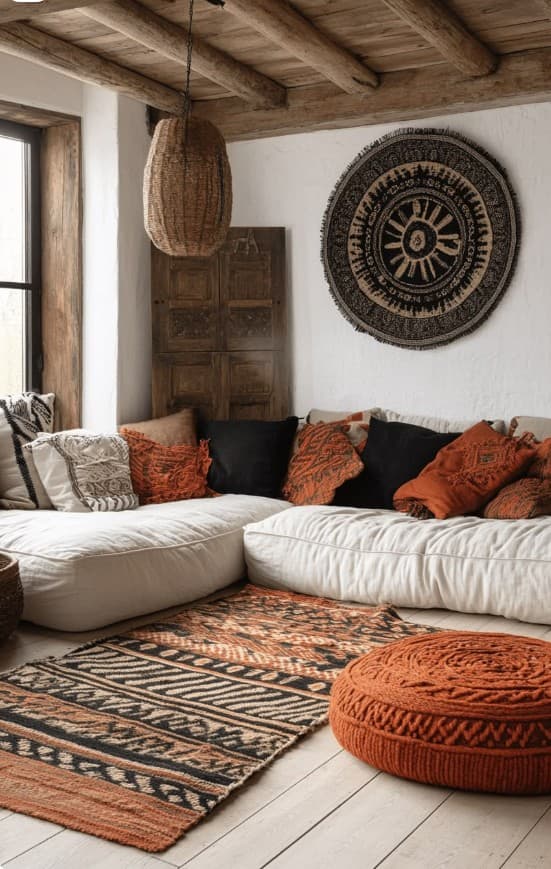
Rust, Black and White: The Boldest Boho Palette in One Living Room
A low white sectional sofa loaded with rust-orange ethnic cushions, a black circular wall tapestry, a bold kilim rug and a rattan pendant — this is boho living room design at its most confident and distinctive.