The Built-In Banquette Dining Nook: Maximum Storage, Minimum Footprint
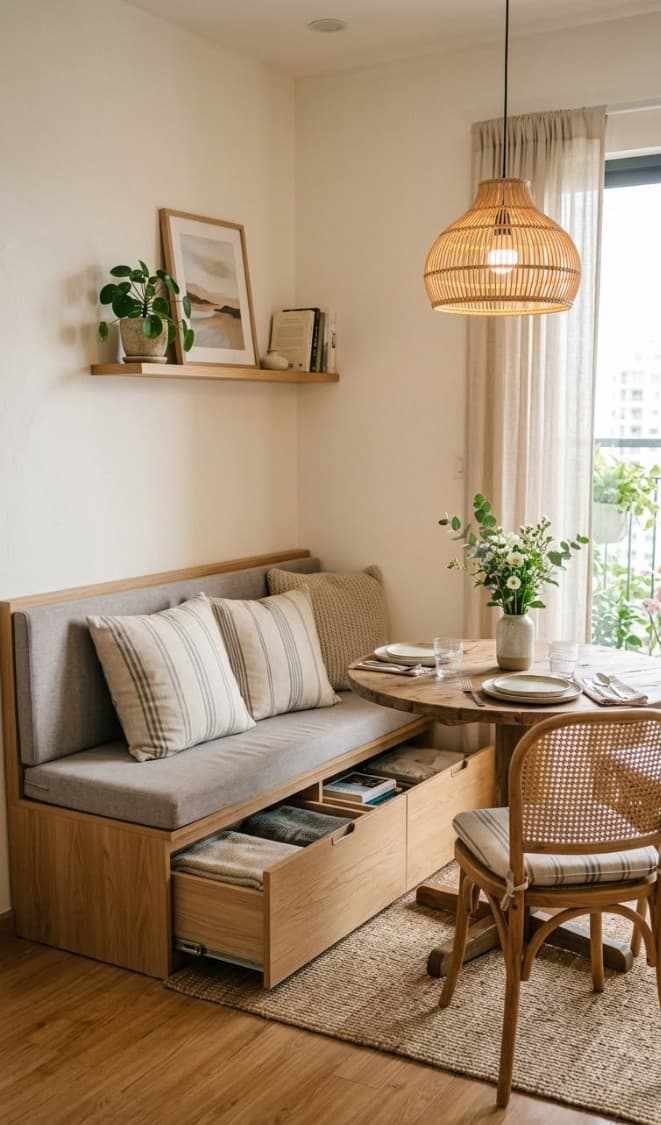
This dining nook occupies what might be the corner of a living room or kitchen — a space that in many homes goes completely unused. A long oak bench with a grey upholstered seat cushion and striped linen pillows runs along the back wall. In front of it, a small round wooden dining table is set for two with plates, glasses and folded napkins. A single rattan cane chair faces the bench. Above, a woven rattan dome pendant light fills the corner with warm light. On the wall above the bench: a floating oak shelf with an art print, a small plant and a few objects. A jute rug grounds the whole arrangement. This corner is now the best seat in the house.
Why a banquette beats a dining chair
A built-in or free-standing bench along one wall of a dining nook does several things a chair cannot. It accommodates more people than the same footprint of chairs — you can squeeze another person or two onto a bench in a way that individual chairs don't allow. It doesn't need to be pulled out to sit down, which matters in a tight corner. And the storage underneath, in the case of this bench, adds a full drawer's worth of hidden space.
The storage drawers
The bench here has three pull-out drawers along its front face, each wide and shallow. One is open in the photo, revealing folded textiles — throws, table linens, extra napkins. This is exactly the kind of storage that gets ignored in most homes: the space beneath a seat, used only as dead air. With drawers, every centimetre of the bench height is working.
The round table advantage
A round table in a corner nook is almost always the right choice. It has no corners that dig into your ribs when you sit down, no long edges that dominate a small space, and it can seat the same number of people in a smaller footprint than a rectangular table. The natural wood grain here adds warmth against the off-white walls.
The rattan dome pendant
The woven rattan dome pendant above the table is the light source and the centrepiece. It hangs low enough to feel intimate — dining pendants should be low enough to light the table without blinding the people sitting at it. The warm amber glow through the woven rattan casts the characteristic dappled light that makes this style of pendant so effective in dining settings.
Interior tips
- Hang the pendant at table height plus 60–70 cm: this is the standard rule for dining pendants, and it works. Too high and the light is ambient but not intimate; too low and it interrupts conversation across the table.
- A floating shelf above the bench adds vertical display space without touching the floor space of the nook. Keep it styled simply: one art print, one plant, one small object — nothing more.
- Stripe and plain cushions together: the combination of a striped linen lumbar pillow and a plain grey cushion adds visual interest without pattern overload. Both must be in the same tonal range.
- A jute rug unifies the corner: even in a corner that doesn't need a rug functionally, a small jute rug defines the dining zone as a distinct space within the larger room.
- One cane chair facing the bench is more interesting than two matching chairs — the contrast between the upholstered bench and the open weave of the cane chair adds texture and lightness to the arrangement.
Building vs. buying: what you actually need to know
A banquette dining nook can be built from scratch, bought as a ready-made unit, or assembled from off-the-shelf components.
Building from scratch gives you the most control over dimensions and finish. The basic structure is a simple timber box — a plywood frame with a face of planks or painted MDF. The seat height should be 45–47 cm (standard chair height), and the depth 45–55 cm (enough to sit comfortably against a wall with a cushion). The drawers on the front face are standard soft-close drawer runners available at any hardware store.
Ready-made options worth looking at include IKEA's KALLAX units turned on their sides as a bench base — they have the right depth, come with drawer inserts, and the seat can be cut from a piece of plywood and fitted with a foam cushion. This is the fastest route to a finished nook.
The seat cushion is where you should invest. A thin cushion on a hard bench is uncomfortable after ten minutes. Use high-density foam at a minimum of 10 cm thickness, wrapped in a removable, washable cover. Linen and cotton mixes are the most practical — they look good, wash well and get better with age. Avoid velvet in a dining context unless you are a very careful eater.
Practical cushion and textiles advice
The cushion and pillows are the elements that make the nook feel like somewhere you actually want to sit rather than a piece of storage with a seat on it.
- Bench cushion: cut to the exact width and depth of the bench seat. If it slides, use non-slip mat underneath or add Velcro ties to the back.
- Lumbar pillows: one or two is enough. More than two and the sitting space gets crowded. Keep them in the same tonal range as the cushion.
- Waterproof cushion covers: if this is a nook used daily by children or for casual meals, consider a water-resistant fabric or at minimum, a cushion cover with a full zip that can be removed and washed easily.
Common mistakes with corner dining nooks
Making the bench too short. A bench that only runs to the length of the table seats the same number of people as two chairs would — which misses the point. Extend the bench past the table on both sides, and the nook can squeeze in an extra person or two at celebrations.
Choosing a rectangular table. A rectangular table pushed into a corner creates a dead corner where the table meets the wall. A round table has no such corner, can be pulled slightly out when more people join, and generally makes conversation easier — you can see everyone at the table without turning.
Hanging the pendant too high. An intimate dining nook with a pendant light five feet above the table feels cold and unresolved. The pendant here hangs low enough to cast a pool of warm light directly on the table surface, which makes the food look better and the conversation feel more private.
Related posts
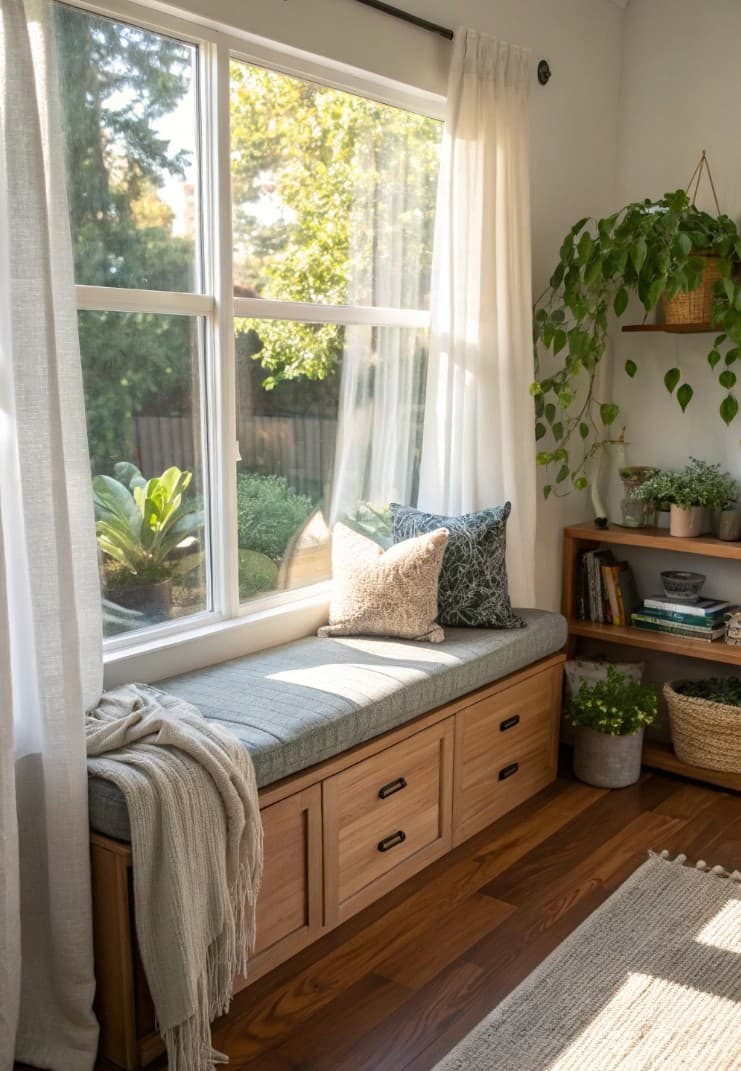
How to Build a Window Seat With Built-In Storage Drawers
A window seat with drawers underneath adds seating, storage and a reading nook in the space a window usually leaves empty.
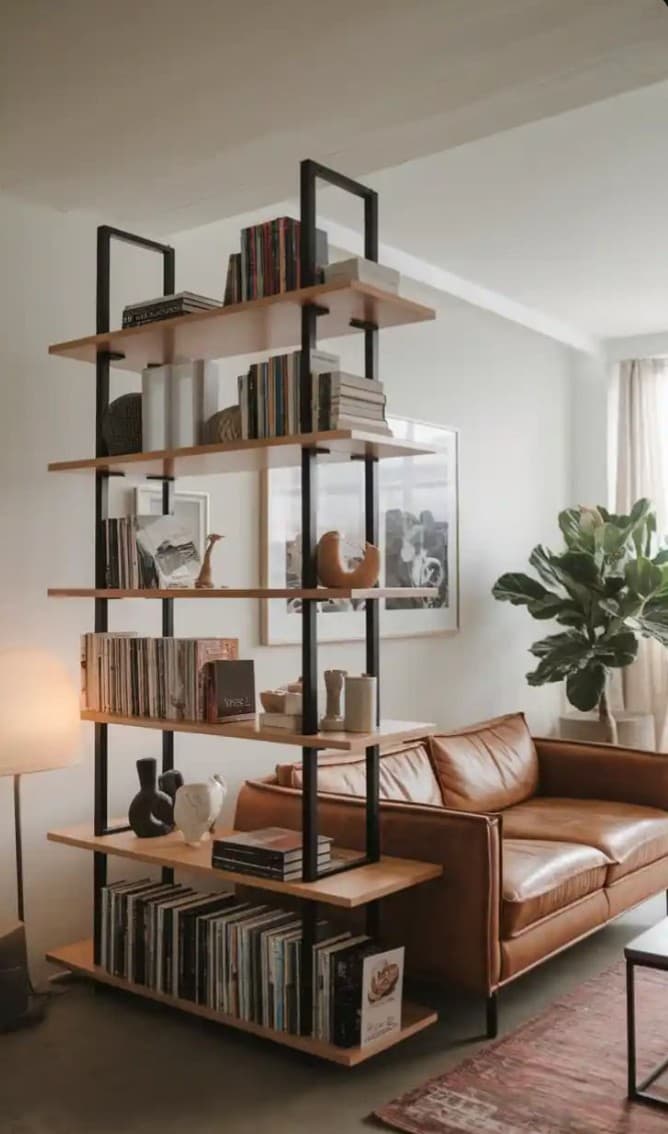
Industrial Shelving Units: The Statement Storage Piece for Modern Living Rooms
A tall black-frame, oak-shelf freestanding unit with books, ceramics and vinyl records becomes the focal point of a living room — here's how to style one.
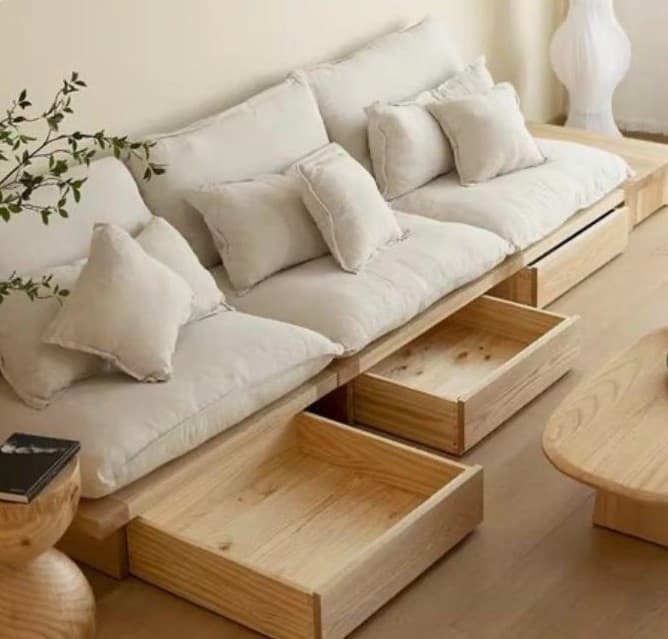
Japandi Platform Sofa With Hidden Storage Drawers: The Ultimate Space-Saver
A low pine platform sofa with pull-out drawers underneath stores as much as a wardrobe while taking up the footprint of a sofa. Here's why this is one of the smartest furniture ideas around.