The Raised Bed Platform With LED Strips: How One Step Up Creates Two Rooms
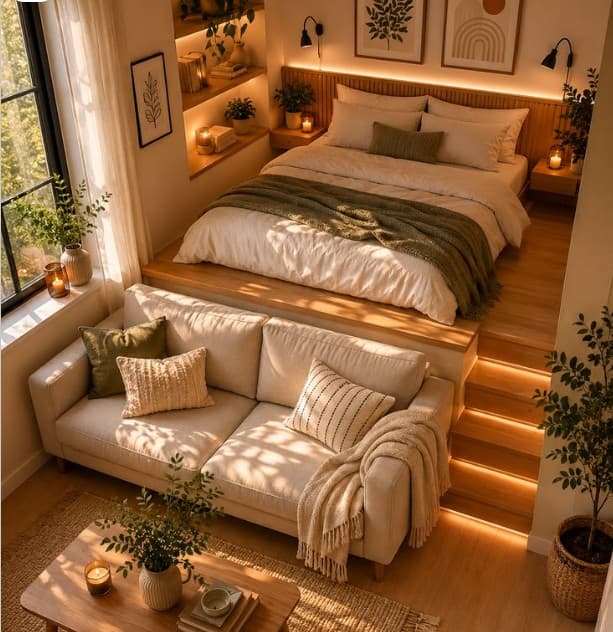
Looking into this studio apartment, two levels are immediately visible. On the lower level: a cream sofa with green and cream cushions, a wooden coffee table with a small plant and a mug, a jute rug, warm light streaming through a large window. Three wooden steps lead up to the upper level, each with a warm amber LED strip glowing underneath. On the upper level: the bed, with white bedding and a sage green throw, positioned against a wall with floating shelves holding plants, framed botanical prints and a small wall-mounted lamp. Both levels glow with warm light. This is not a standard apartment layout — it's a deliberately designed split-level that uses the vertical dimension of the room to create two distinct spaces within one footprint.
Why a raised platform works
A raised bed platform solves the fundamental challenge of studio living — the bed being in the same plane of vision as everything else — by simply moving it to a different level. When the bedroom is elevated by even 30–40 cm, it occupies a separate visual and psychological space from the living area below. You don't just see a bed across the room; you see a bedroom above the room, which is a completely different experience.
The LED strips: light as architecture
The amber LED strips running along the underside of the raised platform's edges and each step are not decorative accessories — they're structural lighting. They outline the architecture of the level change and fill the living area below with a warm ambient glow that no conventional light source could replicate. At evening time, when these strips are the primary light source, the platform glows from within, making the step structure feel deliberate and finished rather than improvised.
The steps: storage opportunity
The three steps up to the platform are wide enough to walk up comfortably, and each one represents a potential storage opportunity. Drawer-equipped steps can store shoes, bedding or clothing invisibly inside the step structure. Even without drawers, the space beneath the platform itself can be accessed through pull-out drawers or lift-up flap sections, providing storage equivalent to several large suitcases.
The living zone below
The lower-level living area is defined by the sofa and coffee table on a jute rug, with the platform edge as the back wall of the zone. The window on the left provides natural light. The wall above holds floating shelves with plants and art, making the full height of the room — from floor level to ceiling — visually active. The living zone benefits from the platform overhead: its ceiling is lower, which paradoxically makes the sofa area feel more enclosed and intimate.
Interior tips
- The platform height matters: 30–40 cm is high enough to feel like a different level and low enough to step up onto comfortably without a ceiling problem. Taller than 50 cm requires a taller room or a lower mattress.
- LED strips on the step risers and platform edge — warm white (2700K), not cool white. The warm tone is what makes the platform glow like ember; cool white would look clinical and reduce the effect entirely.
- Keep the bed simple and white: on a raised platform that is already a feature, the bedding should be as quiet as possible. White, cream or linen — nothing that competes with the platform itself.
- Floating shelves above the bed use the vertical wall space of the raised zone — space that's usually dead in conventional studios because it's above the furniture. Here it becomes the most visible wall in the room.
- A jute rug at the lower level visually anchors the living zone and prevents the lower level from feeling transitional. The rug marks "this is the living room" in the same way that walls normally would.
Related posts
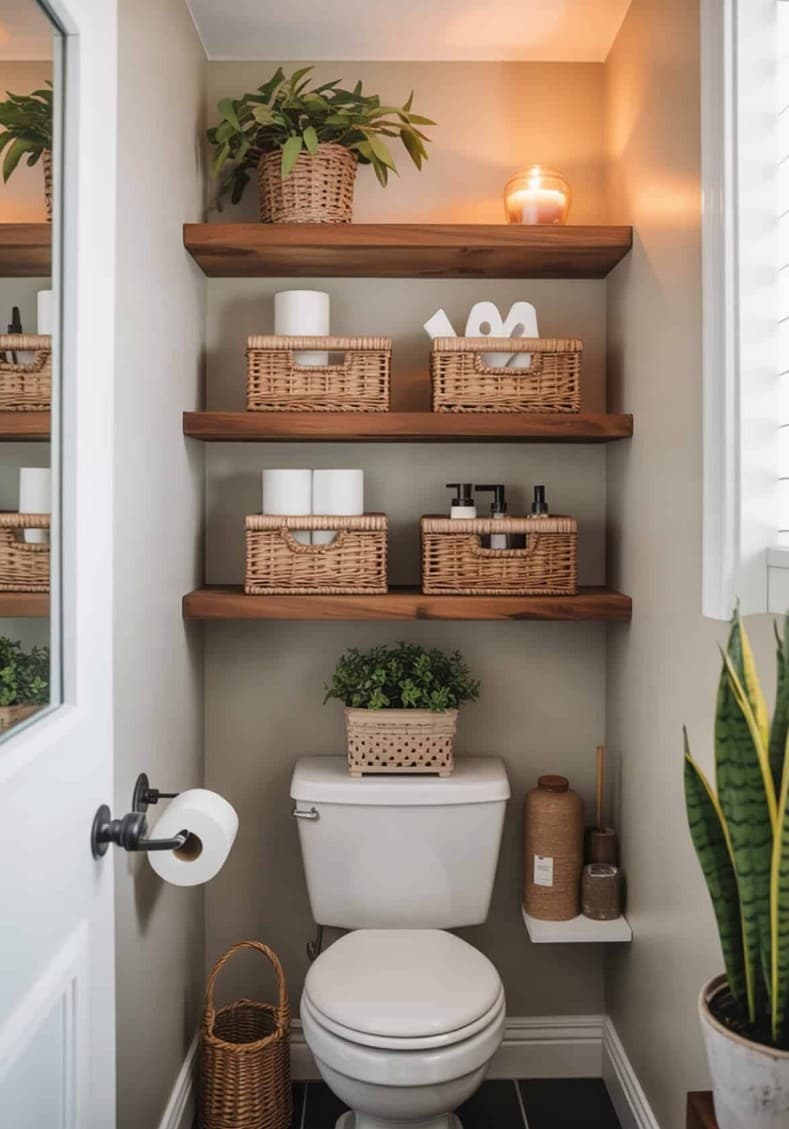
Three Walnut Shelves Above the Toilet: The Bathroom Storage Idea That Changes Everything
Three dark walnut floating shelves above the toilet, each holding wicker baskets with toiletries, a large plant, an amber candle and a snake plant on the floor — this is how to make a small bathroom look considered and beautiful.
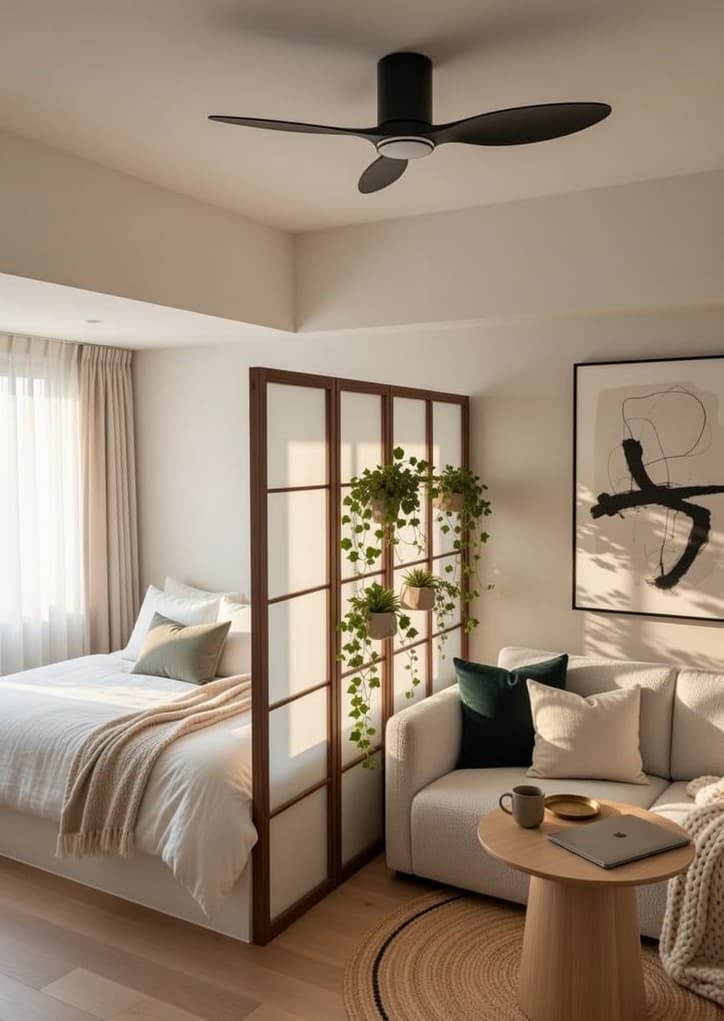
The Plant Room Divider: How to Separate a Studio Bedroom Without Walls
A wooden grid panel with hanging trailing plants creates a beautiful, light-filled boundary between sleeping and living zones — no construction required.
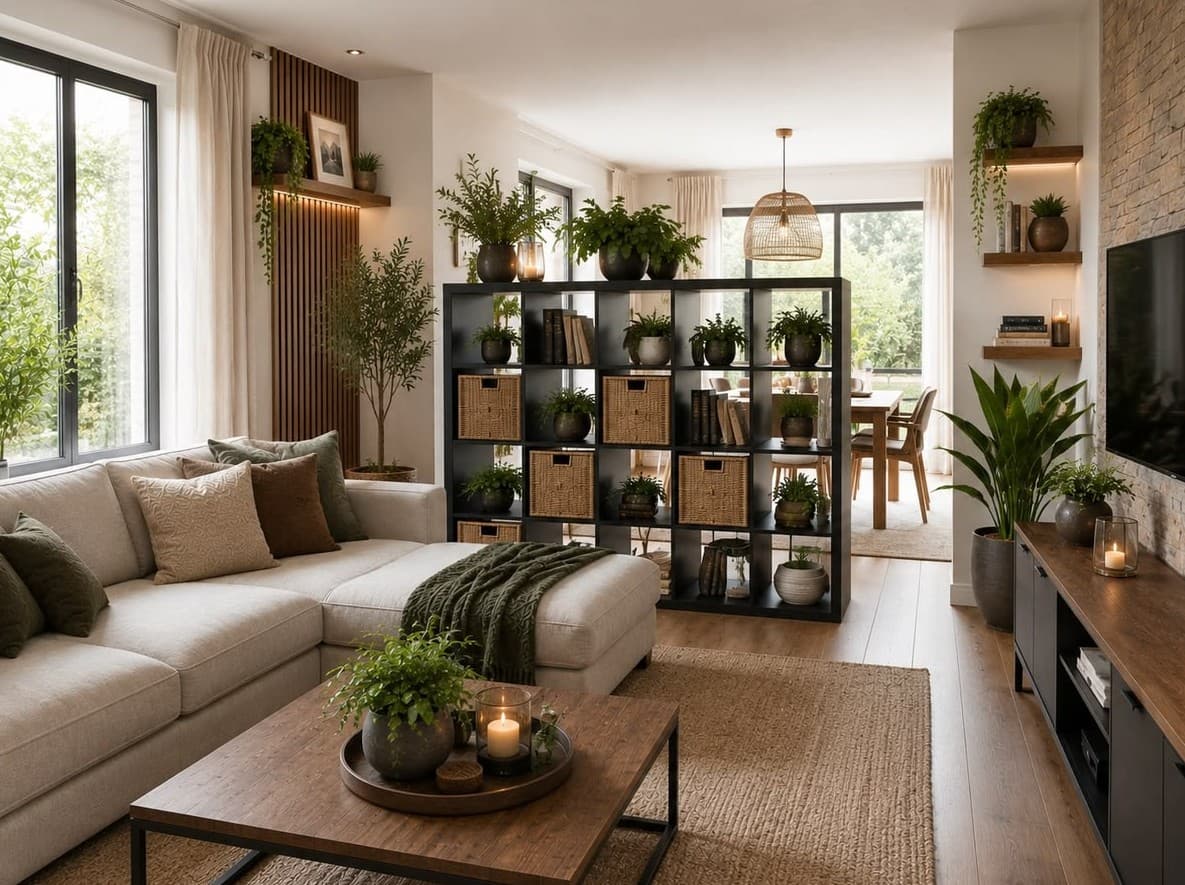
Open Plan Living: How a Plant-Filled Shelf Divider Transforms a Small Space
One bookshelf loaded with plants and wicker baskets separates living from dining — and does it more beautifully than any wall could. Here's the full breakdown of this open-plan setup.