Open Plan Living: How a Plant-Filled Shelf Divider Transforms a Small Space
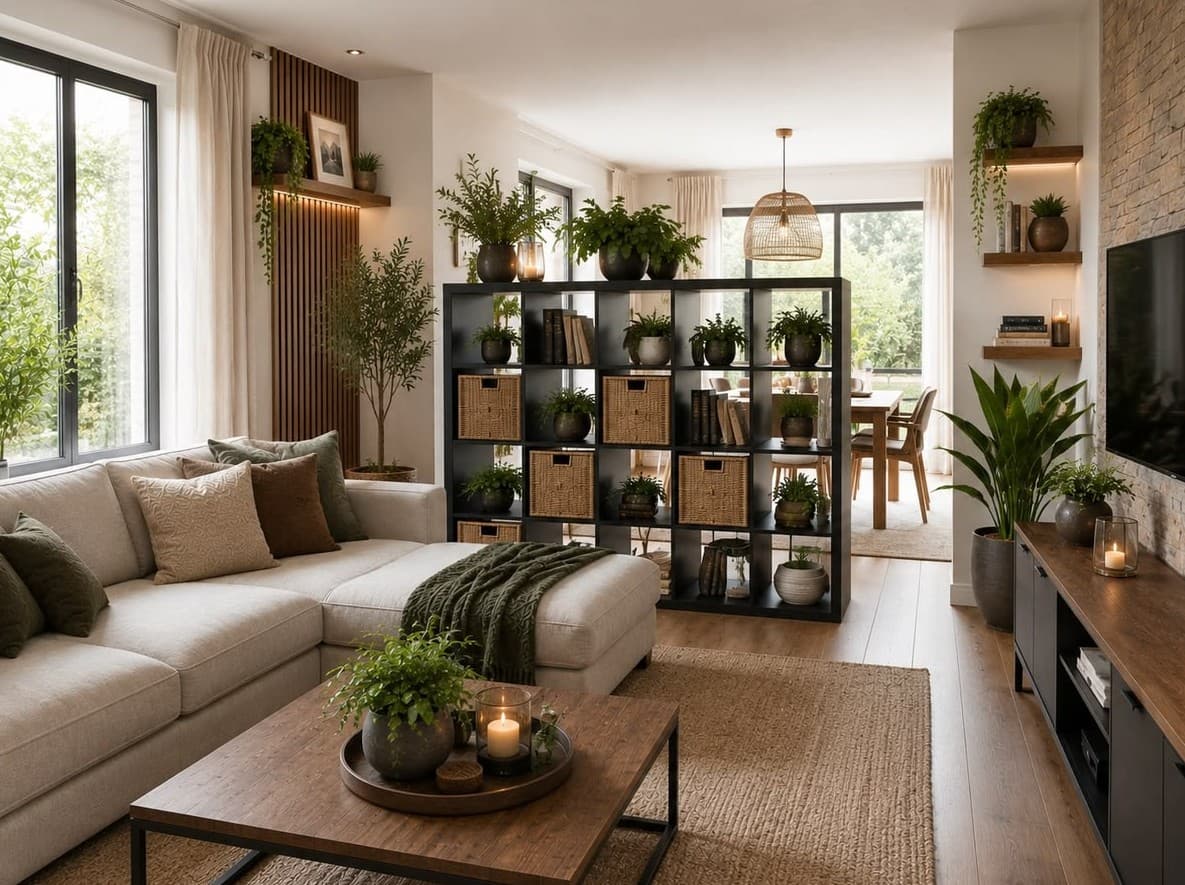
This open-plan apartment does something very clever: instead of leaving the living and dining areas as one undivided space, it uses a large dark bookshelf as a room divider. The shelf is tall enough to define two separate zones, open enough to let light through, and styled so beautifully — with trailing plants, wicker baskets, books and ceramics — that it reads as a feature rather than a barrier.
The bookshelf room divider
The shelf here is a dark charcoal or black cube unit, freestanding in the middle of the room. Every opening is used deliberately: wicker storage baskets in the lower cubes, potted plants (ferns, trailing ivy, small olive trees) in the upper ones, books spine-out in the middle rows. The effect is dense and lush without feeling chaotic because the repetition of the cube grid imposes order.
The living zone
On the front side of the divider: a large cream sectional sofa with brown and green cushions, a chunky knit throw draped across the arm. A wooden coffee table sits on a jute rug, styled with a round wooden tray holding candles and a small trailing plant. The overall palette is cream, warm brown and earthy green — natural and calm.
The dining zone
Behind the divider, visible through the openings: a wooden dining table with chairs, flooded with natural light from the large window. The two zones share the same light source but feel distinctly separate thanks to the shelf.
Light and warmth throughout
A large rattan pendant light hangs above the living area — the warm amber glow from inside the woven shade creates a soft evening atmosphere. Warm pendant and LED strip lighting in the background adds depth. The whole space glows without any harsh overhead light.
Interior tips
- A cube shelf works better as a divider than a solid unit because the open sections allow light to pass through, keeping both sides feeling connected and airy rather than divided and dark.
- Put the trailing plants on top: plants that drape and spill downward over the edge of a shelf are visually dynamic — they blur the boundary between the shelf and the room, making the whole thing feel more organic.
- Wicker baskets in the lower cubes keep the base grounded: the heavier, more opaque materials belong at the bottom, with more open and decorative items rising toward the top. This follows the same principle as any good composition.
- Match your throw cushions to the plants: the earthy green of the cushions here repeats the green of the plants on the shelf — this is the simplest way to tie two areas of a room together.
- Keep the jute rug large: in an open-plan space, a rug defines the living area boundary almost as effectively as a wall. Too small and the zone collapses; large enough and it holds the whole composition together.
Related posts
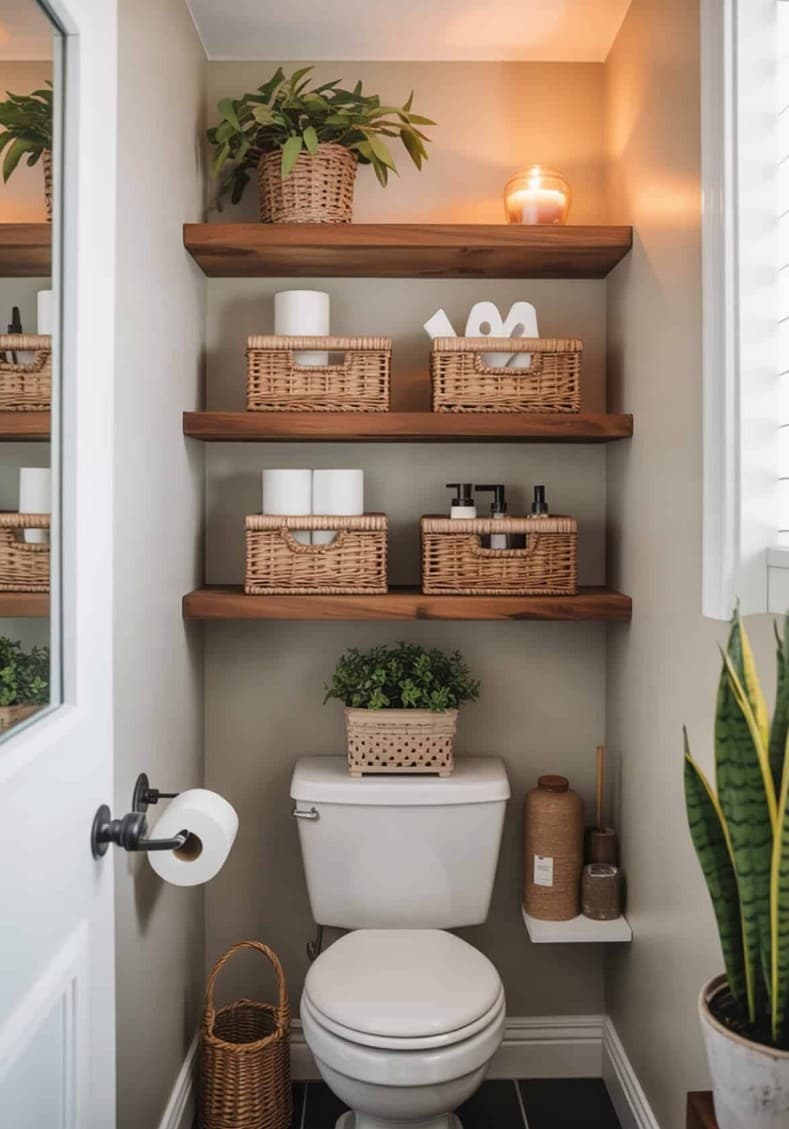
Three Walnut Shelves Above the Toilet: The Bathroom Storage Idea That Changes Everything
Three dark walnut floating shelves above the toilet, each holding wicker baskets with toiletries, a large plant, an amber candle and a snake plant on the floor — this is how to make a small bathroom look considered and beautiful.
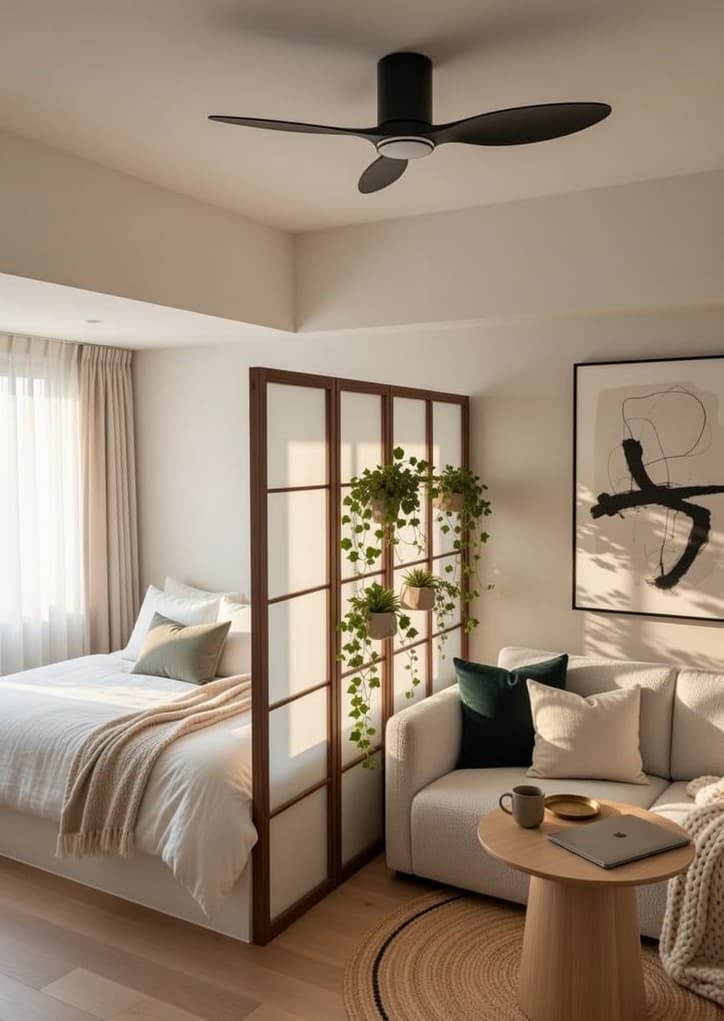
The Plant Room Divider: How to Separate a Studio Bedroom Without Walls
A wooden grid panel with hanging trailing plants creates a beautiful, light-filled boundary between sleeping and living zones — no construction required.
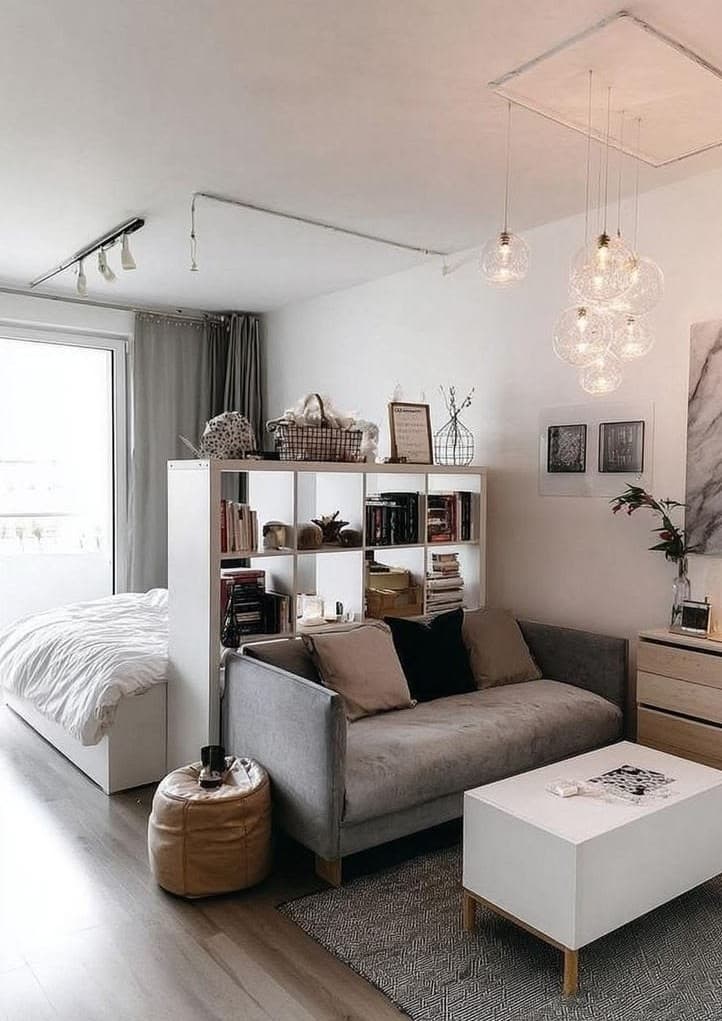
Studio With Shelf Divider and Bubble Pendant: A Small Space That Gets Everything Right
A white cube shelf separates bed from sofa, a multi-globe bubble chandelier fills the ceiling, and every zone has its own light source. Here's how this studio apartment layout works.