The Mediterranean Scandinavian Living Room: Linen, Terracotta and an Olive Tree

Some of the most interesting interior design happens at the overlap between two aesthetics. This living room sits exactly at the meeting point of Scandinavian minimalism and Mediterranean warmth — and the result is a space that feels both restrained and full of life.
The palette is dusty blue and warm stone. The materials are linen, raw wood, terracotta and plaster. The only plant is an olive tree, but it is enough.
The raw plaster wall
The most distinctive element in this room is the textured, raw plaster wall — a surface that reads simultaneously as aged and deliberate. Raw plaster walls (or lime-wash painted walls that mimic the effect) bring a depth and warmth to white rooms that smooth emulsion simply cannot. The surface catches light differently at different times of day: warm in the morning, cooler at noon, golden in the afternoon.
If a full raw plaster finish is out of budget or scope, lime-wash paint — available from most specialist paint suppliers — achieves a very similar effect. Apply it in overlapping strokes rather than rolling it evenly, and let the layering show. Two or three tones of the same colour, applied wet over wet, creates exactly the kind of depth you see here.
The dusty blue linen sofa
A relaxed, slipcover-style sofa in dusty blue linen is the centrepiece of the room. The slipcover silhouette — slightly gathered, not rigidly tailored — suits the aesthetic perfectly. It says ease rather than formality, and it works with the slightly imperfect plaster wall rather than against it.
Dusty blue works especially well as a sofa colour in a neutral-toned room. It reads as a neutral itself in certain lights — somewhere between grey and blue — but brings colour when you need it. Against warm stone tones and terracotta, it is particularly beautiful.
When shopping for a linen sofa in this style, look for removable, washable covers. Slipcover sofas from IKEA (the SÖDERHAMN with a custom cover from Bemz or Comfort Works) are a practical option at a reasonable price.
The reclaimed wood coffee table
A coffee table made from a single slab of reclaimed or rough-sawn timber sits at the perfect height for the sofa — low enough to feel relaxed, solid enough to feel substantial. The surface is deliberately unpolished: you can see the grain, the knots, perhaps a crack filled with resin or left as is.
On the table, a cluster of terracotta ceramics — a wide bowl, a small jug, a couple of rounded vessels — are arranged without symmetry. They look as though they have been gathered over time, not bought as a set. That quality of accumulation is central to this aesthetic.
The olive tree in a terracotta pot
An indoor olive tree in a large, aged terracotta pot grounds the room and brings the Mediterranean reference into sharp focus. Olive trees are slow-growing and long-lived — the right plant for a room designed to feel timeless rather than trendy.
A large terracotta pot (40 cm diameter or more) in a classically proportioned shape works best. Avoid pots with decorative detailing — the simpler the pot, the more beautiful the tree. Position the olive tree where it will receive the most light in the room: beside a window or skylight, angled slightly toward the light source.
The brass pendant light
A single brass dome pendant — antique or aged rather than polished — hangs over the seating area and provides the room's primary light source. Brass is the right metal finish here: warmer than chrome, less rustic than black iron, and perfectly aligned with the Mediterranean-Scandi palette.
A dome pendant casts direct downward light as well as a warm wash against the ceiling. Position it at around 180–200 cm from the floor — low enough to feel intimate, high enough not to obstruct sightlines.
The textured rug and linen curtain
A low-pile, natural-toned rug in off-white or oat runs beneath the sofa and coffee table, adding softness underfoot. The linen curtain at the window — barely hemmed, hanging loosely — filters the light without blocking it.
Both the rug and curtain are deliberately understated: supporting elements that add texture without drawing attention to themselves.
Common mistakes to avoid
- Choosing the wrong shade of blue. Bright or saturated blues look harsh against raw plaster. You want a dusty, greyed-down blue — more blue-grey than blue.
- Over-styling the coffee table. Three terracotta pieces is enough. The restraint is the point.
- Using synthetic materials anywhere. Every material in this room is natural: linen, wood, terracotta, plaster, brass. A synthetic rug or a plastic pot breaks the spell immediately.
- Painting the walls brilliant white. Brilliant white is too cold and too sharp for this aesthetic. If you are not going to plaster or lime-wash, choose a warm off-white with a slight yellow or grey undertone.
- Buying a standard olive tree pot. Most garden centres sell olive trees in plain black plastic. Repot immediately into terracotta.
Interior tips
- Dry flowers or dried botanicals in one of the terracotta vases add the right kind of quiet, slightly faded beauty to the coffee table.
- Choose linen cushions with feather inserts rather than foam — they hold their shape differently and look much better over time.
- Let the curtain pool slightly on the floor. A floor-length curtain that just grazes the ground reads as luxurious; one that floats above the floor reads as a fitting error.
- Apply lime-wash paint in two coats in slightly different directions to build depth. One coat is never enough.
- Water your olive tree infrequently but deeply — let the soil dry out completely between waterings. Most indoor olives die from overwatering, not underwatering.
Related posts

How to Style a Cosy Scandinavian Living Room with Black Accents
Cream sofa, black coffee table, Matisse prints and candlelight — this is how to build a Scandinavian living room that is warm and sophisticated at the same time.

How to Create a Boho Living Room with Plants and a Low Green Sofa
A low green sectional, trailing plants, a rattan pendant and a jute rug — here's how to build a relaxed, nature-filled living room that feels both collected and calm.
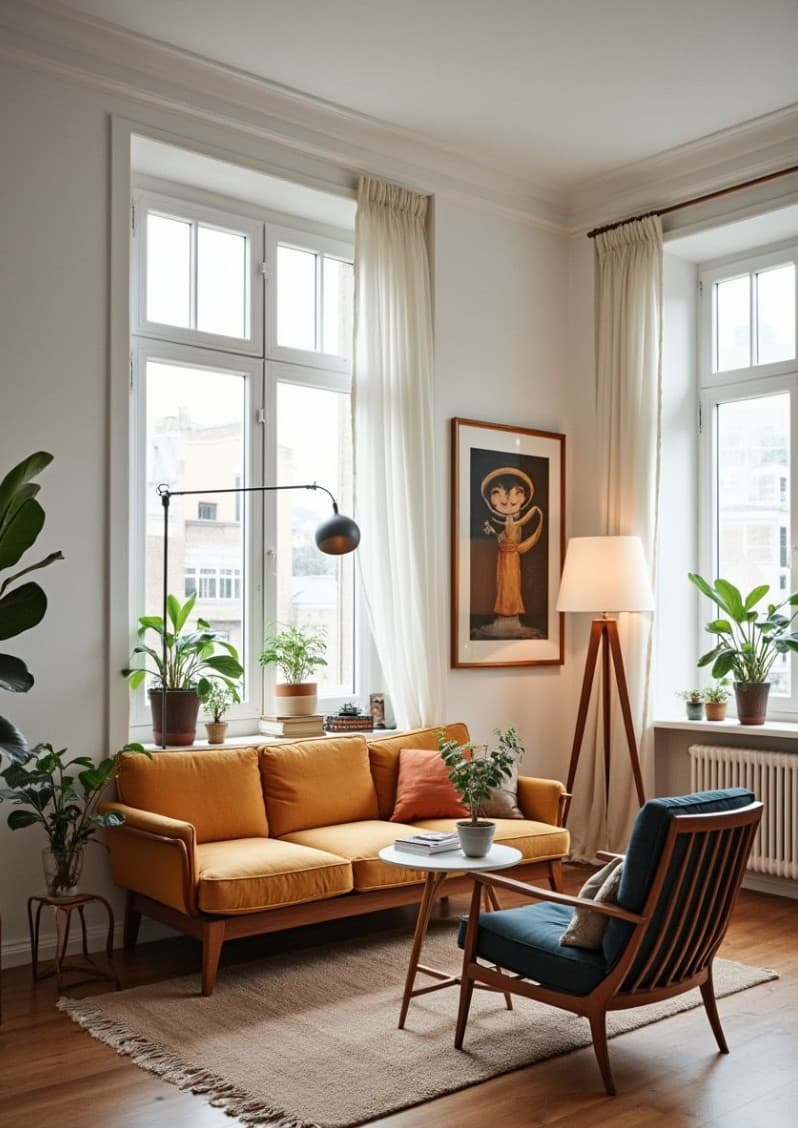
Colour, Plants and Light: The Scandinavian Living Room That Does Everything Right
A mustard yellow sofa, a navy mid-century armchair, a tripod floor lamp, a large illustrated poster and tropical plants in every corner — this bright Scandinavian living room shows how colour and nature work together.