
There is a particular kind of living room that feels like it grew rather than was decorated. Plants spill from every surface, the furniture sits low and unhurried, and every texture — woven, worn, natural — seems to belong together without any obvious effort. This room is that kind of space, and it is easier to recreate than it looks.
The low sofa as the starting point
Everything here begins with the sofa. A deep, low sectional in forest green sets the tone for the entire room. Low sofas — seats that sit 30–35 cm from the floor rather than the standard 45 cm — immediately make a space feel more relaxed and more generous. They suggest you are meant to sink in and stay, not perch politely.
Green is the right choice for a plant-filled room because it does not compete with foliage — it joins it. The sofa reads as another leaf in the composition. Look for a modular sectional so you can configure it to fit your specific room rather than forcing a standard L-shape into an awkward corner. The fabric should be something durable and lived-in: a brushed cotton or a performance weave in a muted olive or sage will age well and survive a throw blanket pulled over it every evening.
Building upward with plants
The room uses plants at every height, and this is the key to why it feels so full of life without feeling cluttered. On the floor, large-leafed plants — a fiddle leaf fig, a monstera, a banana plant — anchor the corners and create vertical presence. On the wall shelves, smaller plants in terracotta pots sit alongside books and ceramics. A round mirror becomes a frame for trailing pothos or string of pearls. A hanging plant from the ceiling drops greenery down from above.
This three-layer approach — floor, shelf, ceiling — means no wall or corner is bare, but nothing is crowded either. The plants are doing the decorating.
For a boho living room, choose plants with personality: ones that trail, drape, arch or spread dramatically. Monsteras, pothos, hoyas, ferns and bird of paradise all work. Avoid very architectural, symmetrical plants — they read as too formal for this aesthetic.
The rattan pendant light
A large rattan pendant — oversized, woven, warm — is essential to this look. It does two things: it brings natural material up to eye level and above, connecting the ceiling to the room below, and it casts a warm, dappled light that makes the whole space glow in the evenings.
Look for pendants with an open weave so the bulb is visible and the light spills outward. A single oversized pendant centred over the seating area works better than multiple smaller ones. Choose a warm filament bulb at around 2200K — the colour temperature of candlelight — to keep the glow amber rather than white.
The jute rug and woven pouf
A large natural jute or sisal rug grounds the seating area. In this room it runs beneath the entire sectional and coffee table, making the space feel deliberate and unified. The texture of jute — coarse, golden, slightly irregular — adds warmth that no smooth rug can replicate.
The oversized woven pouf in the foreground serves as extra seating, a footrest and a visual anchor. Its rounded shape and natural tone echo the pendant overhead, creating a satisfying symmetry. When choosing a pouf, go larger than you think you need — a small pouf in a large room disappears.
The rustic coffee table
A low, solid wood coffee table — one that looks like it was cut from a single slab rather than assembled from panels — fits perfectly here. The grain, the knots, the slight unevenness are features, not flaws. Style it simply: a small wooden tray, a candle, a ceramic bowl. Nothing shiny or synthetic.
Common mistakes to avoid
- Going too dark with the green. A near-black forest green can make a low sofa feel heavy. Look for something in the mid-range — an earthy, slightly desaturated olive or sage reads as natural rather than dramatic.
- Buying plants before planning their homes. Every plant needs a pot, a surface or a hanging point. Map out where things will go before you start buying.
- Ignoring the ceiling. A bare ceiling in a boho room is a missed opportunity. A pendant, a hanging plant or even a macramé piece lifts the eye and completes the look.
- Using a rug that is too small. The rug should sit under all the main furniture. A rug that floats in the middle of the seating area makes the room feel unresolved.
- Mixing too many colours. The palette here is tight: green, warm neutrals, terracotta, natural wood. Add one or two accent colours at most — mustard or dusty pink work well — and resist the urge to add more.
Interior tips
- Layer your throws. One throw draped over the back of the sofa and another folded on the seat adds depth without clutter.
- Use terracotta pots rather than white or grey for a warmer, more organic look. Mix sizes — a tall one, a medium one, a small cluster — rather than matching sets.
- Add a decorative ladder against one wall for extra textural interest and a place to hang throws or trailing plants.
- Keep the floor mostly clear. With a low sofa and many plants, the floor can feel busy. Resist the urge to fill every gap.
- Let plants grow into each other. A pothos allowed to trail across a shelf or drape over a mirror is more beautiful than one kept neatly contained.
Related posts

The Mediterranean Scandinavian Living Room: Linen, Terracotta and an Olive Tree
A dusty blue linen sofa, raw plaster walls, a reclaimed wood coffee table and an olive tree in a terracotta pot — the Mediterranean Scandi aesthetic at its best.

How to Style a Cosy Scandinavian Living Room with Black Accents
Cream sofa, black coffee table, Matisse prints and candlelight — this is how to build a Scandinavian living room that is warm and sophisticated at the same time.
Colour, Plants and Light: The Scandinavian Living Room That Does Everything Right
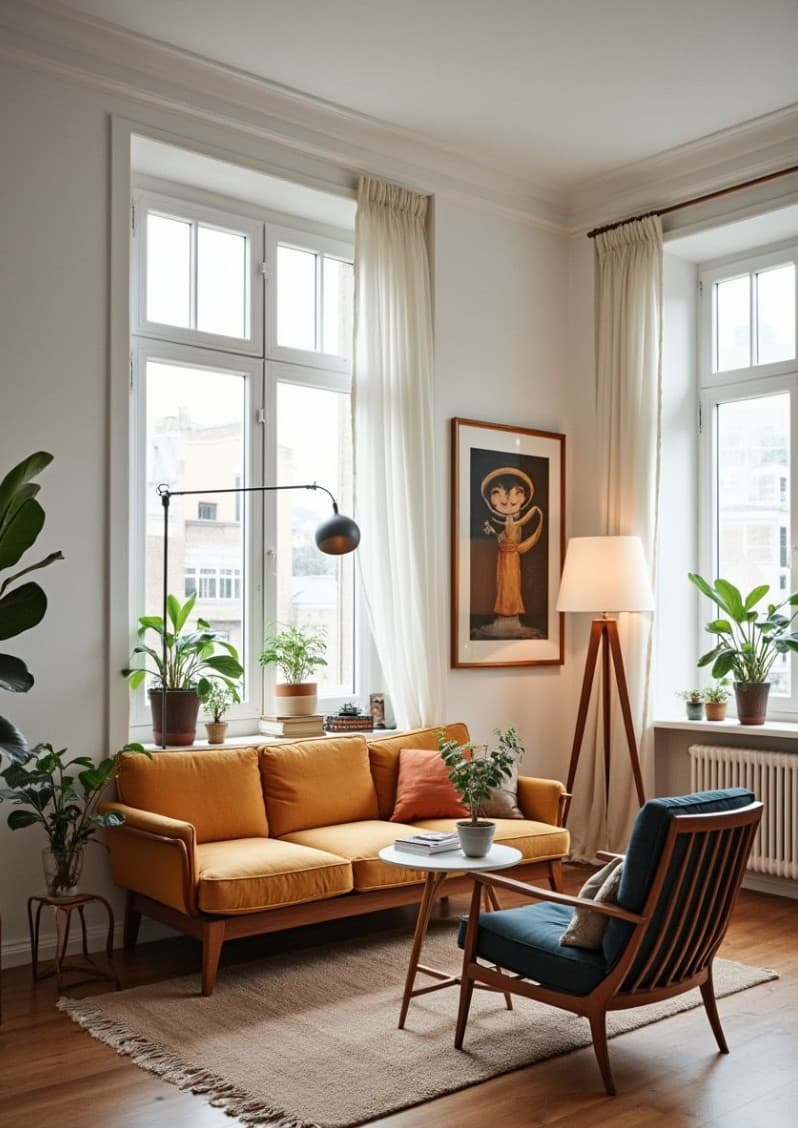
A mustard yellow sofa, a navy mid-century armchair, a tripod floor lamp, a large illustrated poster and tropical plants in every corner — this bright Scandinavian living room shows how colour and nature work together.