Three antique window frames, hinged together as a folding screen and painted white with deliberate distressing, stand in a corner of a room and immediately become the most interesting thing in it. The glass panes remain intact — slightly wavy, slightly imperfect, the way old glass always is. In the lower panels of each frame, small potted plants sit directly behind the glass, their green silhouettes visible through it. This is a room divider that looks like it was always there.
Why window frames work as room dividers
The logic is simple: a window frame is already a frame — it defines a plane, it has structure, it stands vertically and it looks right in a domestic setting. Joined as a folding screen, three frames create exactly the partition a studio apartment or open-plan living room needs, without the visual weight of a solid wall or the flimsiness of a fabric screen. The glass panes let light pass through, so the room divider divides the space without darkening either side.
Vintage window frames, specifically, carry something a new partition cannot: patina. The layers of old paint, the slightly uneven joinery, the imperfect glass — these are details that took decades to accumulate. When you bring three of these frames into a contemporary interior, they provide the visual complexity that new furniture rarely does.
The white paint and distressing
The choice to paint these frames white rather than to strip or refinish them is the right one. White unifies three frames that were originally separate objects and may have been different colours. It connects them visually and relates them to the white walls of most contemporary interiors.
The distressing — sanding back the white paint at the edges, corners and glazing bars to reveal the wood or the previous paint beneath — is not decorative in a superficial sense. It is honest. It acknowledges that these frames are old, that they have history, that the white paint is not the original surface. A perfectly smooth, uniformly painted frame would obscure what makes vintage frames interesting. The distressed surface tells the truth.
Plants in the lower panels
The small potted plants placed in the lower panels, visible through the glass, are the detail that completes this room divider. They soften the structure, introduce living material, and create a connection between the greenery on one side of the screen and the room on the other. The glass frames the plants in a way that makes each one look deliberate — a small still life in a rectangular frame.
Choose low-maintenance plants for this position: a small succulent, a trailing string of pearls, a single stem of eucalyptus in a narrow vase. The plants should be small enough to sit within the panel without touching the glass, and they should be species that tolerate the indirect light a room divider will typically receive.
Interior tips
- Source frames from salvage yards or antique markets: look for frames with intact glass panes and solid joinery. Cracked panes can be replaced; broken joints are harder to fix.
- Hinge with three-way folding hinges: these allow the screen to fold flat for storage and to stand stably when open. Use brass hinges for a finish that complements the vintage aesthetic.
- Paint with chalk paint: chalk paint adheres without priming, dries to a matte finish and distresses easily with fine sandpaper. One coat is usually enough to cover; the distressing removes some of it anyway.
- Stabilise with a floor wedge: a folding screen on hard floors can shift. A small rubber wedge under the outermost panel prevents movement without marking the floor.
- Use this screen to define a sleeping area in a studio: placed at an angle behind a bed, three window frames create the suggestion of a separate bedroom without enclosing it.
Related posts
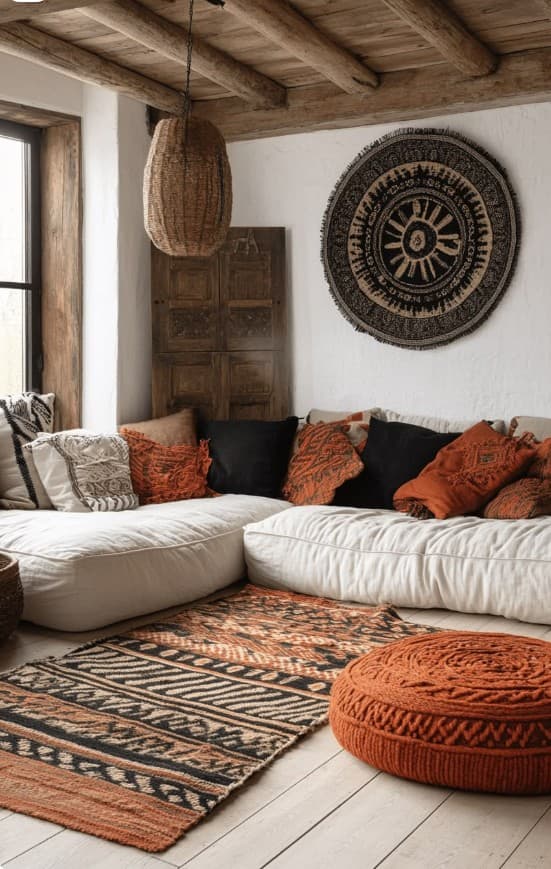
Rust, Black and White: The Boldest Boho Palette in One Living Room
A low white sectional sofa loaded with rust-orange ethnic cushions, a black circular wall tapestry, a bold kilim rug and a rattan pendant — this is boho living room design at its most confident and distinctive.
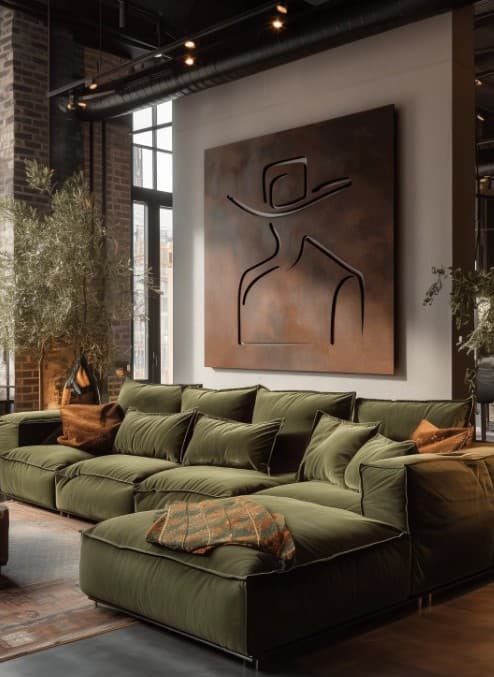
How to Style a Dark, Dramatic Living Room With a Green Velvet Sofa
A large green velvet sofa against an industrial backdrop is one of the boldest moves in interior design — and one of the most rewarding. Here's how to pull it off.
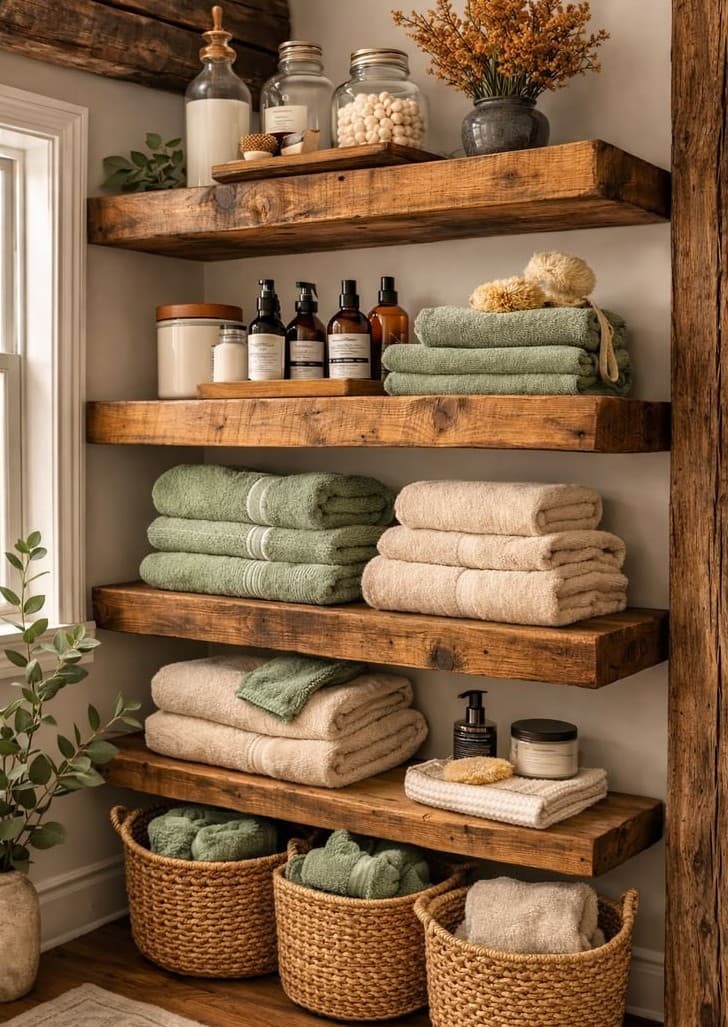
Rustic Bathroom Shelves: How to Style Open Storage Beautifully
Open bathroom shelving looks effortlessly styled when you get the layering right. Here's how to arrange towels, products and decorative pieces on rustic wooden shelves.