The DIY Pallet Bench With Built-In Bookshelves: A Weekend Project Worth Making
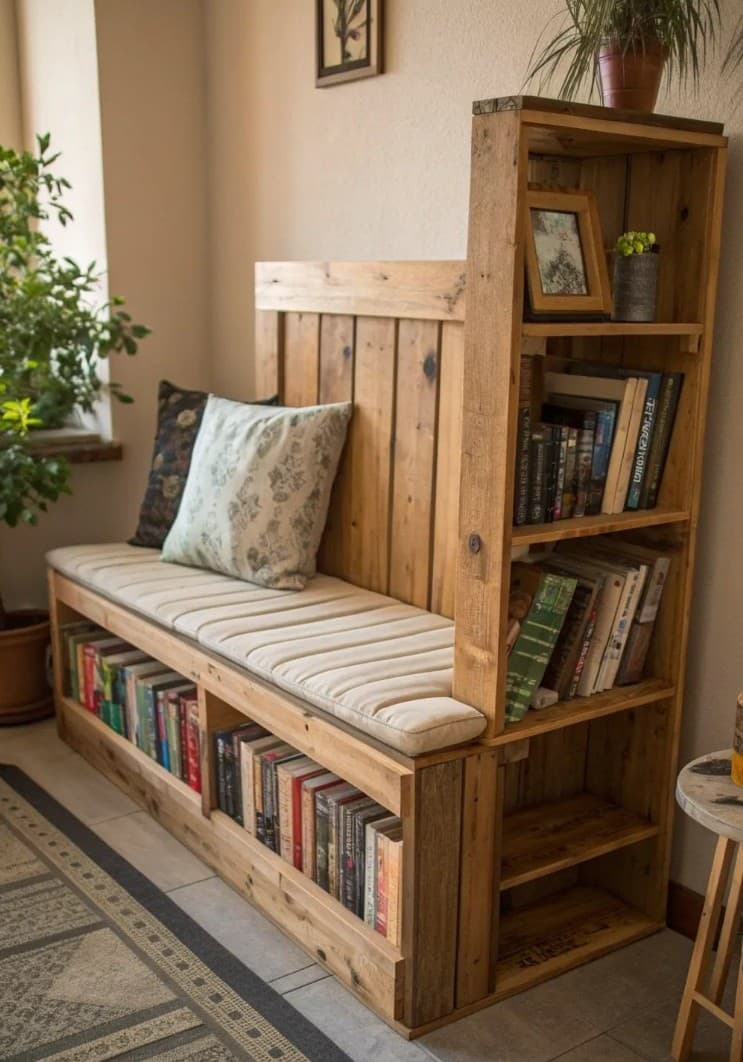
This piece of furniture is almost certainly handmade — the kind of project someone built on a weekend with salvaged pallet timber, some screws, a jigsaw and a plan drawn on paper. The result is a reading bench with open bookshelf cubbies running underneath the seat and a tall shelf tower rising at one end. Both sections are full of books — colourful spines, different sizes, clearly used and loved. The seat has a long padded cushion in natural linen and two decorative pillows — one with a floral print, one with a stripe. The whole piece sits against a window, with plants on the windowsill and a patterned rug below. It is practical, characterful and entirely homemade.
Why pallet wood works for a bookshelf bench
Pallet timber is widely available, inexpensive or free, and comes pre-aged — the rough surface, visible grain and occasional marking are what make it look intentional rather than cheap. The boards are consistent in thickness, which makes joining them straightforward. And the natural variation between individual boards (slightly different tones, different grain directions) creates the visual interest that a factory-cut shelf piece would lack.
The structure: bench and tower
The bench section is a simple platform — a rectangular base frame of upright boards, with horizontal shelves at two heights creating open cubbies across the full width. These cubbies hold books in landscape orientation (stacked flat) or standing upright. The seat surface sits directly on top, with no additional framework needed. The tower at one end is built the same way: uprights with horizontal shelves at approximately 30 cm spacing. A flat top on the tower provides a surface for a plant pot.
The seat cushion
The cushion is the element that turns this from a shelf into a piece of furniture you want to sit on. A simple platform cushion — foam core cut to the bench dimensions, covered in natural linen or cotton — is enough. The thickness should be at least 8–10 cm for genuine comfort; thinner than this and you can feel the timber underneath. Linen covers in natural or cream look right on raw timber.
What to store and display
Books on all the shelves — this is a bookshelf bench, not a display cabinet. The more books, the better: a half-full bookshelf on this kind of piece reads as unfinished. Additional items visible here include a framed photo on the tower, a small ceramic piece and a potted plant on top. These are additions to a book collection, not substitutes for it.
Interior tips
- Alternate the book orientation: some stacked flat (spines up), some standing upright. This variation is more interesting than uniformly upright books, and allows you to use the flat stacks as surfaces for small objects.
- Leave the wood unfinished or oil it: a clear wood oil will bring out the natural colour and grain of pallet timber without looking like a furniture-shop finish. Varnish or paint would lose the rustic quality entirely.
- Position it under a window if possible: the daylight above the bench makes reading on it practical, and the window behind plants creates the layered look visible here.
- A patterned vintage rug below adds colour to a piece that is entirely in natural wood tones. The rug is where the pattern lives; everything else stays quiet.
- Fill the shelves completely: an overfull bookshelf looks generous and well-used. An underfull one looks abandoned. If you don't have enough books yet, borrow some from other rooms while you build the collection.
Step-by-step: how to build this over a weekend
The build is genuinely achievable in a weekend if you prepare the materials in advance. Here is a realistic breakdown:
Materials list:
- Pallet timber boards, sanded and de-nailed (8–12 pallets for a bench of this size)
- 3 x 2 inch timber for the internal frame and uprights
- Wood screws (50 mm and 70 mm)
- Sandpaper in 80, 120 and 180 grit
- Clear wood oil or beeswax finish
- High-density foam for the cushion (10–12 cm thickness)
- Fabric for the cushion cover, cut to bench dimensions plus seam allowance
Day one: structure Build the box frame for the bench section first — four corner uprights with horizontal cross-members at the top (seat height) and one or two levels below (shelf heights). Clad the exterior in your pallet boards, screwed flush to the frame. Build the tower section on the same principle: uprights with horizontal shelves at book height.
Day two: finishing and cushion Sand everything thoroughly — pallet timber can have rough patches and splinters. Start with 80 grit to remove roughness, work through to 180 for a smooth-to-the-touch finish that still shows the grain. Apply two coats of clear wood oil, allowing drying time between coats. Meanwhile, cut foam to size and wrap in your fabric. A simple envelope cover with a flap at the back is the easiest no-sew option; a zip closure is more polished and allows washing.
A note on pallet timber safety
Not all pallet wood is safe for indoor furniture. Most shipping pallets are stamped with a treatment code — look for this on the side grain of each board:
- HT (Heat Treated): safe to use indoors. The timber has been heat-treated to kill insects and bacteria, with no chemical additives.
- MB (Methyl Bromide): avoid. This treatment uses a fumigant chemical that can off-gas in an enclosed indoor environment.
- No stamp: treat with caution. The origin is unknown. If in doubt, source timber from a supplier who guarantees heat-treated pallets.
Pallets used in the food industry (marked with a food-safety stamp) are generally the cleanest source.
Common mistakes with pallet furniture
Not sanding enough. Pallet timber is rough by industrial standards, not furniture standards. Every surface that will be touched — the seat surface, the shelf edges, any exposed horizontal surface — needs thorough sanding. Splinters in a reading bench are not acceptable.
Making the bench too tall or too short. Standard seat height is 45 cm. Go much below this and the bench is awkward to get up from; go above it and your feet dangle. Measure your existing chairs and match the height before you build.
Building without planning the cushion. The cushion is not an afterthought — it determines the effective seat height and the overall proportion of the bench. Decide on your foam thickness before you fix the seat height. If your foam is 10 cm thick and your frame is 45 cm tall, the finished seat height will be 55 cm — too tall for most adults. Build the frame at 35–38 cm and let the cushion bring it up to sitting height.
Related posts
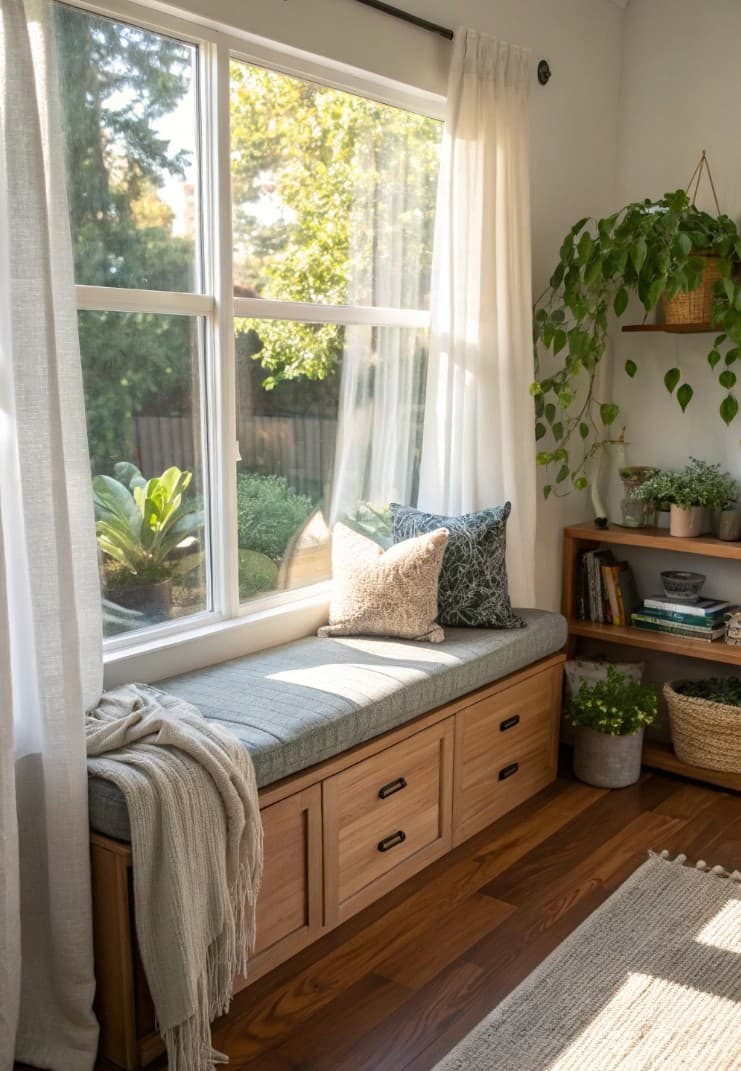
How to Build a Window Seat With Built-In Storage Drawers
A window seat with drawers underneath is one of the most rewarding home projects you can do — it adds seating, storage and a beautiful reading nook all at once.

Industrial Shelving Units: The Statement Storage Piece for Modern Living Rooms
A tall black-frame, oak-shelf freestanding unit with books, ceramics and vinyl records becomes the focal point of a living room — here's how to style one.
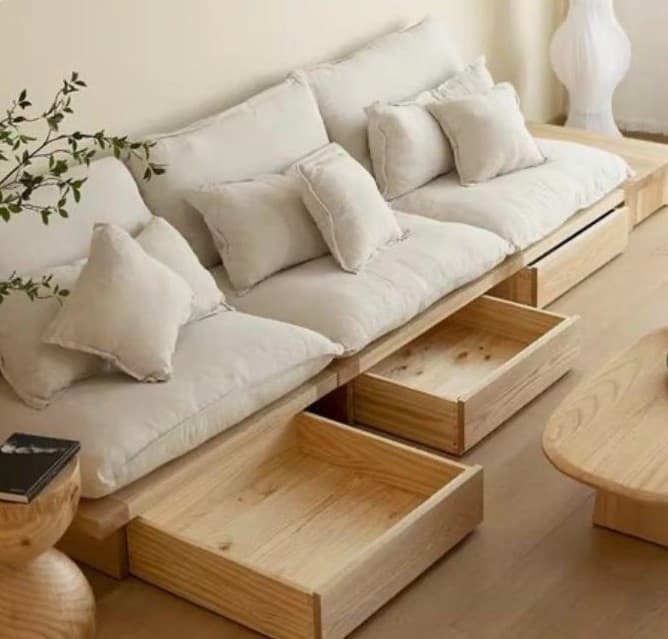
Japandi Platform Sofa With Hidden Storage Drawers: The Ultimate Space-Saver
A low pine platform sofa with pull-out drawers underneath stores as much as a wardrobe while taking up the footprint of a sofa. Here's why this is one of the smartest furniture ideas around.