The Built-In Banquette Dining Nook: Maximum Storage, Minimum Footprint
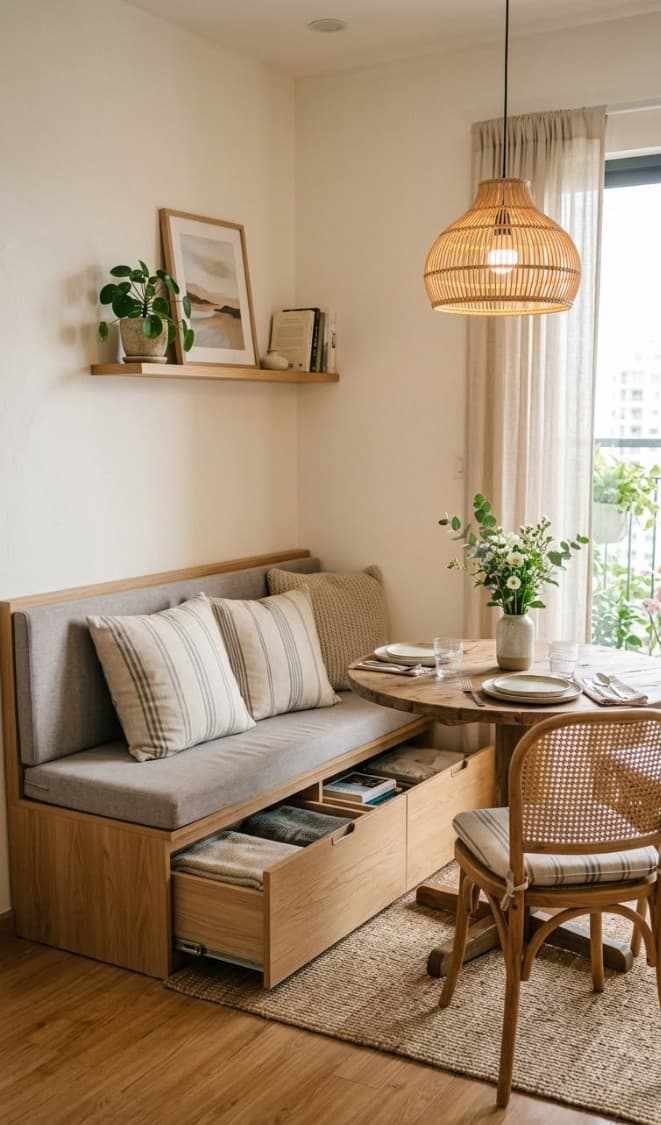
This dining nook occupies what might be the corner of a living room or kitchen — a space that in many homes goes completely unused. A long oak bench with a grey upholstered seat cushion and striped linen pillows runs along the back wall. In front of it, a small round wooden dining table is set for two with plates, glasses and folded napkins. A single rattan cane chair faces the bench. Above, a woven rattan dome pendant light fills the corner with warm light. On the wall above the bench: a floating oak shelf with an art print, a small plant and a few objects. A jute rug grounds the whole arrangement. This corner is now the best seat in the house.
Why a banquette beats a dining chair
A built-in or free-standing bench along one wall of a dining nook does several things a chair cannot. It accommodates more people than the same footprint of chairs — you can squeeze another person or two onto a bench in a way that individual chairs don't allow. It doesn't need to be pulled out to sit down, which matters in a tight corner. And the storage underneath, in the case of this bench, adds a full drawer's worth of hidden space.
The storage drawers
The bench here has three pull-out drawers along its front face, each wide and shallow. One is open in the photo, revealing folded textiles — throws, table linens, extra napkins. This is exactly the kind of storage that gets ignored in most homes: the space beneath a seat, used only as dead air. With drawers, every centimetre of the bench height is working.
The round table advantage
A round table in a corner nook is almost always the right choice. It has no corners that dig into your ribs when you sit down, no long edges that dominate a small space, and it can seat the same number of people in a smaller footprint than a rectangular table. The natural wood grain here adds warmth against the off-white walls.
The rattan dome pendant
The woven rattan dome pendant above the table is the light source and the centrepiece. It hangs low enough to feel intimate — dining pendants should be low enough to light the table without blinding the people sitting at it. The warm amber glow through the woven rattan casts the characteristic dappled light that makes this style of pendant so effective in dining settings.
Interior tips
- Hang the pendant at table height plus 60–70 cm: this is the standard rule for dining pendants, and it works. Too high and the light is ambient but not intimate; too low and it interrupts conversation across the table.
- A floating shelf above the bench adds vertical display space without touching the floor space of the nook. Keep it styled simply: one art print, one plant, one small object — nothing more.
- Stripe and plain cushions together: the combination of a striped linen lumbar pillow and a plain grey cushion adds visual interest without pattern overload. Both must be in the same tonal range.
- A jute rug unifies the corner: even in a corner that doesn't need a rug functionally, a small jute rug defines the dining zone as a distinct space within the larger room.
- One cane chair facing the bench is more interesting than two matching chairs — the contrast between the upholstered bench and the open weave of the cane chair adds texture and lightness to the arrangement.
Related posts
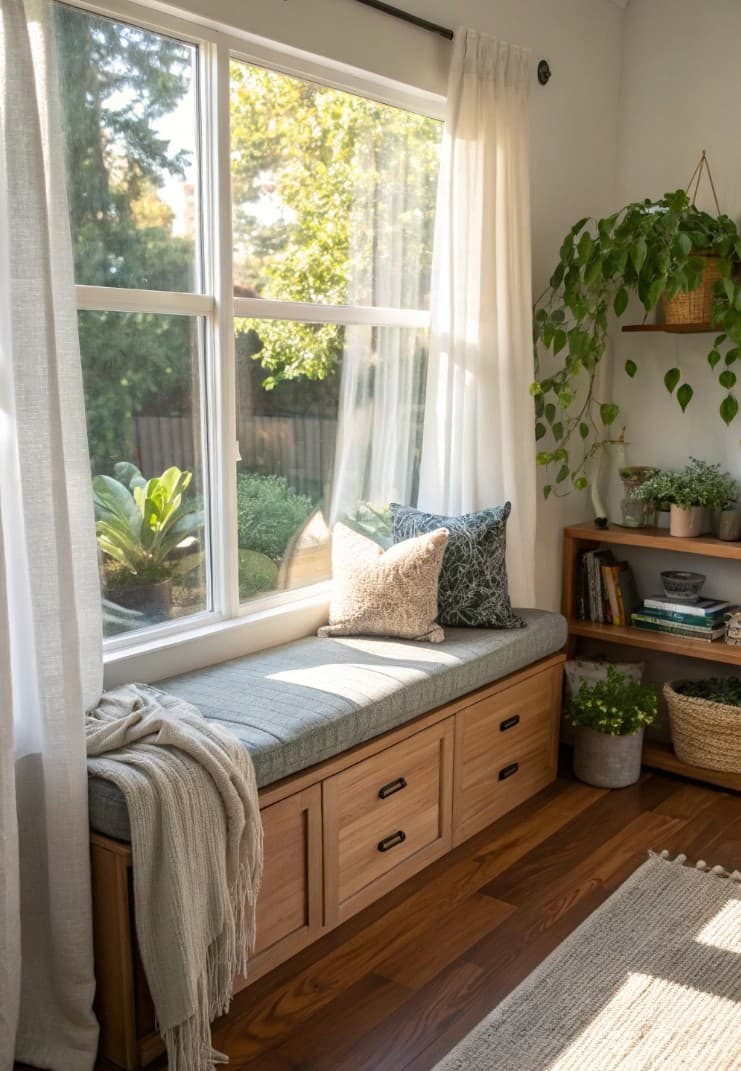
How to Build a Window Seat With Built-In Storage Drawers
A window seat with drawers underneath is one of the most rewarding home projects you can do — it adds seating, storage and a beautiful reading nook all at once.
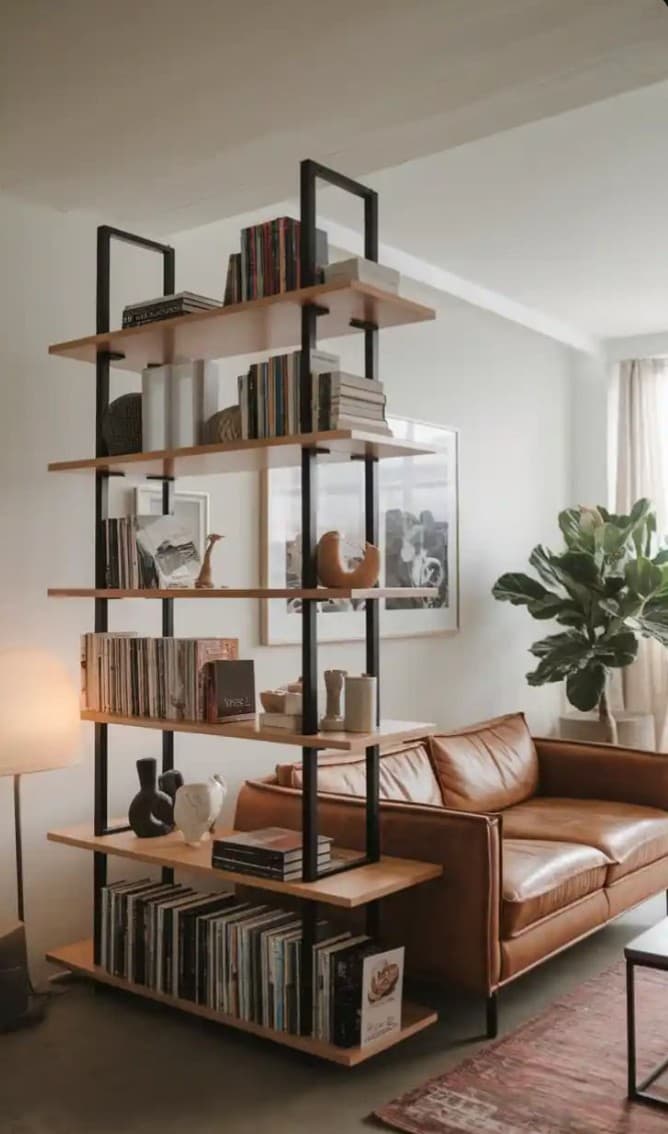
Industrial Shelving Units: The Statement Storage Piece for Modern Living Rooms
A tall black-frame, oak-shelf freestanding unit with books, ceramics and vinyl records becomes the focal point of a living room — here's how to style one.
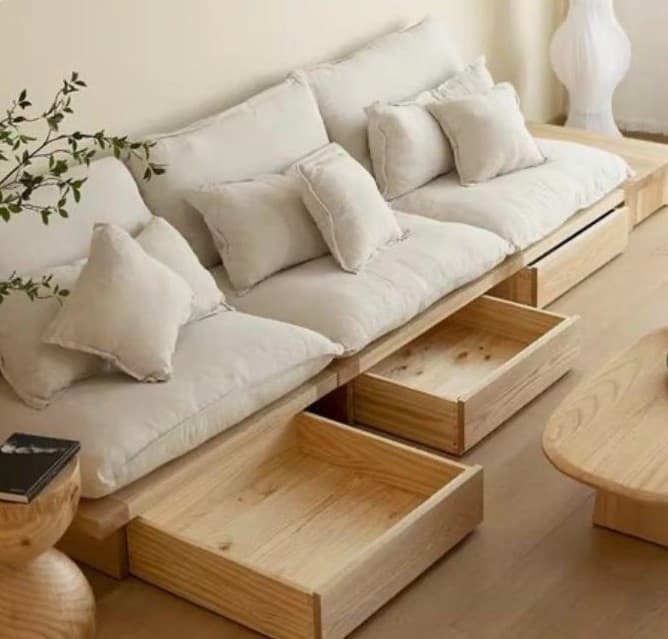
Japandi Platform Sofa With Hidden Storage Drawers: The Ultimate Space-Saver
A low pine platform sofa with pull-out drawers underneath stores as much as a wardrobe while taking up the footprint of a sofa. Here's why this is one of the smartest furniture ideas around.