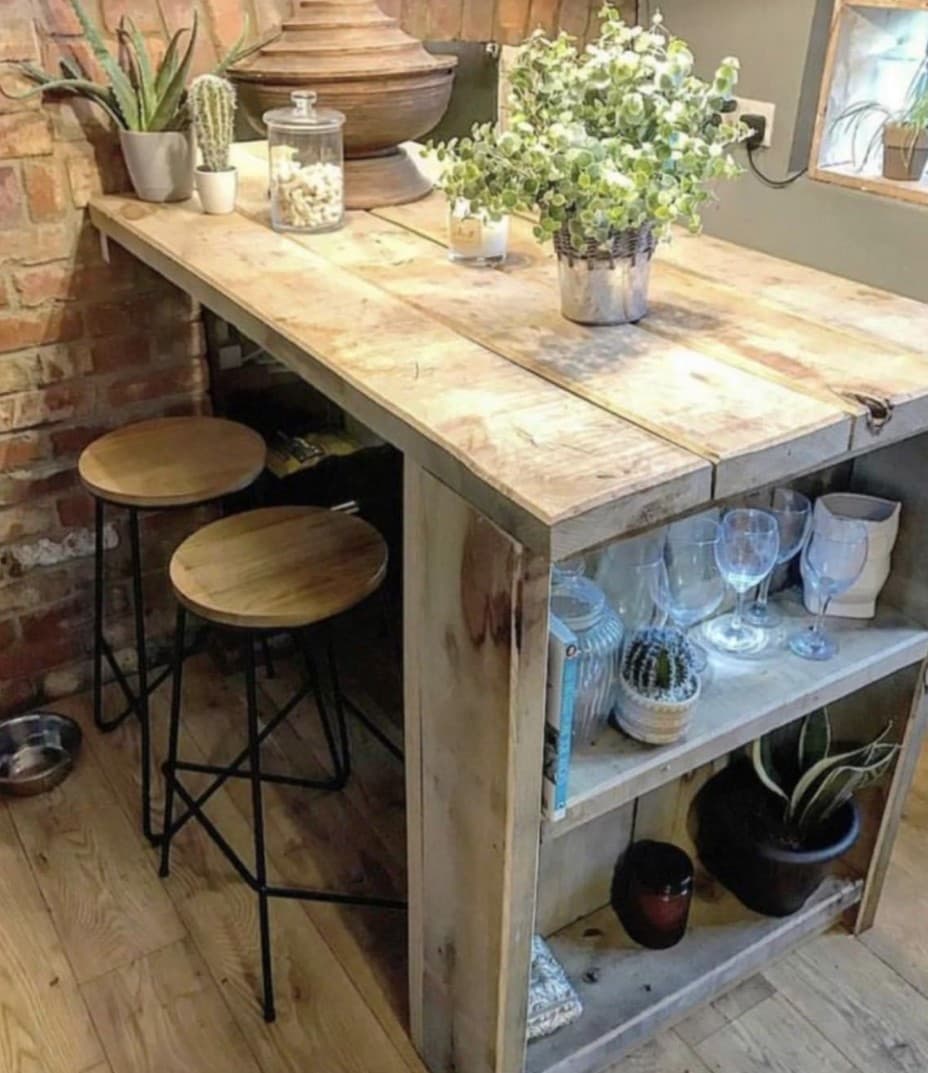
The bar table in this image was almost certainly built, not bought. Wide scaffold boards or reclaimed floorboards, laid side by side to form a generous surface. A simple frame underneath with open shelving — one shelf holding wine glasses and glassware, the lower shelf holding plants and ceramics. Two round-seated bar stools with black metal legs pulled up to one side. A brick wall behind. It is entirely functional, genuinely beautiful, and achievable in a weekend.
Why reclaimed wood works for a bar table
Reclaimed timber — scaffold boards, old floorboards, barn wood — has a texture and grain depth that new wood simply doesn't have. Saw marks, knots, colour variation, the occasional stain or nail hole: these imperfections are exactly what make the surface interesting. A smooth, freshly sanded and lacquered plank is a worksurface. A weathered plank with history is a centrepiece.
The environmental case matters too. Using reclaimed material means nothing new needs to be manufactured. Scaffold boards are typically European softwood that has aged in outdoor conditions for years — that weathering process is what makes them so visually rich, and it can't be replicated in a factory.
Where to source reclaimed scaffold boards
Scaffold boards are widely available and often surprisingly affordable. Good sources include:
- Timber salvage yards and architectural reclaim yards — often stock boards in various conditions and lengths
- Online marketplaces (eBay, Facebook Marketplace, Craigslist) where construction companies and scaffolding firms list surplus stock
- Specialist reclaimed wood suppliers who clean and grade boards before selling
- Building sites directly — many firms sell boards that have reached the end of their working life
When buying, look for boards with minimal cracking and no signs of rot. Surface stains and discolouration are desirable. Avoid boards that smell strongly of oil or chemical treatment.
Building the frame
The simplest version of this table uses a steel or timber frame at bar height (roughly 90–100 cm) with planks laid across the top and screwed down. The open shelving underneath can be as simple as a second horizontal frame at mid-height. If you're working with scaffold boards, their weight provides stability — you may need no additional fixing at the base.
For a completely DIY approach, hairpin legs are the easiest route: buy hairpin legs in the right height, attach them to the underboard base and you have a solid table in under two hours. For the shelf, a simple stretcher rail between pairs of legs at mid-height provides enough support for wine glasses and light ceramics.
Finishing and sealing the surface
Raw scaffold board is porous and will absorb moisture, oils and stains. For a kitchen bar table, some form of finish is essential:
- Hardwax oil (brands like Osmo or Rubio Monocoat) is the best all-round choice: it penetrates the wood, enhances the grain, and provides water and food resistance without the plastic-film look of varnish.
- Raw linseed oil is traditional and beautiful but slow to cure — allow several days between coats.
- Wax gives a lovely soft sheen but needs regular reapplication and isn't as water-resistant as oil.
Avoid polyurethane varnish on reclaimed boards — it seals the surface in a way that kills the texture and makes the piece look mass-produced.
The glassware display shelf
The shelf visible in the open section here holds a row of wine glasses and tumblers, stored upright. Glassware on open display is both practical and decorative — the transparency of the glass catches the light and the collection communicates something about how the space is used. Keep only the glasses you actually use; remove anything that doesn't earn its place.
Cacti and plants on top
The surface styling here is spare and effective: two small cactus pots, a large aluminium bucket holding trailing greenery, a glass jar. This is the right amount for a work surface — enough to feel alive, not so much that there's no room to use the table.
Common mistakes to avoid
The most frequent mistake with reclaimed wood tables is over-sanding. Aggressive sanding removes exactly the surface character that makes the board interesting — the saw marks, the slight unevenness, the marks of use. Sand only enough to remove splinters and rough edges; leave everything else.
The second mistake is pairing the table with furniture that's too refined. A rustic plank table looks incongruous next to sleek modern chairs with polished chrome frames. Stick to materials that share the rough-and-natural aesthetic: black powder-coated steel, raw or oiled wood, natural cane or rattan.
Interior tips
- Seal reclaimed wood with a food-safe oil or wax if the table will be used for food preparation — raw wood absorbs moisture and stains, but a good oil finish makes it durable and beautiful.
- A brick wall backdrop is ideal for this style of table, but a limewashed or textured plaster wall works equally well. Smooth painted walls feel too refined for the reclaimed aesthetic.
- Round-seat stools with black metal legs are the classic pairing for a rustic plank table — the contrast between rough wood and precise steel frames is very satisfying.
- Vary plant types: the cacti and the trailing greenery here are deliberately different — one architectural and drought-tolerant, one lush and organic. The contrast prevents the display from looking like a garden centre shelf.
- Under-shelf LED lights pointing upward onto the glassware make the whole piece glow in the evening and turn what's already a feature into something genuinely dramatic.
- Keep the surface lightly styled: two or three plants, a cutting board and a small ceramic jar is plenty. The wood itself is the star — don't bury it under clutter.
Related posts
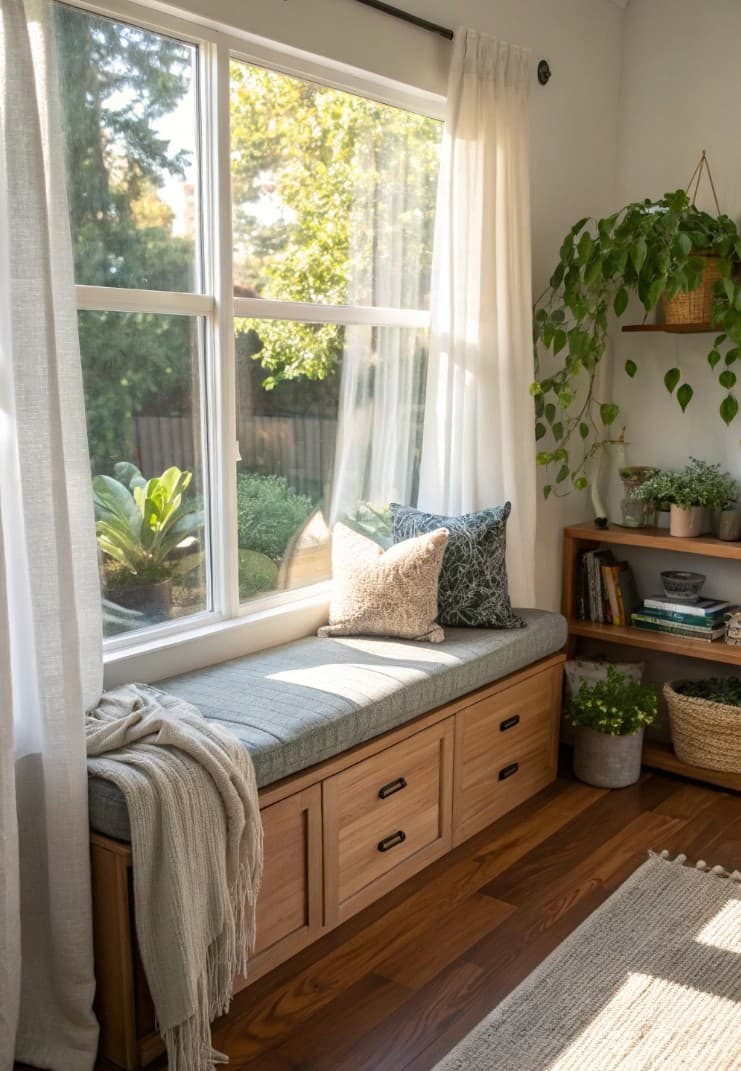
How to Build a Window Seat With Built-In Storage Drawers
A window seat with drawers underneath is one of the most rewarding home projects you can do — it adds seating, storage and a beautiful reading nook all at once.
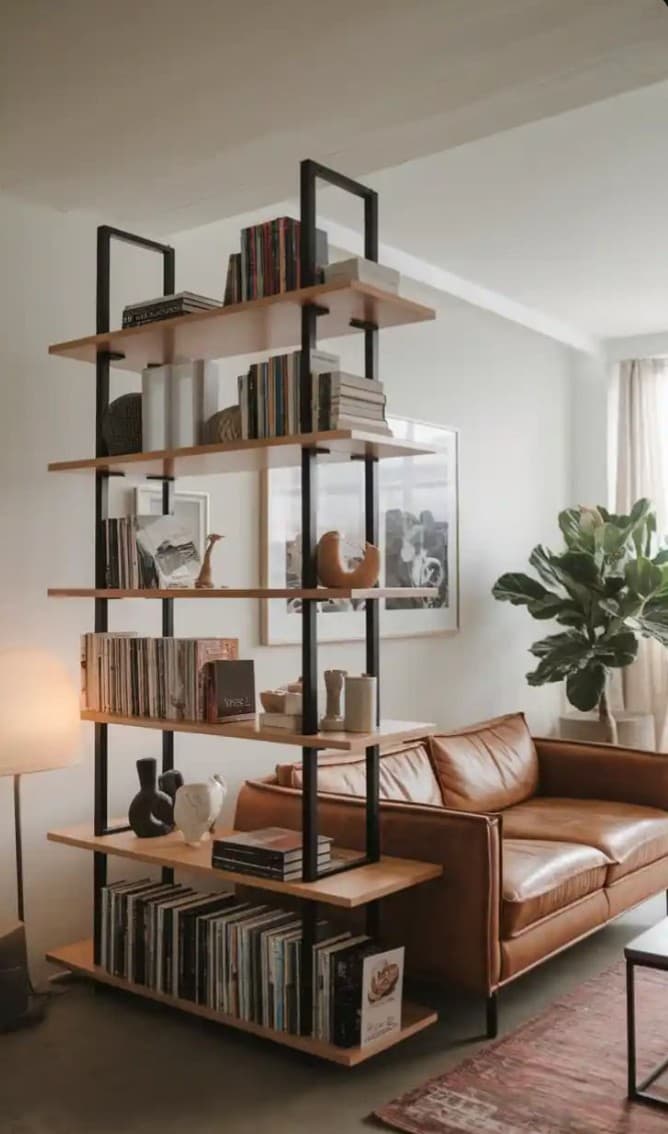
Industrial Shelving Units: The Statement Storage Piece for Modern Living Rooms
A tall black-frame, oak-shelf freestanding unit with books, ceramics and vinyl records becomes the focal point of a living room — here's how to style one.
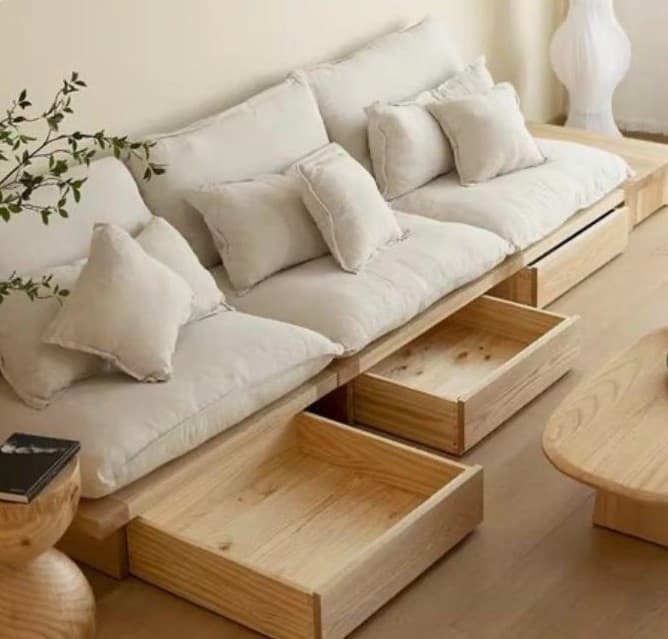
Japandi Platform Sofa With Hidden Storage Drawers: The Ultimate Space-Saver
A low pine platform sofa with pull-out drawers underneath stores as much as a wardrobe while taking up the footprint of a sofa. Here's why this is one of the smartest furniture ideas around.